Flygt Marks 125 Years of Pump Engineering and Water Infrastructure Innovation
Key Highlights
- 125 Years of Pump Engineering — Flygt’s history spans the development of submersible drainage, wastewater, self-cleaning and intelligent pumping technologies
- Energy and Maintenance Remain Key Performance Factors — Recent systems address changing inflows, clogging, equipment wear, manual intervention and energy consumption
- Field Applications Demonstrate Real-World Reliability — Flygt technology has been deployed in mines, airports, tunnels, construction projects and other demanding water-management environments.

Moving water is one of those basic functions modern life depends on but rarely notices. Pumps keep wastewater moving to treatment plants, construction sites and mines dry, cities protected from flooding and critical infrastructure operating.
For more than a century, Flygt pumps have been part of that infrastructure. The company’s history is largely a history of solving practical pumping problems—from keeping equipment out of floodwater and reducing clogging to improving energy efficiency and giving operators more information about system performance.
That engineering history began in Emmaboda, Sweden, with a small foundry and eventually grew into one of the world’s major pump manufacturing operations.
In 1901, blacksmith and mould maker Per Alfred Stenberg established a small foundry in Emmaboda, initially serving the region’s glass industry. More than two decades later, Hilding Flygt established a pump and fan sales company in Stockholm. Their paths crossed in 1929, when a newspaper advert brought the two businesses together. The first Flygt pump was produced in Emmaboda the following year.
More than a century later, Emmaboda remains at the heart of Flygt manufacturing. Xylem’s flagship Flygt pump factory produces approximately 160,000 to 170,000 pumps each year.
Submersible Technology Changed Dewatering
One of Flygt’s first major engineering advances addressed a problem common on construction and mining sites in the 1940s.
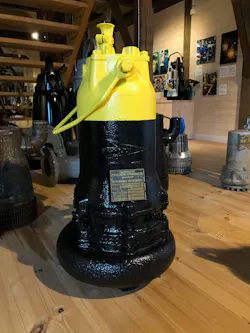
Dewatering systems relied on pumps positioned above the water and connected to suction pipes. As excavations became deeper and conditions changed, equipment had to be moved and adjusted. The pumps themselves could also be vulnerable to flooding.
In Emmaboda, engineer Sixten Englesson took a different approach: put the pump in the water.
In 1947, Englesson developed the world’s first submersible drainage pump. Nicknamed the “Parrot Cage,” the pump could operate while submerged, changing how dewatering equipment could be deployed in demanding environments.
The approach addressed one problem but opened the door to another application: wastewater.
Compact Wastewater Pumping Reduced Installation Challenges
Conventional wastewater pump stations could require significant space and be cumbersome to install and service. In 1956, Flygt introduced the world’s first submersible wastewater pump with an automatic discharge connection.
The design enabled more compact pumping stations while simplifying installation and servicing—an important consideration as wastewater infrastructure became more widespread and increasingly complex.
By the 1990s, pump clogging had emerged as another persistent maintenance challenge. Solids could accumulate in pump stations and become caught in equipment, increasing cleaning and maintenance requirements and potentially leading to unplanned intervention.
Flygt introduced the TOP station in 1996 to reduce the accumulation of solids in the sump. A year later, the company introduced N technology, featuring a self-cleaning impeller designed to reduce clogging while maintaining hydraulic efficiency.
Intelligent Pumping Added Energy and System Monitoring
By 2016, mechanical reliability was no longer the only measure of pumping-system performance. Operators were increasingly looking for lower energy consumption, greater system visibility and equipment capable of responding to changing operating conditions.
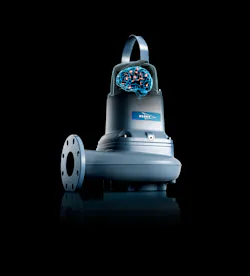
Xylem launched Flygt Concertor, the world’s first wastewater pumping system with integrated intelligence.
Designed to sense operating conditions and adapt performance in real time, Concertor combines hydraulics, motors, power electronics and intelligent controls. Field testing reported energy savings of up to 70% compared with conventional pumping systems.
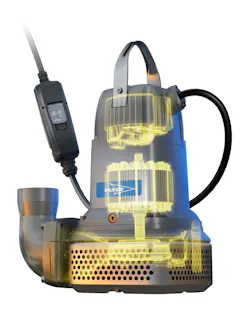
The same shift toward adaptive pumping extended into dewatering five years later with Flygt Bibo Alpha. The system automatically adjusts its speed and performance to changing water inflow, reducing manual intervention while helping limit wear and energy use.
“What 125 years gives us is an extraordinary depth of engineering experience,” said Bala H, SVP & General Manager, Water Infrastructure Transport at Xylem. “The technology has changed enormously, but the expectation from customers has remained remarkably consistent: critical pumping systems need to work when they are needed. That experience gives us a strong foundation as we move from reacting to problems towards identifying and addressing them earlier.”
Flygt Pumps Have Been Tested in Extreme Conditions
Flygt’s engineering has been applied in projects and environments that would have been difficult for the company’s earliest engineers to imagine.
Flygt pumps played a role in the 1961 recovery of the Vasa, helping keep the 17th-century warship afloat after 333 years underwater. The company’s pumps later helped keep the Eurotunnel dry during its construction in the late 1980s.
In 2018, Flygt pumps were deployed during the international operation behind the Thai cave rescue. Xylem dewatering experts worked alongside the rescue team to improve the pumping operation as crews worked to control water levels in the cave.
Today, Flygt pumping systems continue to operate in demanding environments.
At New Boliden’s Renström mine, one of Europe’s deepest, Flygt Bibo Alpha’s adaptive capabilities reduced operational wear by 80%. At Heathrow Airport, Flygt Concertor has required just one reactive site attendance in eight years at a wastewater station previously affected by chronic clogging, while reducing energy consumption by 53%.
Beneath the River Thames, Flygt pumps support six pumping stations along London’s new Silvertown Tunnel, helping protect the route from surface flooding and keep traffic moving.
Pump Reliability Now Extends Beyond Mechanical Performance
The applications vary widely, but the underlying engineering challenge remains consistent: keep critical operations moving when pumping failure can have significant consequences.
That means reliability increasingly involves more than simply keeping a pump running. Energy consumption, system visibility, maintenance requirements and the ability to respond to changing conditions all affect the performance of a pumping system.
Smarter pumping systems can provide operators with more information about system performance while adapting equipment to actual operating conditions. For contractors and infrastructure operators, that can mean fewer manual interventions, reduced wear, lower energy use and earlier identification of potential problems.
The technology has changed dramatically since the first Flygt pump was produced in Emmaboda in 1930. The fundamental requirement has not: keep the water moving.