Bipartisan American Affordability and Jobs Act of 2026 Hopes to Modernize Federal Permitting
Key Highlights
- The Act proposes strict deadlines of 1 year for Environmental Assessments and 2 years for Environmental Impact Statements to speed up project approvals
- The legislation limits legal challenges to permitted projects to 150 days, aiming to reduce judicial delays and increase project certainty
- It will require large data centers to cover some infrastructure costs, protecting electric ratepayers and tracking demand data through the EIA
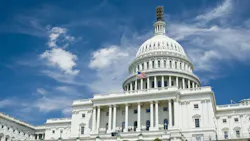
WASHINGTON, DC — On September 30, 2026, Sens. Shelley Moore Capito (R-WV), Martin Heinrich (D-NM), Mike Lee (R-UT), and Sheldon Whitehouse (D-RI) introduced the Bipartisan American Affordability and Jobs Act of 2026—a more than 400-page package intended to increase the efficiency of the nation’s permitting system.
There is widespread agreement among industry groups, business leaders, and policymakers that the US federal permitting system is severely outdated due to high costs, multi-year delays, and complex regulatory hurdles.
A joint report by the National Association of Manufacturers and the Foundation for American Innovation estimates that federal permitting delays cost US manufacturers roughly $7.9 billion each year. A US Chamber of Commerce study estimates that permitting bottlenecks are delaying $1.5 trillion in critical infrastructure investments, including broadband, transmission lines, pipelines, and transportation projects.
The Act at a Glance
Some chief provisions of the Act include:
- Mandatory Deadlines: Sets a strict 1-year completion limit for Environmental Assessments (EAs) and a 2-year completion limit for Environmental Impact Statements (EIS).
- Public Comment Windows: Standardizes public comment periods to a range of 45 to 60 days (extendable up to 75 days only with project sponsor agreement).
- Judicial Review Limits: Imposes a 150-day deadline for filing legal challenges against permitted projects.
- Digital Portal: Directs the Council on Environmental Quality (CEQ) to establish a unified, cloud-based ePermit authorization portal by December 1, 2028.
- Data Center Demand: Requires data centers with 20+ megawatt demand to cover full infrastructure costs, protecting residential and commercial ratepayers from absorbing these expenses. It also tasks the US Energy Information Administration (EIA) with tracking demand data.
The Act will limit federal agencies from revoking valid permits barring specific exceptions (like fraud) and places the legal burden of proof on agencies attempting to alter approved projects, allowing courts to award damages.
Industry Reactions
United Association of Union Plumbers and Pipefitters (UA) General President Mark McManus issued the following statement after Senate leaders introduced the Act.
“In our industry, uncertainty means one thing: unemployment. It is long past time that Congress enacts meaningful permitting reform to put UA members to work faster delivering reliable and affordable energy to American communities.
“Today’s announcement is the culmination of a long process to reach a bipartisan deal and take a critical step towards a long-overdue modernization of our country’s permitting process. This bipartisan legislation, led by Chairs Lee and Capito and Ranking Members Heinrich and Whitehouse, will increase project certainty, streamline federal review timelines, and create thousands of good-paying jobs—all while maintaining reasonable environmental safeguards and opportunities for public input.
“The UA looks forward to continuing our work with members of both parties in the Senate to advance this critical legislation and with all members in the House to ultimately pass it into law.”
The Act also faces intense opposition, primarily from a coalition of environmental organizations, conservation groups, and progressive advocates. While some clean-energy factions support the bill for its potential to accelerate renewable energy grids, critics view the legislation as a threat to environmental protections.
A chief complaint among water quality advocates is that the Act eviscerates Section 401 of the Clean Water Act (CWA), a federal law that grants US states and authorized Native American tribes the direct authority to review and approve, condition, or deny federal permits for major infrastructure projects.
Next Steps
The next steps for the Bipartisan American Affordability and Jobs Act of 2026 involve navigating the post-recess legislative calendar. Because the text was unveiled right before the Senate recessed for the 2026 midterm elections, the bill’s advancement is scheduled around the upcoming lame-duck session.
The next scheduled milestone is a November 9 cloture vote in the Senate to proceed to the permitting reform vehicle. This will require 60 votes to overcome any potential filibuster.
CONTRACTOR will continue to follow this story as it develops.
About the Author
Steve Spaulding
Editor-in-Chief - CONTRACTOR
Steve Spaulding is Editor-in-Chief for CONTRACTOR Magazine. He has been with the magazine since 1996, and has contributed to Radiant Living, NATE Magazine, and other Endeavor Media properties. You can find him on LinkedIn at www.linkedin.com/in/stevespaulding.