2026 Book of Giants – The Challenge of the Moment
Key Highlights
- Egan emphasizes a technology-driven approach, leveraging AI and BIM to enhance project delivery and employee engagement while maintaining a focus on long-term stability
- McKinstry invests heavily in prefab and modular construction, expanding its industrialized building capabilities to meet rising demand in data centers and other sectors, while prioritizing sustainability
- Both companies recognize the critical role of workforce development, implementing programs to attract, train, and retain diverse talent amid labor shortages and industry-wide challenges
- Strategic communication and flexible contracting are vital for managing volatile material costs, helping companies stay nimble in uncertain markets
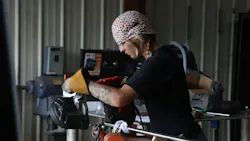
“If only we could get just one normal year,” seems to be the constant refrain from builders, manufacturers and contractors alike. Just one normal year to plan, to profit and to grow without the specter of uncertainty. But instead, each year seems to offer a new set of unexpected challenges.
For more than a decade, it seems, the US economy has been rocked by one upheaval after another; from pandemic to supply chain turmoil to inflation; from tariffs to war to spiking energy prices. And, looming over it all, Artificial Intelligence, and the incredible potential it holds for revolutionizing—and disrupting—the industry.
For this year’s Book of Giants, we spotlight two of the nation’s largest mechanical contractors, and how they are meeting the moment, finding success, and planning to secure the future.

Andy J. Egan Co.
Staying nimble to navigate change.
GRAND RAPIDS, MI — Mechanical contractor and fabricator Andy J. Egan Co. was founded in 1919, and in the course of its storied history has tackled some of the region’s largest and most difficult projects: The Helen DeVos Children’s Hospital, the Grand Rapids Art Museum, and the DeVos Convention Center, to name only a few. It offers engineering, fabrication, mechanical insulation, controls and 24/7 service for commercial, industrial and institutional applications.
In April of 2026, Andy J. Egan named Chris Weaver as President, marking a leadership transition that continues the company’s focus on technology-driven project delivery and long-term stability. Egan has been under the leadership of the Jasper family since 1932, when Harold Jasper acquired the company. As succession planning progressed Weaver emerged as a clear choice to lead the organization forward.

Weaver, who joined the company in 2000, most recently served as Director of Technology, a position he has held since 2015. “Chris Weaver is the ideal candidate to take over the reins at Egan,” said outgoing President Andy Jasper. “Our customers and employees can expect the same steady leadership, trusted relationships and commitment to quality that Egan has delivered for generations.”
In Transition
As you might imagine, Weaver’s first steps in his new role will be to reinforce continuity for customers, employees and business partners. He hopes to take his cues from the existing company culture at Egan that has already seen so much success. And, luckily, he won’t be doing that alone.
“I have tremendous support from our experienced executive team here at Egan,” Weaver says. “Together we’re continuing to grow strategically in West Michigan and growing thoughtfully in markets beyond our home base. Operationally, we’re continuing to employ LEAN techniques and the latest in construction technology smartly to add value, eliminate waste and deliver consistent outcomes.”
Technology Serving People
Egan has had a consistent approach to technology for more than 25 years thanks in no small part to Weaver’s tenure as Director of Technology. That approach begins with people and processes, not with any piece of software. It is always the requirements of the work, and the people doing the work, that drives the digital tool selection.

That philosophy made Egan a leader in BIM implementation over two decades, and now the company is taking the same approach to AI.
“We want all employees to work in roles that they are passionate about,” Weaver says. “Egan is leveraging AI to remove those low-value, repetitive tasks, so they can do more of what they love.”
Prices, Pricing, and Navigating Change
Cushman & Wakefield, a global real estate services leader, estimates that as of April, 2026, tariff rates will result in an increase to construction materials costs by 6.0% relative to a 2024 baseline (before the new tariff regime), while total project costs are estimated to rise 3.0%.
Andy J. Egan Co. relies on its talented procurement department to monitor ever-changing materials prices, working closely with the company’s preconstruction team, project managers, field teams and estimators. Early and frequent communication—both internal and external, and at all levels—is vital to negotiating in a volatile operating environment.
Weaver is quick to give credit to his procurement team, and for the edge they have given the company. “Because those people and processes were in place before market swings,” Weaver says, “Egan has been able to stay nimble as we navigate constant change.”
A Place the Best Want to Be
Amid the industry-wide labor crunch, Egan has found success by offering a mix of competitive pay, benefits, and opportunities for development. But those are just the baseline. Egan has worked hard to create a work environment where employees feel good about coming to work each day and gain personal satisfaction from the work they do.
“Building a strong culture has been critical to attracting the best talent in the industry for both field and office employees,” Weaver says. “We’ve been named one of the nation’s top employers four years in a row by the National Association for Business Resources, and Egan has been a regional top employer for more than a decade before that.”
This ties right back to the company’s business development and growth strategy. When employees are proud of where they work, they are excited to promote the company and independently seek out areas for continuous improvement. “We see that every day at Egan,” Weaver says. “Specific to the younger generation coming into the industry, we see that technology is important to them. They are excited to use technology they grew up with in new ways.”
Egan has also developed company-wide training programs that are available to all generations of employees, not just the digital natives.
McKinstry
An obsession with diversity.
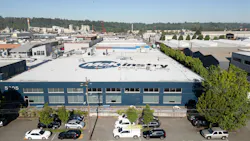
SEATTLE, WA — McKinstry has been lauded in the mechanical construction industry for its best practices, early recognition of emerging trends, progressive ideas for today’s built environment and its team-based approach to innovation (through Dawson Ventures and its Spokane, Washington-based Living Laboratory).
The 66-year-old company’s market expertise includes commercial, data centers, education, government, healthcare, industrial, life sciences, and utilities and infrastructure.
Today, the $1.5 billion mechanical contractor employs 3,100 people at 22 offices, two manufacturing facilities and four fabrication shops.
Communication and Contracts
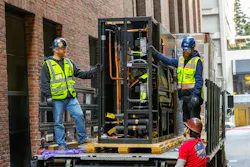
Trade tariffs and the war in Iran have dealt a blow to the construction industry not seen since the COVID-19 pandemic.
“We are a little nervous because if the cost of construction goes up, the demand impact could trickle down to us,” notes Matt Allen, McKinstry Executive Vice president, Chief Client Officer and grandson of co-founder George Allen. “There's been a lot of talk about copper pricing, which obviously has a big impact on us. However, I believe we're better positioned, as we were when many commodity price shocks occurred during COVID and amid supply chain issues.”
During the current commodity price situation, communication with customers is key, Allen says. Contractors can address the price fluctuations and protect themselves with contracts and a shared responsibility with customers.
“We don't want to get locked into something in a contract and then, six months later, the price shoots up,” he explains.

Data Center Sustainability?
With the surge in artificial intelligence (AI) and data center construction, McKinstry is now a full participant in that marketplace, a development that has fueled much of its growth this past year.
“We've held back a bit more compared to other firms,” Allen says. “We've leveraged our diversity to make sure we closely track those metrics. We're focused on the market mix to make sure we're not overly wedded to one vertical market.”
Data center construction has been controversial for a few years, especially in small towns and rural areas. Such buildings consume a lot of water and electricity, and the growing use of AI compounds the challenge.
“We have a very strong sustainability focus,” Allen says. “McKinstry has the ability to work with customers to find more sustainable ways to build data centers, such as closed-loop systems that don't use as much water.”
Prefab Repeatability
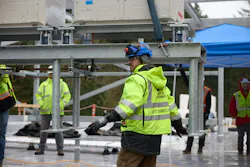
While many mechanical contractors have yet to get their feet wet in the prefabrication and modular construction sectors, McKinstry has been using prefab for 30 to 40 years. It’s been the company’s biggest growth in capital expenditures and infrastructure over the last year.
“It’s McKinstry’s hallmark,” Allen says. The data center market has been the sector with the most demand for prefab’s highly repeatable components.
In the last year, McKinstry has been moving into industrialized construction. The market demand has centered in Spokane, where the company has a core production facility. It added between 300,000 and 400,000 sq. ft. of space to meet demand for off-site modular or industrialized construction.
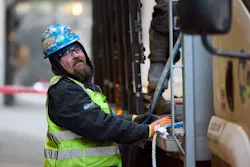
“We started up a group that we call McKinstry Modular Products, but the industry often calls it off-site manufacturing or OSM,” Allen explains. “We forecast that it's going to get even bigger over the next few years.”
A national approach to clients “allows us to tap into a broader set of marketplaces that help fuel our growth and give us stability in some of our slower markets,” he explains. “That's the McKinstry story: we're very obsessed with diversity. We try not to get too over-concentrated in one vertical.”
AI Use Among Divisions
Allen notes that McKinstry seems to be on both sides of the AI marketplace.
“We're participating in the infrastructure build-out for AI and it's feeding tremendous growth into our business,” he says. “Yet, as an AI consumer, we still need to get organized and determine how to use it effectively.”
To drive efficiency gains and boost productivity, McKinstry is forming a dedicated AI team that will work in close partnership with its core IT and software engineering teams. The idea is to determine how each McKinstry division can use the tool across many different workflows. Allen is the executive sponsor coordinating this operation.
“Training is a huge part of it,” he notes. “The AI tools are only as good as the data foundation that they sit on. We know AI is going to be a big part of upskilling our people to do more with less.”
Heavy Metal Labor
As a union contractor, McKinstry has a reputation as an employer of choice. Today, the company is feeling the labor crunch.
“It's real,” Allen says. “For years, we worked with our locals, did some kind of demand forecast for what labor needs we would have. It's been pretty rare for us to actually run into a true labor crunch. Now, there aren’t as many people on the bench, and it’s a bit harder to find labor resources in the right places where facilities are being built.”
To help boost interest in the skilled trades, McKinstry’s Heavy Metal Summer Program brings high school kids from underrepresented communities to learn how to solder pipe, how electrical circuitry works and more. Allen notes that the company hopes to replicate the program in regions where it wants to grow.
“We’ve always believed in being a preferred place to work, but it's also a strategy for us to retain and attract the best talent,” Allen explains. McKinstry’s field leadership development program is also a good retention strategy.
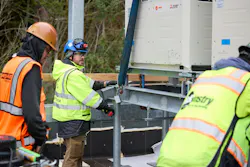
Allen serves on the McKinstry Foundation board, which made a long-range $1 million commitment to develop a building futures initiative to get women excited about STEM careers and the skilled trades. “There are some exciting opportunities for young people going the craft route,” he says. “That's not to say we don't need engineers and commissioning agents; we're recruiting for those careers, too.”
Given the demanding needs of the construction industry, McKinstry is casting as wide a net possible to find the skilled workers of tomorrow.
“If it's only white men who traditionally get in these trades, that's not going to scratch the itch or meet the demand we see now and into the future,” Allen notes.
To read more about the nation's largest mechanical contractors, turn to pg. 28 for Giants in the News.
About the Author
 Kelly L. Faloon
Kelly L. Faloon
Freelance Writer/Editor
Kelly L. Faloon is a contributing editor and writer to CONTRACTOR, Contracting Business magazine and HPAC Engineering and principal of Faloon Editorial Services. The former editor of Plumbing & Mechanical magazine, Faloon has more than 26 years of experience in the plumbing and heating industry and more than 35 years in B2B publishing. She started a freelance writing and editing business in 2017, where she has a varied clientele.
Faloon spent 3 1/2 years at Supply House Times before joining the Plumbing & Mechanical staff in 2001. Previously, she spent nearly 10 years at CCH/Wolters Kluwer, a publishing firm specializing in business and tax law, where she wore many hats — proofreader, writer/editor for a daily tax publication, and Internal Revenue Code editor.
A native of Michigan’s northern Lower Peninsula, Faloon is a journalism graduate of Michigan State University. You can reach her at [email protected].
Steve Spaulding
Editor-in-Chief - CONTRACTOR
Steve Spaulding is Editor-in-Chief for CONTRACTOR Magazine. He has been with the magazine since 1996, and has contributed to Radiant Living, NATE Magazine, and other Endeavor Media properties. You can find him on LinkedIn at www.linkedin.com/in/stevespaulding.