PHVAC Contractors are the Superheroes; Codes are the Capes
Key Highlights
- The 2027 plumbing code introduces guidance for adult changing stations, promoting dignity and sanitary conditions in public facilities
- New standards address pipe rehabilitation techniques like pipe bursting and cured-in-place pipe (CIPP), emphasizing professional qualifications and best practices
- Sizing rules for tankless and dual-purpose water heaters have been clarified to optimize performance and safety

Most are familiar with the American Standard poster that reads, “The Plumber Protects the Health of the Nation.” And while this statement is entirely true—plumbers do ensure clean, safe water, provide sanitary waste conditions, champion for an overall comfort in our daily lives and understand the plumbing codes in place—one could argue that the adopters, advocates and reviewers of said codes should also be associated with “protecting the health of the nation.”
It's important, now more than ever, to keep up with the changing codes, especially when technology changes seemingly by the day. “The codes are not a static document fixed in time,” says Chuck White, VP Regulatory Affairs, PHCC-National Association. “Newer technologies or practices evolve over time, contractors that fail to keep up will be left behind. The code changes may result in more efficient, affordable systems or provide increased protection to consumers as they utilize plumbing and mechanical systems,” says White.
Matt Sigler, Executive Director of Plumbing, Mechanical, and Fuel Gas at the International Code Council (ICC), concurs, saying that contractors need to be able to influence project conversations and design decisions. “For example, contractors who are informed on such updates better equipped to translate code into actionable design constraints that the team can act on, prevent expensive redesigns, engage AHJs proactively, use code expertise to help influence early equipment/material decisions, participate in code and spec development and educate owners,” says Sigler.

Hugo Aguilar, Senior Vice President of Codes and Standards Development, IAPMO—in the middle of the excitement of celebrating IAPMO’s 100-year anniversary—talked about the 2027 edition of the plumbing code, most specifically the Uniform Plumbing Code (UPC). “The UPC committee reviewed around 600 code changes that were submitted for both proposals and comments. The objective behind these codes is always moving toward improving and protecting the health and safety of the public,” says Aguilar.
Plumbing Code Changes
According to PHCC’s White, one important change to the plumbing code would be the language for adult changing rooms. “The addition of guidance for adult changing rooms provides contractors, designers and inspection authorities with valuable direction for these facilities and brings more dignity for individuals that have need of hygiene assistance in public settings,” says White.
“Many of us have aging parents that sooner or later will require some care or someone with a physical or cognitive disability. These adults are actually being laid on the floor, which not only poses some sort of shameful event, but also poses an unsanitary situation,” says Aguilar.
Specifically, IAPMO’s Z1390—which is accredited by both the ANSI and Canada—states that the Standard shall cover assistive tables to facilitate and support the personal hygiene of individuals over 50 lbs. who are physically challenged or disabled. Assistive tables shall be fixed or adjustable height, pivot or tilt. Assistive tables shall have the option to have an integrated water closet, body wash system, lavatory or sink and disinfection system. This standard shall establish physical requirements and tests addressing structural strength, mechanical adjustments, materials, integrated fixtures, electrical components, safety restraint systems, entrapment safety, drain line hydraulics, product marking and installation documentation requirements for assistive tables.

Aguilar says that the 2027 UPC not only references this standard, but also provides the necessary provisions for these stations, such as inclusion of a lavatory, a hose bib, floor drains, be accessible by a single user or any family room or installed with multiple water closets.
“The adult changing station can be installed in separate compartments or in a completely separate room with ventilation,” says Aguilar.
Another code update that didn’t come without its fair share of debate was clarifications on rehabilitation of existing drainage piping by pipe bursting methods or cured-in-place pipe (CIPP) relining. The work on sections dealing with underground pipe rehabilitation provides clear guidance on best practices in this market sector. “A sector that has been frequently debated in the industry but, though consensus discussions, has brought about agreed upon language for the multiple methods that are commonly used today,” says White.
“Everybody had a thought on this,” says Aguilar. “Some people were stating that this practice reduces a pipe’s diameter, so there was much debate as to whether it was referencing all the appropriate requirements.”
The 2027 UPC added new sections to address this technology. It also added two new standards that were not in the 24 UPC edition. This was a ASTM F1743 and ASTM F3541 for the push or pulled in place methods. Another major change that was added to the cured-in-place section was a reference to a professional qualification standard (ASSE 28000). “When you are installing a cured-in-place technology, it's not something that anyone should be doing; it requires a special practice, and you need to know what you're doing,” says Aguilar.
Additional Code Updates
Other key updates include:
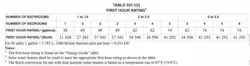
- 2027 UPC sizing rules on tankless and dual-purpose water heaters. 501.2 Dual-Purpose Water Heaters — “Water heaters used for combined space heating and water heating applications shall be designed by the manufacturer as a dual-purpose water heater. Dual-purpose water heaters shall not be used for space heating applications only.” 501.2.1 Sizing — “…Where the manufacturer’s installation instructions do not include provisions for determining the minimum input rating (Btu/h)(kW), the minimum input rating (Btu/h)(kW) shall be the sum of the first-hour rating for domestic hot water in accordance to Table 501.1(2) and the peak sensible heat load (Btu/h)(kW).” 501.3 Instantaneous (Tankless) Water Heater Sizing — “…The instantaneous water heater capacity shall be based on the hot water demand for fixtures in gallons per minute (gpm)(L/s) and the temperature rise required to meet the design output temperature.”
- Appendix N of the 2027 UPC was further revised to address minimum requirements for reducing scalding and Legionella growth risks in plumbing systems. It emphasizes ASHRAE 188 and ASHRAE Guideline 12 and provides guidance on water management plans and documentation for building water systems and equipment.
- New water reuse requirements, in the ICC 2027 International Plumbing Code® (IPC®), that specify appropriate water quality parameters based on application.
- The 2027 UPC included new potable water reuse which applies to the design and installation of onsite wastewater treatment systems for direct potable water reuse in dwelling units.
- The regulated flood hazard area was expanded from a 100-year to 500-year floodplain in the 2027 IPC, IMC, and International Fuel Gas Code® (IFGC®).
- Both ASHRAE 188 and ASHRAE 514 will be referenced in the 2027 IPC for mitigating Legionella and other waterborne pathogens.
Data Center Momentum
It seems you really can’t escape the data center conversation these days. According to Sigler, implementing potential codes and standards relating to data centers is critical, “especially when it comes to addressing water and energy efficiency."
In the 2027 International Building Code® (IBC®), occupancy classification requirements for data centers were added. ICC, in collaboration with industry stakeholders that include major data center operators such as Google and Amazon Web Services, is actively developing the new G12 Guideline on Data Centers. The guideline will provide a clear and comprehensive framework that outlines applicable code and standards requirements for the design and construction of modern data centers. The guideline is on track to be published later this year and will serve as a seed document for the development of ANSI/ICC 1525 (Standard for Data Centers).
“ICC, through our PMG Code Action Committee, is working alongside the G12 Committee to address plumbing and mechanical-related topics for data centers in the 2030 IPC and IMC,” continues Sigler.
Aguilar notes that although data centers are now a mainstream topic, they are not new to the industry. Current plumbing and mechanical codes and standards already include relevant provisions, but he expects future updates to address any additional requirements.