Construction Input Prices Dip in December Amid Tariff Pressures
Key Highlights
- Construction input prices fell 0.6% in December, with nonresidential inputs decreasing 0.7%
- Overall construction costs are 2.8% higher than last year, driven by energy and tariff-related price increases
- Copper wire, cable, and nonferrous metals saw significant price jumps, up over 22% and nearly 62% respectively year over year
- Despite rising costs, contractor optimism remains high, with 70% expecting profit margins to stay steady.
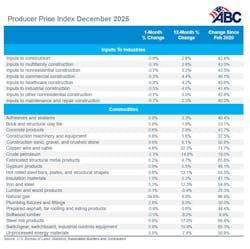
WASHINGTON, DC — Construction input prices fell 0.6% in December compared to the previous month, according to an Associated Builders and Contractors analysis of US Bureau of Labor Statistics’ Producer Price Index data released January 30th. Nonresidential construction input prices decreased 0.7% for the month.
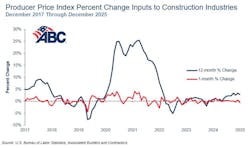
Overall construction input prices are 2.8% higher than this time last year, while nonresidential construction input prices are 3.2% higher. Prices increased in 2 of 3 energy categories last month. Natural gas and unprocessed energy materials prices were up 34.8% and 5.5%, respectively, while crude petroleum prices were down 2.7% in December.
Tariff-Related Escalation
“Construction materials prices posted a welcome decline in December, yet key inputs are still experiencing rapid escalation,” said ABC Chief Economist Anirban Basu. “This is especially true for materials most exposed to tariffs. Copper wire and cable prices, for instance, jumped an incredible 4.6% in December and are up more than 22% year over year, and prices for primary nonferrous metals are up nearly 62% over the past 12 months.
“Prices for commodities less exposed to tariffs, like asphalt or crushed stone, will likely remain tame in the coming months due to soft demand for construction services,” said Basu. “While that may limit increases in overall materials prices, trade policy will continue to put upward pressure on certain materials. This has not significantly dimmed contractor optimism; 7 in 10 ABC members expect their profit margins to remain stable or grow over the next two quarters, according to ABC’s Construction Confidence Index.”
Visit abc.org/economics for the Construction Backlog Indicator and Construction Confidence Index, plus analysis of spending, employment, job openings and the Producer Price Index.