Construction Input Prices Rise 0.7% in January
Key Highlights
-
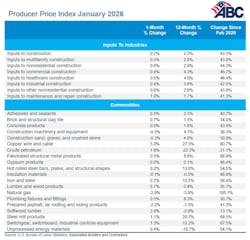
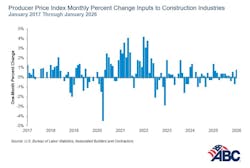
Monthly Momentum: Overall construction input prices rose 0.7% in January, with nonresidential inputs up 0.6%
-
Year-Over-Year Trend: Construction input costs are 2.3% higher than a year ago; nonresidential inputs are up 2.9%
-
Energy Price Split: Crude petroleum and unprocessed energy materials increased, while natural gas prices declined 2.9% for the month
WASHINGTON, DC — Construction input prices rose 0.7% in January compared with December, according to an analysis by Associated Builders and Contractors of new US Bureau of Labor Statistics Producer Price Index data.
Nonresidential construction input prices increased 0.6% for the month.
On a year-over-year basis, overall construction input prices are up 2.3%, while nonresidential input prices have climbed 2.9%.
Energy prices were mixed in January, with increases in two of three categories. Crude petroleum prices rose 1.8% and unprocessed energy materials increased 0.4%, while natural gas prices declined 2.9% for the month.
“Nonresidential construction input prices rebounded in January, surging at a blistering 7.1% annualized rate for the month,” said ABC Chief Economist Anirban Basu. “While this sharp monthly rise can be traced to significant increases in prices for tariff-affected products like copper wire and cable, iron and steel, and industrial controls equipment, aggregate input price escalation is not particularly concerning right now. Nonresidential materials prices are up just 2.9% over the past year and have been virtually flat over the past several months, rising just 0.2% since September despite some large monthly fluctuations.
“Trade policy may continue to put upward pressure on certain input prices, especially those subject to the large Section 232 tariffs,” said Basu. “Even so, input escalation is unlikely to rise too sharply as long as energy prices remain tame and demand remains subdued. Contractor sentiment seems to reflect this; optimism regarding profit margins improved in January, according to ABC’s Construction Confidence Index, although it remains lower than one year ago.”
Visit abc.org/economics for the Construction Backlog Indicator and Construction Confidence Index, plus analysis of spending, employment, job openings and the Producer Price Index.