March Construction Costs Surge Driven by Oil Price Fluctuations
Key Highlights
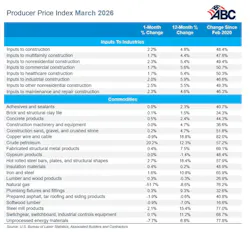
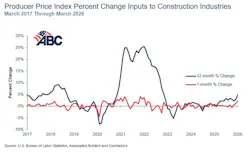
- Construction input prices are up 4.8% compared to last year, marking the largest annual increase since January 2023
- March saw a 2.2% month-over-month rise in construction input prices, with nonresidential inputs increasing by 2.3%
- Energy prices showed mixed trends: natural gas and unprocessed energy declined, but crude petroleum surged by 20.2%
- Contractors remain optimistic about profit margins despite rising costs

WASHINGTON, DC — Overall construction input prices are 4.8% higher than at this time last year, and nonresidential construction input prices are 5.4% higher.
Month-over-month, construction input prices increased 2.2% in March according to Bureau of Labor Statistics’ Producer Price Index data released April 14. Nonresidential construction input prices increased 2.3% for the month.
Prices decreased in two of the three energy subcategories last month. Natural gas and unprocessed energy materials prices were down 51.7% and 7.7%, respectively, while crude petroleum prices were up a significant 20.2% in March.
“Construction materials prices surged in March and are now up 4.8% year over year, the largest annual increase since January 2023,” said ABC Chief Economist Anirban Basu. “This monthly increase is due to higher oil prices, a direct result of conflict in Iran, and it remains to be seen how that seismic geopolitical event will affect other input prices in the months to come.
“The rapid increase in diesel prices since late February, for instance, will raise shipping costs, putting upward pressure on virtually every construction material. Contractors remained confident that their profit margins would continue to grow, according to the March reading of the ABC Construction Confidence Index, and it will be interesting to see if that optimism persists in the event of prolonged oil market strife.”
Visit abc.org/economics for the Construction Backlog Indicator and Construction Confidence Index, plus analysis of spending, employment, job openings and the Producer Price Index.