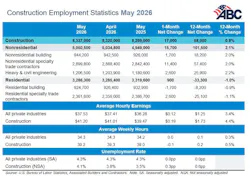
Construction Adds 17,000 Jobs in May
Key Highlights
- The construction industry added 17,000 jobs in May 2026, with significant growth in nonresidential sector
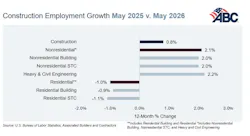
- Year-over-year, construction employment increased by 68,000 jobs, up 0.8%
- The broader labor market showed surprising strength, with stable unemployment at 4.3%
- High borrowing costs and tight lending standards may slow future construction activity.
WASHINGTON, DC — The US Bureau of Labor Statistics has released its employment data for May of 2026. On net, the construction industry added 17,000 jobs in May. Year-over-year, industry employment has increased by 68,000 jobs, up 0.8%.
Nonresidential construction employment increased by 15,700 positions, with gains in all three subcategories.
Nonresidential specialty trades added the most jobs, increasing by 11,400 positions. Heavy and civil engineering added 2,600 jobs, while nonresidential building added 1,700 jobs in May.
The construction unemployment rate was 4.1% in May. Unemployment across all industries remained unchanged at 4.3% and is also unchanged from a year ago.
Broader Labor Market Shows 'Surprising Strength'
“The construction industry posted healthy job gains in May, especially within the nonresidential segment,” said Associated Builders and Contractors Chief Economist Anirban Basu. “The industry’s recent job growth, driven by insatiable demand for data centers and ongoing growth in publicly funded construction activity, appears set to continue over the coming months. Contractors also remain broadly optimistic about growing their staffing levels over the next six months, according to ABC’s Construction Confidence Index.
“The bigger story in the May jobs report, however, is the surprising strength of the broader labor market,” said Basu. “Economywide job growth has accelerated, rising to a pace not seen since the early months of 2024, and the unemployment rate held steady at a perfectly acceptable 4.3% in May. This is an indication of broader economic resilience, albeit one that is not necessarily encouraging for the construction industry.
“The combination of a stable labor market and resurgent inflation suggests that rate hikes are now more likely than rate cuts over the next several quarters, and high borrowing costs and tight lending standards will continue to weigh on construction activity during the months ahead,” said Basu.