Power, Tariffs and Labor are Reshaping the Nonresidential Construction Market
Key Highlights
- Power is the new project constraint: Grid interconnection delays are increasingly determining when data center projects can move forward, even as AI infrastructure investment accelerates
- A two-speed construction market: Data center spending is rising while manufacturing construction has fallen about 22% year over year, making sector-specific conditions increasingly important to contractors
- Watch material and labor costs: Tariffs could put additional pressure on bids as existing contracts roll off, while the industry still needs roughly 349,000 additional workers in 2026
BOSTON, MA — Power availability, tariff-driven material costs and labor shortages are emerging as the more durable forces shaping US nonresidential construction, according to the Q3 2026 edition of Today’s Construction Economy from MOCA Systems, Inc. (MSI).
The report examines market conditions beyond the industry's current focus on jobsite robotics, reshoring and data center project pauses. MSI's research points instead to three structural factors affecting construction costs, project schedules and labor availability.
Among the most significant pressures are electric-grid capacity constraints delaying data center development, tariff-driven materials inflation beginning to influence construction bids, and labor shortages exacerbated by immigration enforcement in some regions.
Power Access Becomes Critical Path for Data Centers
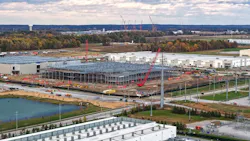
Data center construction spending is up approximately 23% year over year, but access to electrical power is increasingly determining when new projects can move forward.
MSI's analysis finds that electric-grid interconnection delays are throttling new data center development even as investment in AI infrastructure accelerates. For owners planning data center and industrial projects, the availability and timing of grid capacity can now have a greater effect on schedules than traditional project milestones.
"While many headlines this quarter have focused on the importance of jobsite robots, reshoring, and data-center pauses, our data point to something else," said Brandon Michalski, Chief Economist at MSI. "The impact story is structural: power access, tariff-driven materials costs, and selectively constrained labor. For owners planning a data center or industrial project, the grid interconnection queue, not permitting or, construction, is now the critical path.”
Construction Growth Varies Sharply by Sector
The overall construction market is increasingly operating at two different speeds.
Manufacturing construction has declined approximately 22% year over year as CHIPS Act and IIJA-related stimulus fades, while data center construction continues to expand rapidly.
That divergence means national construction averages can obscure the conditions facing individual contractors and project teams. Data centers, infrastructure projects and other megaprojects are accounting for a growing share of construction activity, while other segments face weaker demand.
For mechanical contractors and other trades working across multiple market sectors, the shift creates substantially different bidding and scheduling conditions depending on project type.
Tariffs Put Pressure on Material Pricing
Tariff-driven materials inflation is beginning to work its way into construction costs, although contractors have not yet fully passed higher material costs into bids.
MSI expects that pressure to become more visible as existing contracts are completed and contractors price new work. The report identifies the timing gap between rising input costs and bid pricing as the most immediate cost risk.
For contractors, that gap can create margin pressure when material costs increase after a project has been priced or contracted. Owners and project teams may also see greater variability in bids as contractors adjust pricing to account for changing material costs.
Labor Shortages Persist Despite Higher Unemployment
Labor availability remains a structural challenge even as construction unemployment shows signs of a moderating job market.
Construction unemployment increased to 4.1% in May, compared with 3.5% a year earlier. At the same time, the industry is projected to need approximately 349,000 additional workers in 2026.
MSI's report also identifies immigration enforcement as an additional factor affecting labor availability in some regions.
For contractors, the combination of uneven project demand and persistent skilled-labor shortages means workforce availability can remain a constraint even when broader employment indicators suggest some cooling in the labor market.
Structural Factors Outweigh Construction Headlines
MSI's Q3 analysis suggests that contractors, owners and developers should look beyond individual technology or project headlines when evaluating construction conditions.
Jobsite robotics, reshoring and data center pauses may influence specific projects or segments, but the report identifies grid capacity, material costs and labor availability as the factors most likely to continue influencing project economics and schedules.
For data center and industrial projects in particular, understanding power availability early in the planning process may be increasingly important to determining when a project can actually advance from development to construction.
To view the report visit mocasystems.com/reports/todays-construction-economy-report-q3-2026.