Weighted Check Valves Leave Water with ‘One Way Out’
Key Highlights
- Check valves allow water to flow in only one direction, preventing backflow and ensuring system efficiency
- Historically, weighted check valves used weights to prevent gravity circulation in coal boilers, evolving to spring-loaded designs in modern systems
- Incorrect installation of check valves can lead to unintended flow paths, reducing system performance and efficiency
I had been feeling the blues, a combination of flu-like symptoms, couple of weird jobs at work, and the decrease of sunlight as we approach the beginning of winter. Nothing like southern blues by the Allman Brothers to get out of a funk. They didn’t write this song, but gave it their edge, singing about being trapped with only one way to get out, like the upstairs window.
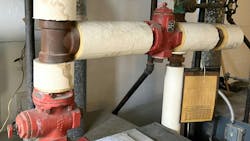
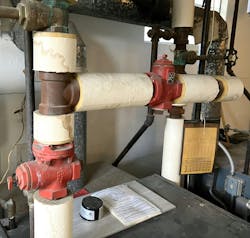
The red valves in the photo are like that. They only let flow to get out and none to get in because they are a version of a check valve, which means water flow can only go through the valve in one direction. This model has a weighted check that has to have a pump circulating water in that zone to lift the check and allow the water to flow.
Today we use that idea but we use a spring instead of a weight to keep the check in place to prevent gravity circulation. That was the original concept for the weighted check valve, preventing gravity circulation from an automatic fired hot water boiler. It was part of the conversion from coal fired boilers to gas/oil fired boilers.
Early Advanced
These old coal boilers were connected to the huge pipes that circulated by gravity. When the contractor promised the homeowner that the newfangled thermostat on the wall would keep the house at one temperature, there had to be something to prevent all the heat in the high mass cast iron boiler from circulating by gravity out of the boiler after the thermostat ended the call for heat. The pump would stop, the check would fall into place, and circulation to the radiators would stop. This was advanced stuff back then.
Times changed and the function of the weighted check valve evolved to prevent backwards circulation in the newfangled multiple zoned hot water systems using zone pumps. Without the check valves, when one zone pump starts circulating, water can also flow backwards through zones that are off. This doesn’t happen with zone valve systems, because of the positive closure of the zone valves.
Misapplication
The application of the valves shown in the photo is completely wrong. I hate to be so judgmental, but this guy completely misunderstood what they do. This is a two equal size boiler system, providing heat to an apartment building. The boilers are staged on and off to improve system efficiency. I forget what I was there for, but these valves caught my eye.
The valve on the left is connected to the supply tapping of the boiler, so water can only go up through the valve. The valve on the right is connected to a tee in the return line of the boiler. As orientated, the water can only flow from right to left through the valve, or from the return to the tee above the other valve, which is the supply.
Their flows combine to be the total flow through that side of the pair of boilers, and in this case half the total flow of the system. How much flow goes through each valve cannot be controlled, only which direction the flow will be. The valves are situated to make me believe that the installing contractor thought they could control flow. In fact, if we had the piping diagram that the contractor was using to run the piping, there would be valves in those locations marked “flow control or balancing valves”.
Full disclosure, for many years I sold this exact brand of valves. The manufacturer gave them the trade name, “Flo-Control” valves. Yes, they did control flow, but only its direction. A few times in my career I did catch contractors trying to buy these valves to control the amount of flow. I guess I didn’t get a chance to talk to this guy.
Working Theory
The reason he piped in this bypass between the supply and return is unknown, but I suspect it would have been to prevent flue gas condensation. The theory for this is mixing the hot water from the boiler with the cooler return water from the system to keep the temperature up in the cast iron or copper fin heat exchanger of on/off boilers.
If it’s a high efficiency condensing boiler, than we don’t want to do this because the cooler the return water, the higher the efficiency. In this case, the check valve would prevent the water from going that way. With the way this is set up, the cooler water from the return mixes with the hot water from the boiler, reducing the temperature of the water going to the radiation. Not sure why you want to heat the water up and then cool it down.
Just Don’t Know
Another feature of this valve is the ability to manually lift the weighted check valve off the set. This was important back in the day when electricity and pumps weren’t so reliable. If you didn’t have a pump to lift the check, you could turn that little knob on the top and it would pull up the check and hold it open so gravity flow could happen.
If you notice in the photo, the left valve is manually open and the right valve is working automatically. A lot of the times in the field, I find the valve in the manual position. I guess a lot of people misunderstand the function and operation of the weighted check valve. As the song says at the end, “Oh baby, I just don’t know.”
About the Author
Patrick Linhardt
Patrick Linhardt is a forty-one-year veteran of the wholesale side of the hydronic industry who has been designing and troubleshooting steam and hot water heating systems, pumps and controls on an almost daily basis. An educator and author, he is currently Hydronic Manager at the Corken Steel Products Co.