Burnham CEO Chris Drew on Tariffs, Rulemaking and the Future of Hydronics
Key Highlights
- Tariffs didn’t disrupt supply — they reset the cost floor. Drew explains why domestic steel prices rose alongside foreign tariffs and why manufacturers across the board issued increases
- Price increases are sticky. Even if tariffs are overturned, inventory economics and distributor relationships make rollbacks highly unlikely
- Venting is the real battleground. As efficiency standards tighten, manufacturers are pushing the physical limits of combustion physics
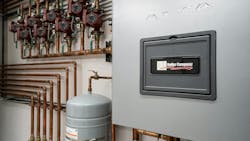
Burnham Holdings, Inc., is the parent company of such well-known brands as Burnham Commercial Boilers, U.S. Boiler Company, New Yorker Boiler and Bryan Boilers. The industry-leading manufacturer of interior comfort solutions prides itself on a diverse offering of products to suit nearly any application.
Burnham’s product footprint stretches across various geographic regions, energy sources, and market sectors to meet the changing needs of an evolving world that demands highly efficient thermal technology.
Chris Drew has been CEO at Burnham Holdings since 2023, having previously served the company as President and COO, EVP – Marketing & Strategy, and in other positions on the board of Burnham and as President of US Boiler. He has also served as chairman of AHRI.
Drew took the time to speak to CONTRACTOR about the state of the industry, Burnham’s unique value proposition, and what the future of hydronics might hold for the company and its customers.
CONTRACTOR: Thanks so much for speaking with us today. The big story for manufacturers in 2025 was tariffs, and their effects on the supply chain. Do you think those disruptions are behind us, and what sort of after-effects will we see moving forward in 2026?
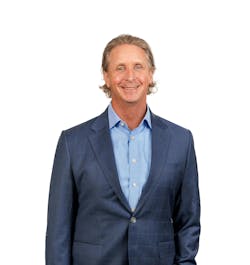
Chris Drew: To address the first part of your question, no we've not had supply disruptions due to tariffs. It really has not been an issue for us. And for context, we buy from China, we buy from Mexico, we buy a little bit from Canada, we buy from various European countries. We have somewhat of a global supply base for portions of our product portfolio. Other parts are domestic. Broadly speaking, tariffs have not created an issue with getting material.
The second part of your question is a bit more difficult. Tariffs have absolutely impacted costs for pretty much every product we make, so it’s more about navigating the fluid nature of the current economic environment.
Like most manufacturers, we’ve faced a shifting cost structure due to various tariff impacts on commodities and components. Our approach has been to act as responsible stewards of our supply chain—working diligently to mute and mitigate these costs wherever possible.
I'll give you two examples. For instance, Section 232 tariffs, which are basically the steel tariffs. We mainly buy domestic steel. So, the administration puts a tariff on foreign steel, the US manufacturers say, great, now I can just raise my price to whatever floor they just set—which is what they did. So, our cost on steel went up.
That's a domestic example. An international example is fans. The price of some fans, which we buy from Germany, basically went up overnight because of the tariffs. Did we delay raising the price as long as we could? Sure, we did. But at some point, you use up that inventory, and the replacement cost of that inventory is now much higher, and we have to take a price increase to offset that.
While there have been instances where adjustments were a necessity to maintain our standards of quality and service, we’ve worked to build these into our cost structure appropriately. For the most part, our wholesalers have been incredibly understanding of these global pressures.
The biggest issue isn't even the actual increase in prices; it’s managing the uncertainty. With the legal landscape surrounding tariffs evolving, we are closely tracking these developments to understand how they impact pricing throughout the supply chain. It requires a mature, disciplined approach to decision-making to ensure we remain a stable partner for our wholesalers and contractors.
Let me digress a little bit here, because in all the talk about tariffs, what’s not being talked about are other rising prices: natural gas, electricity, water, even insurance—frankly, the insurance market is bananas—which have all had dramatic increases over the last several years.
Making sure our customers and partners understand these changing dynamics has been an important challenge. I think we’ve done a good job—frankly, Bryan [O’Toole, VP of Business Development] and his team have done a fantastic job of managing our customer base and our wholesaler relationships through these shifts.
CONTRACTOR: New efficiency standards are on their way from the federal government, some in 2026, some in 2029. I know Burnham is prepared for the changes, but what sort of challenges have your design and production teams been facing?
Chris Drew: Serial rulemaking has been a significant challenge for the entire industry and just about every product appliance category—not just in boilers. but across furnaces, air conditioners, heat pumps, pumps and fans. It is an expensive, time-consuming process that often provides minimal benefit to the consumer.
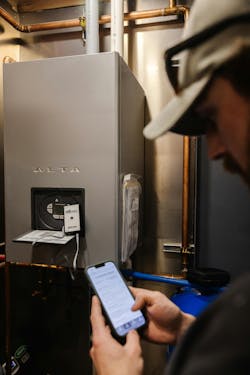
The challenge in the boiler space, and this is regardless of residential or commercial, is venting. And that's the biggest issue that I would say exists for any sort of fired appliance: how do you vent it safely, keep the customers safe, and make sure the product works.
This is an emotional topic for us because safety and reliability are our highest priorities. We want our products to work whenever they are called upon, especially in the dead of winter. Current rulemaking is pushing the boundaries of physics making it more difficult to meet these important safety and performance constraints. We have essentially reached the upper limit of what is technically possible for atmospherically vented equipment.
We can produce oil, gas, electric, or heat pump solutions—you name it, we can do it. But let the consumer make the choice, don't prescriptively force them into a selection that may be inappropriate for their specific situation.
Keep in mind, the boiler business on the residential side is 99% replacement. Sometimes you're dealing with structures that are 100 years old. You're dealing with all kinds of housing stock that was built in the ‘20s, ‘30s, ‘40s, ‘50s. It is so hard to go into those structures and tell a homeowner, oh, you can't use this type of boiler anymore, it's been outlawed, you have to go use something completely different that your house was never designed to use, and then pay for the retrofit to make it work.
It's so bad for the consumer. Why are you making somebody go do that? If they want a condensing boiler, fine, if it works in their space, fine, go put it in. (We sell thousands and they work great.) But if you live in an older home, a row home, and you have no easy access to vent out the side wall, what then?
We focus on developing and designing products that are not only safe, but work in the conditions that they're asked to work in, which are not all the same. If you look at our installation manuals, we spend 10 pages on how to connect the water, the natural gas, and the electric, but we spend 50 pages on how to vent the unit safely. Like I said, the last thing we want to do is compromise safety.
About the Author
Steve Spaulding
Editor-in-Chief - CONTRACTOR
Steve Spaulding is Editor-in-Chief for CONTRACTOR Magazine. He has been with the magazine since 1996, and has contributed to Radiant Living, NATE Magazine, and other Endeavor Media properties. You can find him on LinkedIn at www.linkedin.com/in/stevespaulding.