The Refrigerant-Free Future is Hydronic: How Solid-State Cooling Will Reshuffle the Trades
Key Highlights
- Solid-state cooling uses materials like Nitinol that change temperature under stress, eliminating the need for refrigerants and compressors
- The technology shifts the focus from refrigerant-based systems to hydronics, requiring skills in flow dynamics, pumps, and piping rather than traditional refrigeration techniques
- Regulatory pressures and environmental concerns will accelerate the adoption of solid-state cooling, reducing reliance on controlled substances and refrigerant management
- This technological convergence blurs the lines between plumbing and HVAC trades, emphasizing a holistic understanding of water, heat transfer, and mechanical systems
“Refrigerant fatigue” will be experienced if you are more than 10 years into the HVAC game.
First, we were told to stop using R-22 to save the ozone layer. So we repurposed, retrained, and reequipped with new recovery machines for R-410A. Now with the AIM Act and GWP (Global Warming Potential) phase-downs on the horizon, we are preparing to go again. Moving to A2L “mildly flammable” refrigerants (such as R-32 and R-454B). Teaching a new generation of technicians that will learn how to work with gases that are technically ignitable. This would require new sensors, new safety protocols, and a little more concern.
We are always chasing the “perfect” chemical. But what if that chemical doesn‘t exist?
Is it possible that the next step forward in cooling technology actually isn‘t an entirely new gas, instead, it is just a solid piece of metal? And—even more so for the readers of CONTRACTOR—what if this new technology is totally water-driven in moving energy?
Solid-State Cooling is being born. It will do away with the compressor and the refrigerant and replace them with a stress field and a metal alloy. It promises to do away with the F-gas age. But its biggest disruption won‘t be the reduction in emissions. The disruption will be to the trade licenses in your wallet. This is because when cooling becomes solid-state, air conditioning becomes a hydronic application.
Cooling with Metal, Not Gas
Understanding what is about to happen to the trade, however, requires a glance at the physics of “caloric cooling."
We have used and relied on vapor compression for a century. We compress a gas (refrigerant) making it hot and turn it into a liquid, then expand it to make it cold. We‘ve used it successfully but it is mechanical, noisy, and prone to leaking greenhouse gases.
Solid-state cooling works on a different principle: materials change temperature when they are stressed.
As cited in the Non-Vapor Compression HVAC Technologies Report by the US Department of Energy (DOE), “caloric” technologies are now the front-runners to replace the common AC. The two main types are Elastocaloric and Magnetocaloric cooling.
The most promising form for residential use is elastocaloric cooling. It is similar to a rubber band. When you stretch a rubber band very quickly and press your lips against it, you will feel a few degrees of heat. However, when you relax the rubber band, it will feel cool. This is the “latent heat” of the material being released and absorbed.
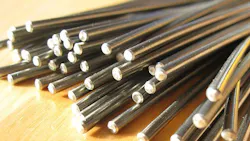
Researchers at the University of Maryland‘s A. James Clark School of Engineering have taken this concept out of the lecture halls and into the research labs. In their paper, named Elastocaloric Cooling System Developed by Clark School Faculty Featured in Science, they explain how they were using bundles of Nitinol (Nickel-Titanium) tubes. This “shape-memory alloy", as they call it, heats when they are mechanically flattened or pulled and cools when the stress is taken away.
It doesn’t have a compressor. It doesn’t have freon. There are only a handful of metal tubes bending and recovering, quietly generating a Delta-T.
Why This is a Plumbing Story
This is the pivot point that every mechanical contractor should understand.
In a normal split system, the refrigerant is the conveyance. The compressor forces the gas through copper linesets directly to the evaporator coil in the plenum. The gas is the mover.
But in a solid-state system, the "refrigerant" is a solid block of Nitinol or a magnetocaloric wheel that can‘t move. You can’t pipe a solid metal bar into an attic air handler.
So, how do you get the cooling from the unit to the house? Well, you have to pump a fluid through it.
As per a report from the Leibniz Center for Sustainability (LZN) and Fraunhofer, who are working on the concept of "environmentally friendly and efficient cooling,” the architecture in these systems utilizes a heat transfer fluid (usually water or a glycol mix). The fluid is circulated through the caloric structure to remove the cold (or heat), transporting it to a hydronic coil or radiant ceiling.
The above implies that the “air conditioner" of 2035 is in fact a Hydronic Chiller.
The consequences for the trades are mind-blowing. If this system is a solid-state core, a circulator pump, an expansion tank, and PEX or copper distribution lines, then the “AC Tech” isn‘t the HVAC expert anymore. The Hydronic Pro is.
What is the skill set necessary to install these systems? It’s not superheat and subcooling; it‘s flow dynamics, head pressure, and pump curves. The barrier that existed between “Wet” (Boilers/Plumbing) and “Dry” (HVAC/Scorched Air) is effectively eliminated.
Why Now?
There is always a certain cynicism about new technology from contractors, and there is good reason (many of us recall the pioneering days of condensing boilers). But this time, the call for solid-state cooling is not just coming from eager scientists; it is coming from the regulatory precipice we are heading for.
The clock is steadily being wound tighter for HFCs with the AIM Act and the European F-Gas regulations. As supplies dwindle, prices for conventional refrigerants will shoot up, while the cost of compliance (leak detection, reclamation) eats into margins.
And at the same time, we‘ve exhausted the efficiency ceiling of vapor compression. We are pulling every ounce of blood we can from a stone, trying to squeeze an extra 1 SEER point out of R-410A.
In comparison, solid-state tech is just emerging. The University of Maryland researchers mentioned in their press release, The Future of Cool: Additive Manufacturing and Ni-Ti Metal Bolster Cooling Technology, that with 3D printing (additive manufacturing), they are now able to create a “nanostructured” Nitinol bundle. These structures possess a surface area and fatigue strength needed to be significant in today’s commercial market, with efficiency potentials that far exceed the theoretical limits of vapor compression.
The 'License-Free' Future
For the business owner, this switch provides an avenue of retreat from the bureaucratic nightmare that is the EPA.
1. Farewell, EPA 608: If you are using no refrigerant, then you have no need for section 608 certification. It is no longer a controlled substance you are managing; it is just water and metal. The candidate pool just got a lot bigger. You need a skilled plumber, someone who understands flow, not a master refrigeration mechanic, to service these units.
2. Safety and Liability: We are currently moving to A2L refrigerants. Though “mildly flammable,” they still need to come with the right training, mitigation sensors, and insurance adjustments. Solid-state cooling is inert. A bunch of Nitinol tubes have no chance of leaking, exploding, or suffocating residents. It generates a “zero-liability” cooling loop that is extremely attractive to institutional and multi-family customers.
3. The New Maintenance Model: Current maintenance for HVAC is reactive: “The unit is low on charge; I need to find the leak.” It is a challenging game of hide-and-seek. The solid-state future fosters a maintenance model depending on Hydronic Health. The revenue will be derived from fluid analysis (pH and inhibitor inspection), pump seal checks, and strainer cleanings. This ensures regular, predictable maintenance that can be part of a recommended service plan, “the bread and butter” of the boiler business.
The Great Convergence
For decades, we’ve been broken up by trade. The Plumbers handled the water. The HVAC Techs handled the gas. We shared the same mechanical rooms but spoke different languages.
Solid-state cooling is the Great Convergence. It takes the "Dry" side over to the "Wet" side.
The Department of Energy‘s Non-Vapor Compression report is explicit: the future of decarbonized cooling isn’t in better chemicals; it‘s in better physics. As these units begin to migrate from the lab to the supply house in the coming decade, the contractors who really understand pumps, pipes, and fluids will be the ones with the market share.
The refrigerant gauge is destined for the museum. The future of cool is running water. Are you ready to pipe it?
To learn more about solid-state cooling, read:
Barocal Raises $10 Million to Advance Refrigerant-Free Cooling Technology
About the Author
Steven Onofua
Steven Onofua is a mechanical and construction trades technical writer and researcher. With an emphasis on the intersection of building codes, public safety, and business strategy, he turns complex regulatory data into actionable insights for contractors. For over three years he has been covering the industrial sector. Contact him at [email protected].