Beyond Adoption: How Contractors Are Navigating Electrification’s New Realities
Key Highlights
- Regional differences in policies and incentives create a patchwork landscape, requiring contractors to navigate varying eligibility and funding criteria
- Evolving energy markets and rising electricity prices complicate the economic analysis of electrified systems, demanding broader evaluations beyond equipment costs
- Flexibility in system design, such as dual-fuel solutions, allows homeowners to balance reliability, comfort, and operational efficiency amid changing conditions
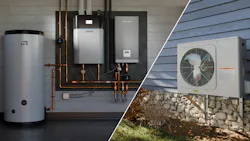
For years, conversations around electrification have centered on technology. Manufacturers introduced new products, policymakers developed incentive programsand contractors began exploring how heat pumps and other electrified solutions fit into their businesses.
Today, the conversation is changing. Electrification is no longer a future concept. In fact, the International Energy Agency reports that heat pump sales have surpassed gas furnace sales in the United States in each year since 2022, highlighting how quickly electrified heating solutions have moved into the mainstream. The question facing contractors is no longer whether electrification is coming. It is how to help customers navigate a complex landscape of regulations, incentives, utility costs and evolving expectations.
One of the biggest misconceptions about electrification is that it is progressing at the same pace everywhere. According to data from the Northeast Energy Efficiency Partnerships, states such as Massachusetts, Vermont and New York have consistently ranked among the nation's leaders in heat pump adoption and incentive program activity, creating a markedly different operating environment for contractors than in many other regions of the country. While some markets are seeing aggressive policy initiatives and robust incentive programs, others are taking a more measured approach.
As a result, contractors are being asked to make sense of a transition that is anything but uniform.
A Patchwork of Policies and Incentives
Some of the strongest electrification activity continues to occur in states where air-to-water heat pump incentives and electrification programs have accelerated adoption. Programs like Massachusetts’ Mass Save program and New York’s NYSERDA initiatives are driving significant uptake, offering rebates that can offset thousands of dollars in upfront costs. At the same time, federal, state and local policies continue to evolve, creating new opportunities and challenges.
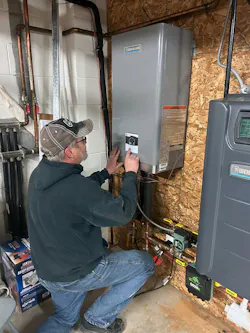
Even where incentives exist, the process is rarely straightforward. Many contractors operate in markets where rebate availability depends on a specific utility, municipality or regional program. Eligibility requirements, documentation standards and incentive amounts can vary from one jurisdiction to the next. In some cases, homeowners may qualify for substantial rebates, such as utility programs that require specific cold-climate heat pump certifications or integrated controls. In others, nearly identical projects may receive little or no financial support due to differences in utility territories or program funding cycles.
This growing complexity is changing the role contractors play in the sales process. Increasingly, homeowners are looking to HVAC professionals not only for installation expertise, but also for guidance on incentive eligibility, operating costs and long-term value.
The Economics Conversation is Getting Harder
While regulations and incentives often dominate discussions around electrification, operating economics are becoming just as important.
Homeowners are asking more sophisticated questions than they were just a few years ago. They want to know how much a system will cost to operate, how utility rates may affect long-term savings and whether projected benefits justify the investment, but those questions are becoming difficult to answer because energy markets continue to evolve.
According to the US Energy Information Administration, residential electricity prices increased more than 10% year over year in early 2026. Similarly, fuel prices continue to fluctuate based on regional infrastructure, weather patterns and global market conditions. These shifts can significantly influence the economics of electrified heating systems depending on where a homeowner lives and which fuel sources are available.
The industry needs to move beyond viewing electrification as a simple equipment decision. Successful projects require a broader evaluation of local utility rates, climate conditions, building characteristics and homeowner priorities, meaning the right answer in one market may not be the right answer in another.
Why Flexibility Matters
Too often, electrification is discussed as an “either-or” proposition. In practice, many homeowners are looking for solutions that allow them to integrate new technologies while maintaining reliability, comfort and operational flexibility, and dual-fuel systems are one example of this approach.
Contractors working with legacy hydronic systems often face different considerations than those working in forced-air environments. Existing equipment, distribution infrastructure, building characteristics and homeowner expectations can all influence the path forward.
By pairing an air-to-water heat pump with a boiler, these systems position the heat pump as the primary heating source while relying on the boiler to provide supplemental support when conditions demand additional capacity.
Solutions such as the Weil-McLain ECO® HP air-to-water heat pump reflect this trend toward adaptable system design. Rather than forcing contractors into a one-size-fits-all solution, this technology allows heating systems to be tailored to the unique needs of each application.
Flexibility will become more important as the industry continues to navigate changing regulations, new technologies and shifting energy economics.
Supporting Contractors Through the Transition
As the market evolves, manufacturers have an important role to play in helping contractors succeed, and that support begins with education and training.
Many technologies shaping the future of hydronics have existed for years, but the way they are being applied, integrated and optimized continues to change, so contractors need access to guidance that helps shorten the learning curve and build confidence.
Manufacturers can provide tools that simplify decision-making. Project-specific operating cost estimates, fuel usage projections and performance calculations can help contractors have more informed conversations with homeowners while setting realistic expectations about system performance.
One of the most effective ways to build confidence is to provide contractors with better information. When homeowners can clearly see how utility rates, weather conditions, heating loads and equipment performance affect a project's economics, it becomes easier to make informed decisions and avoid surprises after installation.
Additionally, manufacturers have an opportunity to help contractors navigate the complex rebate landscape by providing documentation support, educational resources and guidance on program requirements.
The future of electrification will not be defined by a single technology or policy pathway. It will be shaped by contractors who can evaluate each project's unique requirements and help homeowners make informed decisions based on performance, economics and long-term comfort goals.
About the Author
Konrad Witek
Konrad Witek is a Senior Product Manager, Climate Conscious at Weil‑McLain. With more than 15 years of experience in HVAC sales, training, and distribution, Konrad shares how ECO® HP and ECO® Hybrid solutions help contractors design effective systems and deliver reliable, flexible hydronic heating.