Residential Hydronic Floor Heating Market Projected to Reach $5.6 Billion by 2035
Key Highlights
- Residential hydronic floor heating is projected to nearly double in market value, reaching $5.6 billion by 2035
- New home construction remains the largest opportunity, accounting for nearly 90% of today's market
- Heat pumps, smart controls and energy-efficiency incentives continue accelerating adoption of radiant floor heating systems

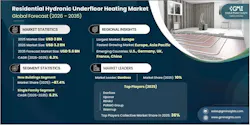
The global residential hydronic underfloor heating market is expected to grow from $3 billion in 2025 to $5.6 billion by 2035, reflecting a compound annual growth rate (CAGR) of 6.3%, according to a new report from Global Market Insights.
Researchers attribute the market's growth to rising demand for energy-efficient residential heating systems that deliver consistent comfort while reducing energy consumption. Hydronic radiant floor heating continues to gain traction as homeowners seek alternatives to traditional forced-air and baseboard heating systems.
Energy Efficiency and Sustainability Drive Demand
The report identifies several factors supporting market growth, including increasing demand for low-carbon heating technologies, government incentives for energy-efficient construction, expanding residential development, and growing integration with heat pumps and renewable energy systems.
Additional drivers include:
- Rising adoption of smart home temperature controls
- Growing awareness of long-term energy savings
- Increased renovation and retrofit activity
- Urbanization and residential infrastructure modernization
- Consumer preference for improved indoor comfort
Government policies encouraging energy-efficient construction and reducing building-related carbon emissions are also creating favorable conditions for hydronic heating installations in both new construction and renovation projects.
Hydronic Systems Offer Comfort and Efficiency
Hydronic radiant floor heating systems circulate heated water through tubing installed beneath finished flooring, providing even heat distribution without visible radiators or forced-air ductwork.
According to the report, homeowners increasingly view these systems as an attractive option because they deliver improved thermal comfort while operating more efficiently than many conventional heating methods. Continued advances in installation techniques, controls and energy management systems are also making hydronic systems more appealing for residential applications.
New Construction Leads Market Growth
New residential construction represented 87.4% of the market in 2025 and is projected to grow at a 6.4% CAGR through 2035.
The report cites rapid residential development, smart city initiatives and increasing adoption of sustainable building practices as key drivers. Builders are incorporating hydronic underfloor heating into new homes because of its energy-saving performance and compatibility with modern home designs.
Government building-efficiency regulations and environmental policies are also encouraging broader adoption of advanced heating technologies in new residential projects.
Single-Family Homes Dominate Residential Installations
Single-family housing accounted for $1.8 billion in market value during 2025 and is expected to grow at a 6.2% CAGR through 2035.
Researchers say homeowners continue investing in heating systems that improve comfort while lowering long-term operating costs. Growth in green building programs, stricter carbon reduction goals and increasing use of smart home energy management systems are further supporting adoption within the single-family housing market.
US Remains Largest Regional Market
The United States accounted for 78.4% of the North American residential hydronic underfloor heating market in 2025, generating approximately $582.2 million in revenue.
The report credits continued market expansion to growing consumer awareness of energy-efficient heating technologies, increased residential remodeling activity and greater demand for sustainable housing solutions. Government initiatives promoting improved building performance and lower carbon emissions are also contributing to market growth.
Manufacturers Focus on Innovation and Heat Pump Integration
The report identifies major manufacturers serving the residential hydronic underfloor heating market, including Uponor, Danfoss, Watts, REHAU, Warmboard, Schluter-Systems, Roth, Wunda Group, PURMO Group, TECE, ProWarm, Nu-Heat, PIPELIFE and others.
Manufacturers continue investing in product innovation, smart controls, sustainability initiatives and expanded distribution partnerships while developing systems designed to integrate more effectively with heat pumps, renewable energy sources and modern residential construction.
To learn more visit www.gminsights.com.