From Grit to Grid: How AI, Wearables, and the Next Generation Are Changing the Trades
Key Highlights
- Field workers are adopting smart glasses, voice-activated software, and connected devices to improve safety, accuracy, and efficiency
- The perception of trades careers is shifting positively among younger generations, driven by visibility through social media and the appeal of high-tech work environments
- Unified digital tools like live updates and digital checklists are standardizing communication across industries, enhancing responsiveness and professionalism
There was a time when a day in the trades meant grease-stained hands, a clipboard on the dash, and tools clanging in the back of a truck. You knew the work was real because you could feel it in your shoulders at the end of the day. Everything was manual. Paper logs. Face-to-face updates. Phone calls to confirm jobs and reroute schedules.
Then spreadsheets came. Then apps. Now something else is unfolding. Look around and you'll see it. Smart glasses. Voice-activated software. Workflows that move faster than a clipboard ever could.
What’s happening in the trades isn’t a small shift. It’s a full-blown transition into a new kind of workday. And it’s coming at a moment when the industry faces a generational changing of the guard, a growing labor gap, and a demand for faster, safer, smarter service.
Tech That Works Like the People Who Use It
The idea of tech in the field used to feel like science fiction. Now it’s showing up on job sites, in vans, on rooftops. Not just as shiny gear, but as practical tools that solve real problems.
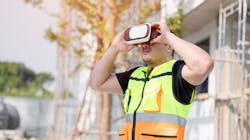
Think of a roofing crew working in the July sun. One worker climbs a ladder with smart glasses on, voice-logging damage while staying hands-free. Down below, a dispatcher gets an automatic update. No texts. No photos to send later. It’s live. It’s done.
Or imagine a delivery driver getting a safety alert before they even realize there’s a hazard ahead. A utility technician running a diagnostics check without flipping through a manual. These aren’t prototypes. These are real scenarios, playing out more often with every passing month.
The New Toolbelt
Field workers today aren’t just using tools, they're wearing them.
The hard hat hasn’t disappeared, but now it might have a camera built in. The wrench is still there, but it might sit next to a tablet in the truck. The new toolbelt includes devices that speak back, remember everything, and reduce the chance of human error.
In industries where every second counts and every detail matters, this isn’t about looking cool. It’s about getting it right the first time. Fewer return visits. Less miscommunication. Safer days on the job.
And while the hardware is starting to catch up with the demands of field work, it’s the software and AI behind it that’s doing the heavy lifting. A wearable is just another gadget until it connects with a platform that knows the work, understands the risks, and serves the right info at the right time.
According to TSIA, frontline teams are being equipped with connected, intelligent tools as organizations reframe field service as a strategic differentiator rather than just a cost center.
A New Generation is Watching
Walk into a high school today and ask a senior what they think of a career in the trades. You might be surprised by the answer. For years, blue-collar jobs carried a stigma. They were seen as dirty, back-breaking, and somehow less desirable than office work. That perception is changing, and fast.
Young people aren’t just open to working in the trades, they're excited about it. And technology plays a big part in that shift. This is a generation raised on smart everything. To them, doing a job without digital tools is like driving without GPS. It’s not impossible, but it feels like going in blind.
Influencers on YouTube and TikTok are also helping rewrite the narrative. Electricians. HVAC techs. Plumbers. They’re showing what a day in the life really looks like, and they’re doing it with pride. With humor. With creativity. That visibility matters. It makes these careers feel real and reachable.
Everyone’s Speaking the Same Language
Here’s what’s interesting. It doesn’t matter if you're in roofing, plumbing, logistics, or food service. The tools being used in the field are starting to look the same.
Live updates. Digital checklists. Hands-free communication. Voice-to-text reporting. It’s no longer about what industry you're in, but how quickly you can move and how clearly you can communicate.
What’s unfolding looks a lot like the early 2000s, when office workers started using CRMs and cloud tools. That wave of white-collar tech made businesses more responsive and more organized. Now, the same kind of transformation is happening out in the field.
And the customer is noticing. They want real-time updates. They want to know exactly what was done, when, and by whom. They want transparency and professionalism, and the companies that deliver it through tech are pulling ahead.
There’s Still Work to Do
Of course, not everything is seamless. The hardware market is still a bit messy. One crew might be using voice-enabled glasses while another is trying to log notes on a dusty phone screen. Devices don’t always talk to each other. And sometimes the tech gets in the way instead of clearing the path.
But progress is coming. The more companies lean into systems that work across platforms and device types, the easier it will be to roll out new workflows and get teams up to speed.
The real winners will be the ones who adopt early and adapt quickly. Because the benefits are already clear. Fewer safety incidents. Faster response times. Stronger documentation. Happier customers. The math is starting to speak for itself.
More Human, Not Less
There’s a fear that always comes up when AI enters the conversation. People worry that machines will take over. That the hands-on work will disappear. But here’s the truth: this isn’t about replacing anyone. It’s about removing friction and risk so the work gets better, not less human.
A technician who doesn’t have to stop and log notes can focus on the task at hand. A dispatcher with real-time visibility can support the team in the field more effectively. A crew member with voice-activated safety alerts can get home in one piece.
The future of the trades isn’t about fewer people. It’s about people who are more empowered, better equipped, and more connected to each other and the job they’re doing.
The Story is Still Being Written
The trades have always been built on grit, skill, and showing up when it counts. That hasn’t changed. But the tools are changing. The rhythm of the workday is shifting. What was once physical and analog is becoming digital and dynamic.
The clipboard has had its time. So has the spreadsheet. What comes next is a story of real people doing hard work, with smarter tools in their hands, on their heads, and in their pockets.
And the best part? This is just the beginning.
About the Author
Anand Subbaraj
Anand Subbaraj is the CEO of Zuper, provider of a leading intelligent workforce management platform for service businesses such as residential & commercial cleaning, HVAC, electrical, Internet Service Providers, plumbing, and landscaping. Anand is a seasoned product leader with over 17 years of experience in technology and 13 years at Microsoft, specializing in the areas of Big Data, BI & Analytics, Cloud Computing, Digital Transformation, and SaaS.