Today’s Rosie the Riveter - How Women Are Powering the Next Generation of Skilled Trades
Key Highlights
- Women are increasingly pursuing careers in skilled trades, offering practical alternatives to traditional four-year degrees
- Trade programs often cost less and allow students to start earning sooner, reducing student debt and increasing lifetime earnings
- Expanding access to technical education and apprenticeships is crucial for addressing labor shortages and promoting economic mobility
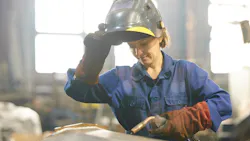
During World War II, Rosie the Riveter became a symbol of women stepping into industrial jobs to power America’s workforce during a moment of national need.
Today, we face a different challenge and, once again, women are answering the call. The US is confronting a critical shortage of skilled trades professionals in welding, HVAC, electrical work and other fields critical to our infrastructure. At the same time, rising student debt and uncertain job outcomes are forcing families to rethink the traditional four-year degree as the only viable path to economic security.
The typical federal student loan borrower now carries nearly $37,000 in debt, a burden that can affect major life decisions for decades like delaying home ownership, having a family or saving for retirement.
For many, debt load—in addition to lower employment opportunities in some college fields—has opened the door for many to explore alternative options. Skilled trades offer a compelling alternative including shorter training programs, lower education costs and faster entry into stable, well-paying jobs, or even the opportunity to start a business.
Earn While You Learn
Training programs like those offered at Tulsa Welding Schools (Refrigeration School Inc.) typically cost a fraction of a four-year degree. Many trade school graduates finish with around $10,000 or less in student loans, significantly lower than the typical bachelor’s degree recipient.
Even better, students often begin earning while they train through apprenticeships or employment partnerships, and these opportunities allow them to enter the workforce many years sooner than their peers following traditional college pathways. An earlier start on a career path can result in increased lifetime earnings, particularly when combined with lower debt.
Skilled trade careers from welding structural steel to servicing commercial HVAC systems are mostly AI-proof, and can offer competitive wages that rival or exceed those of many college-educated professions. While earnings vary by market and experience, trades traditionally provide a strong starting salary and a clear trajectory for long-term income growth.
Investing in The Future
At the school level, we’re seeing more women pursue these pathways, not out of necessity, but opportunity. They include veterans transitioning to civilian life, single parents seeking economic mobility, and young adults opting for practical, hands-on careers with immediate benefits. Their stories are about investments in their families and their futures.
Today’s women are entering the trades to build careers that provide financial independence without the heavy debt that often comes with traditional college. While the trades have historically been male dominated, the reality has evolved. Employers tell us that ideal job performance comes down to skill, safety, and reliability which transcend gender. Women bring diverse perspectives and valuable aptitudes to job sites and shop floors, thus strengthening teams and enhancing outcomes.
Expanding access to the skilled trades is not about replacing one workforce with another. It is about widening the talent pipeline at a time of unprecedented demand. Women represent one of the largest untapped pools of talent in these industries and encouraging their work benefits businesses and communities in every sector.
Challenging Assumptions
During Women’s History Month, we celebrate the “Rosies” who helped build America’s industrial force and highlight today’s Rosies who are helping power communities and strengthen the economy. Our modern Rosie may be welding structural steel for a space craft, installing heating and cooling systems on a college campus or troubleshooting electrical systems in a data center—not because they must, but because they can.
If we are serious about solving America’s skilled labor shortage and expanding economic mobility, we must challenge outdated assumptions about alternative career pathways—this means investing in career and technical education, strengthening employer-training, reskilling or upskilling partnerships, and ensuring young women see the trades as a rewarding and financially smart option.
Rosie showed us what was possible during a moment of national need. Today’s women in the skilled trades are proving that opportunity, not necessity, will define the next generation’s future.
About the Author
Tamekia Morris.
Tamekia Morris is Campus President at the Tulsa Welding School, Atlanta Metro.