What AI Can–and Can’t–Do for Jobsite Safety
Key Highlights
- AI is best suited for analyzing large volumes of safety observations, photos, and videos to identify common hazards and patterns
- It enhances safety by providing early warnings and organizing documentation, but cannot replace inspections or professional judgment
- AI reduces administrative tasks, freeing safety managers to focus on-site coaching, proactive interventions, and addressing root causes
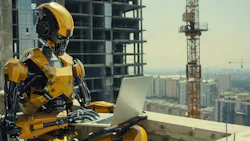
Artificial Intelligence is no longer a concept in construction–it’s showing up on jobsites, inside software platforms and in daily conversations between owners, safety managers and operations leaders.
That increased visibility has created curiosity and concern about whether AI can actually improve jobsite safety or does it only add another system to manage? AI has an important role to play, but a misunderstanding of its capabilities—or its limitations—can lead to wasted investment and missed opportunities to improve safety outcomes.
The Real Problem AI Is Being Asked to Solve
Most safety teams are not struggling with knowledge or commitment—they struggle with scale.
Today’s safety managers are often responsible for overseeing multiple active jobsites while managing increasing documentation and observation requirements. They are doing this under shorter timelines, amid a shortage of experienced workers, and with heightened regulatory scrutiny and oversight.
The core challenge is not identifying hazards—it’s maintaining consistent visibility between inspections. That gap—between formal safety checks—is where risk quietly accumulates.
What AI Can Do Well Today
When used responsibly, AI is well-suited for tasks that involve volume, repetition, and pattern recognition.
On modern job sites, this means AI can review large numbers of observations, such as photos or videos, to identify common hazards. It can help repeat issues that appear across multiple locations or crews, flag conditions that warrant human review, and automatically organize safety documentation that would otherwise require manual effort.
In this way, AI functions best as an early-warning and awareness system. It does not replace inspections or professional judgment. Instead, it helps ensure fewer issues slip through the cracks between site visits.
What AI Can and Can’t (or Shouldn’t) Do
Where expectations often go wrong is assuming AI can make decisions that should never be outsourced on a jobsite.
AI cannot understand situational context on its own, account for trade sequencing or temporary conditions, or determine how a hazard should be addressed in real time. It cannot make disciplinary or enforcement decisions, replace conversations between supervisors and crews, or build trust or safety culture.
Any system that makes those claims should raise serious red flags. Safety is fundamentally human. Technology should support that responsibility—not override it.
Why This Matters for Safety Managers
One of the most persistent fears surrounding AI is job displacement, particularly among safety professionals. In practice, the opposite is occurring. AI does not remove the need for safety managers. Instead, it reduces the administrative burden that often prevents them from being as effective as they could be.
By cutting down the time spent reviewing documentation, sorting photos, compiling reports, and chasing paperwork, safety leaders regain time for higher-value work. That time is better spent being present on jobsites, coaching crews, intervening earlier, and addressing root causes before incidents occur.
This shift is not about replacement. It’s about leverage.
Trust Depends on How AI Is Used
Technology alone does not improve safety—implementation does. When AI is deployed transparently and positioned as a support tool, crews experience fewer surprises, safety conversations happen earlier, and issues are addressed before they escalate into incidents.
When the same technology is positioned as surveillance or enforcement, trust quickly erodes. The difference is not technical. It’s leadership.
Avoiding the Hype
Contractors evaluating AI tools should focus on practical, grounded questions.
- Does the technology reduce manual work rather than add to it?
- Does it improve visibility between inspections?
- Does it help safety teams act sooner?
- And does it keep human judgment firmly in control?
If the answers are unclear, the value likely is as well.
The Bottom Line
AI is not a silver bullet for jobsite safety—and it shouldn’t be treated as one. What it can be is a force multiplier for safety professionals who are already doing the hard work of protecting crews under increasingly complex conditions. Used thoughtfully, AI does not replace safety leadership. It finally gives it the scale modern jobsites demand.
About the Author
Annie Eser
Annie Eser is a regulatory and technology executive with more than 20 years of experience across compliance, public policy, and data-driven systems. Her work has focused on helping organizations navigate complex regulatory requirements and implement technology solutions that improve governance, risk visibility, and operational decision-making.