Building for the Next Century: Skilled Welders Are Critical to Infrastructure Growth
Key Highlights
- The construction industry needs approximately 320,500 additional welders by 2029 due to retirements and increased demand
- Skilled welders are crucial for ensuring accuracy, quality, and resilience in modern construction projects, especially those involving renovation and adaptive reuse
- Workforce shortages lead to project delays, increased costs, and compromised structural integrity, impacting overall industry performance
- Investing in apprenticeship programs and trade education is essential for developing a sustainable, skilled welding workforce
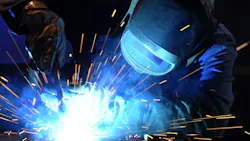
Developing and implementing solutions for the next century of construction and infrastructure growth will require focused attention on the lack of skilled welders and the limitations this creates in executing projects.
The incredible pace of construction nationwide spans upgrading existing structures that are at the end of their functional lifespan and need to be repaired or rebuilt, as well as new projects. As construction becomes increasingly sophisticated, there is a heightened need for accuracy, quality and longevity of every project.
Resilience is now a top priority for the construction community. Buildings must be able to survive extreme weather events, earthquakes and years of wear and tear. Even renovation projects, including adaptive reuse, are becoming even more complex than building new structures This complexity is tied to working with pre-existing elements that may be compromised by age, water damage and other factors. To accomplish these tasks successfully, trained professional welders are required.
Although the demand for skilled personnel in the construction industry is growing, the number of young people entering into the trade is declining and a large number of veteran welders are retiring. Developing trained personnel is time-consuming and requires a certain amount of education and onboarding. As a result, there is currently more work than there are qualified individuals to complete it, leading to immediate challenges with the industry's operating capabilities.
The Workforce Gap Is a Business Problem
Workforce shortages represent an impediment to business operations. While often referred to as a labor issue, they are in fact a business constraint affecting the entire construction and infrastructure continuum.
Estimates show that today there are approximately 771,000 welders employed within the US and approximately 320,500 additional welders will be needed by 2029. Based on this estimate, this equates to an average annual requirement of approximately 80,000 welder positions due primarily to retirement and continued demand for services.
These statistics illustrate that while there is a structural shortfall in welder personnel, it is not merely a question of quantity but also scalability. With regard to business operations, companies may have substantial backlogs of work and numerous opportunities for production. Yet, without adequate quantities of skilled welders, their ability to execute production plans is severely restricted. Ultimately, businesses' growth will be hindered not by market demand but by workforce supply.
The current state of labor shortages resulting from insufficient skilled welders has had numerous impacts on contractors and project teams involved in various aspects of construction.
Where Design Meets Reality
The transition from design concept to actual performance in the field is dependent upon the way fabrication and installation are conducted. Fabrication must be precise and installation must comply with specifications. All connections must be made according to specified standards.
At this point, the design concept transitions to actual performance. This is precisely where proper welding connects individual components into a single functioning unit and where improper welding can introduce variability which can degrade structural performance.
From both an economic/operational aspect, this is where risk manifests itself. Inconsistent performance at connections results in re-work, schedule slips/delays and increased costs. Moreover, it can negatively affect the reliability of the asset over its service life.
Impact on Projects and the Industry
Due to difficulties in securing skilled labor resources, project schedules become increasingly uncertain. Delays occur frequently as schedules begin slipping, sequencing becomes more problematic and coordination issues escalate.
Cost escalation arises when skilled labor resources become scarce and contractors are forced to pay higher wage rates for available labor resources. In addition to paying premium wages for overtime hours worked and paying associated costs related to delays. Contractors competing against other contractors for limited labor resources experience margin erosion due to increased competition for limited labor supplies.
The quality of finished products suffers when contractors' personnel levels decrease or when contractors feel compelled to expedite completion of assigned tasks. Errors and omissions arise when workers are performing at diminished levels of competence. Failed inspections and product performance failures ensue subsequent to rework efforts undertaken by contractors to correct identified deficiencies.
Perhaps most tragically, the departure of experienced welders constitutes a significant loss of institutional knowledge among contractors' personnel. Experienced craftsmen possess valuable judgments regarding methods/procedures, efficient production techniques and problem solving abilities that cannot easily be duplicated by novice personnel seeking to gain equivalent experiences/knowledge bases.
Collectively, these conditions serve to complicate project delivery, enhance project management costs and heighten risk factors associated with project outcomes.
Investing in Workforce Is Investing in Infrastructure
Developing a skilled workforce constitutes a strategic investment in developing future infrastructure assets. Construction companies must begin viewing training as an essential component of their business strategy rather than an optionality/secondary consideration.
An effective method for providing training to apprentice employees is through apprenticeships. Apprenticeship programs enable employees/trainees to receive hands-on training while simultaneously participating in ongoing projects. Employees receive direct exposure to actual construction techniques as well as gain direct experience with actual construction materials.
Trade schools and other training organizations are effective vehicles for expanding access and visibility relative to careers involving welding. Many potential workers are unaware that careers involving welding exist or offer good job prospects. Clearly defined career paths are equally important for attracting workers into and retaining them in the skill area of welding.
The return-on-investment associated with investing in training employees is quantifiable and demonstrable. A stronger workforce leads to improved productivity, higher-quality work and more predictable project delivery. It reduces rework, minimizes delays and enhances overall performance. In other words, investing in people directly improves project outcomes.
As the industry looks ahead, the ability to meet future demand will depend not only on what we design but on who is available to build it.
About the Author
George Skaros
George Skaros is a seasoned financial executive with deep experience in private equity, strategic planning and operational transformation. As Chief Financial Officer at Extreme Steel, he partners closely with leadership to drive growth, improve profitability and guide long-term financial strategy. With a global background across industries and a strong track record in M&A, turnarounds and fundraising, George brings both hands-on leadership and high-level financial expertise.