Build an Emergency Call Dispatch Playbook Before You Need It
Key Highlights
- Implement a written dispatch playbook to standardize how after-hours calls are triaged, routed, and closed, reducing improvisation and errors
- Classify calls into emergency, urgent, or routine based on three key questions to ensure appropriate response times and resource allocation
- Set clear internal standards for callback times and on-site arrival to manage customer expectations and improve service consistency
- Prepare trucks with a curated emergency stock list based on historical data to avoid delays and maintain customer confidence during midnight repairs
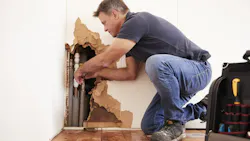
The call that tests a plumbing company never comes at a convenient hour. It comes at 2:00 AM, from a homeowner standing ankle-deep in water, who found your number on a phone screen and has already left a voicemail with your competitor. What happens in the next 90 seconds—who answers, what they ask, how fast a truck rolls—is rarely about plumbing skill. It is about process. And most shops are improvising it.
A dispatch playbook is the written, repeatable system that decides how after-hours and emergency calls get triaged, routed and closed. Larger service companies have run on these for years. Smaller and mid-size shops often run on a single owner's cell phone and a good memory. That works until it doesn't—until two emergencies land in the same hour, or the owner is out of town, or the one technician who knows how the shop handles things gives notice.
After a hard freeze a few winters back produced more burst-pipe calls in a single weekend than we would normally see in a month, we stopped improvising and wrote ours down. Here is the framework we built. Adapt the thresholds to your market, but the structure holds.
Triage Before You Dispatch
Not every after-hours call is an emergency, and treating them all as one burns out technicians and erodes margin. The first job of whoever answers—a person or a well-built call script—is to classify the call into one of three buckets.
A true emergency is active water or sewage that threatens property or safety: a burst supply line, a failed water heater leaking into a finished space, a sewage backup, or no water to an occupied home. These roll a truck now.
An urgent-but-stable call is a problem that will worsen but is currently contained: a slow leak the customer has shut off at the valve, a single clogged drain in a two-bath home, or a water heater that quit but isn't leaking. These get a first-thing-tomorrow slot and clear instructions on what to do overnight.
A routine call that simply came in late gets booked into the normal schedule. The classification itself is the product. We ask every caller the same three questions: Is water actively running right now? Can you reach the main shutoff? Is anyone in the home without water or a working toilet? The answers sort the call in under a minute.
Write the Decision Tree, Then Staff It
Once a call is classified, the playbook should answer the next question without a phone tree of its own: who goes? Build a written on-call rotation at least four weeks out so technicians can plan their lives, and pair every primary with a named backup. The point of writing it down is that nobody has to call the owner to find out who is up.
Set the dispatch standard in plain numbers your team can hit. We commit to a callback within 30 minutes and a truck on site within two hours anywhere in our core service area. Publishing an internal standard does two things: it gives the customer a real answer instead of "as soon as we can," and it gives you something to measure against later.
Set Expectations on the Call, Not at the Door
The fastest way to turn an emergency into a complaint is a surprise. Before the truck rolls, the customer should know three things: roughly when the technician will arrive, that after-hours work carries a flat dispatch fee separate from the repair, and what they can do right now to limit damage. Walking a panicked caller through finding the main shutoff is often the single most valuable 30 seconds of the entire job. It stops the flooding, and it tells the customer you are already helping.
Avoid the temptation to quote a firm repair price sight unseen. Quote the visit, not the fix.
Stock the Truck for the Calls You Actually Get
An emergency playbook is only as good as the parts on the van at midnight. Pull a year of after-hours tickets and look at what the jobs actually required, not what you assume they require.
For us, the recurring emergency list runs heavily to supply stops, push-fit and compression couplings in common sizes, wax rings, a water heater drain-and-cap kit, and a cartridge assortment for the two or three faucet brands that dominate our area.
Build a dedicated emergency stock list from that data and assign one person to restock it weekly. A technician who has to detour to a 24-hour hardware store at 1:00 AM has already lost the customer's confidence.
Debrief Every Emergency
The last step is the one almost everyone skips. Spend five minutes the next morning on every emergency call: Did the truck have the part? Did we hit our on-site standard? Did the customer understand the pricing before we arrived?
Log the answers in your field-service software so they don't live only in someone's head. Over a quarter, the pattern in those notes will tell you exactly where the playbook is leaking—and emergencies, by definition, are where small process gaps cost the most.
The Payoff
None of this requires new technology or a bigger crew. It requires writing down the decisions you are already making under pressure, so they get made the same good way every time—by whoever happens to pick up the phone. The shops that win the 2:00 AM call are not the ones with the most heroic technicians. They are the ones who decided in daylight and on paper, exactly what would happen before the water started rising.
About the Author
Frank Gaborik
Frank Gaborik is the owner of Danika Plumbing & Electric, a licensed, family-owned company providing 24-hour emergency plumbing service in Everett, Washington and the surrounding north Seattle area. He has spent more than two decades on residential and commercial service calls across Snohomish County, with a focus on emergency repair, water heaters and drain work.