Your Van is Covered, Your Tools May Not Be
Key Highlights
- Insurance coverage varies significantly between vehicle, attached equipment, and loose tools, requiring careful policy review to understand what is protected and under what conditions
- Theft or loss of tools can lead to multiple claims across different policy sections, each with its own documentation, deductibles, and valuation methods, complicating recovery efforts
- Proactive communication with insurance professionals about specific tools, locations, and scenarios helps ensure appropriate coverage and minimizes surprises after a loss
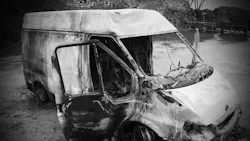
It is six-fifteen on a Monday morning. A service tech arrives at the driveway with a cup of coffee in his right hand and keys in his left. There is no van parked in the driveway.
No van means no press tool, drain camera, pipe threader, cordless kit and the collection of hand tools that have accumulated over the years. The service tech finishes writing up the police report and immediately goes into "damage control" mode. He has to cancel appointments and buy emergency replacements. And he is going to have to hire a new tech to fill in the rest of the day.
The owner feels somewhat better; at least they're insured. But the problem is, insurance companies have ways of looking at vehicles (and trucks) that can result in surprises. Insurance companies typically look at vehicles as being made up of three main categories: (1) vehicle(s), (2) attached permanent equipment, (3) company-owned loose tools. Each category may be eligible for different types of coverage, with varying levels of coverage and possibly different methods of valuing each item. Additionally, deductibles vary greatly between categories.
Vans are Not Toolboxes (On Paper)
Commercial auto insurance provides liability protection for a contractor against claims made by third parties for damages or personal injuries arising out of the operation of a covered vehicle. Additionally, commercial auto insurance provides physical damage protection for a covered vehicle if it is involved in a collision or stolen.
However, commercial auto insurance typically does not provide physical damage protection for loose tools placed in a covered vehicle. Permanent attached equipment such as shelving units, ladder racks, etc., may also be treated separately depending upon how the policy is written and how the vehicle is valued.
General Liability insurance typically only protects against claims made by third parties alleging that the contractor caused injury to people or property. General Liability insurance does not provide protection for the contractor's own stolen property. Business Property insurance may protect equipment stored at a listed shop or facility and may provide some limited protection for equipment taken off premises. The limits of coverage and territories provided by a business property policy are usually much less than those needed by mobile trade businesses.
Equipment that moves between shops, vans, and jobsites are usually protected under contractors' equipment coverage, sometimes referred to as an “equipment floater” or “inland marine coverage.” Despite its name, inland marine is land-based coverage for movable property. Depending on the type of inland marine form purchased, it may protect owned equipment and possibly rented or leased equipment. Employee-owned equipment may also be included under certain inland marine forms. As stated previously, "dependent on the type of form purchased" is a large statement. No label substitutes for reviewing the policy.
Materials taken away from a job site may fall under an installation floater with its own set of limitations and requirements.
One Loss Can Equal Two Claims
In addition to providing protection for a stolen vehicle and attached equipment through the commercial auto coverage section of a policy, some inland marine forms provide additional protection for loose equipment in a stolen vehicle. In this instance, the same incident could produce two separate claims: one through the commercial auto section and one through the inland marine section. Separate adjusters will likely ask for separate documentation and potentially separate deductibles will need to be applied to each claim. The vehicle and the inspection camera may be valued using different methodologies.
For example, if the vehicle is recovered but the racks containing the cameras are empty, the commercial auto section of the policy may pay for damage to the vehicle doors and ignition system while the inland marine section pays for the lost cameras.
There is another loss associated with a theft that may not clearly fit into either claim file: the cost of replacing equipment rentals, transporting specialty tools to a job site or lost revenue due to a crew sitting idle. While some policies provide coverage for these expenses through rental reimbursement, expediting expense, business income or extra expense provisions, each type of coverage has its own distinct triggers, limits, waiting periods and deductibles. These costs are not automatically covered simply because the stolen property is covered.
The take-home message here is not that insurance failed us; it is that "theft of the van" represents an event, not just one bucket of coverage.
Where Was the Tool Last Night?
Mobile coverage still has boundaries.
Take an inspection camera as an example. Over the course of a week this camera traveled from one location to another in various vehicles. On Monday it was at a shop. On Tuesday it rode in a van. On Wednesday it was driven by an employee to a jobsite located in another state. On Thursday it was left overnight in a locked trailer at a jobsite. On Friday it was loaned to another contractor. Although nothing changed about the tool itself during this week-long journey, several coverage-related changes occurred.
Each type of form used to cover mobile property contains unique conditions and/or limits regarding property left unattended in vehicles. Some forms require proof of forced entry into the vehicle or compliance with specific security measures prior to considering claims related to lost or stolen property. Some policies have differing limits based upon individual items, employees carrying items in a van, locations where items were last seen, occurrences resulting in loss and even jobsites where items were located at the time of loss.
Employee-owned tools, equipment rented or leased from others and company-owned equipment loaned to another party can each be treated uniquely and may require separate extensions of coverage. New acquisitions may be covered on a temporary basis until reported.
Don’t just ask "are my tools covered?" Ask if they are covered where they actually travel and under what conditions they are left behind.
A Limit is Not an Appraisal
Let's assume you purchased a $15,000 tools limit several renewals back. During that time, you have acquired batteries, diagnostic equipment and specialized tools one acquisition at a time. Today your total inventory of tools is $28,000.
If all of your tools are stolen at once (or at least all tools eligible for coverage), regardless of their value, including those with higher replacement prices, your maximum recovery under the $15,000 limit will cap your recovery at $15,000 (minus any deductibles) despite the total cost to replace them totaling $28,000.
Similarly, some policies place a per-item limit on each piece of equipment that can severely reduce potential recoveries for high-value items. Consider again our example above, where an illustration states that a $4,800 inspection camera has a $2,500 unscheduled-item limit. Under this scenario, the policy would allow no more than $2,500 to be paid for this particular item, plus any deductible, as determined by the valuation methodology and deductibles found in your policy.
Valuations can further widen gaps between what you think you'll get paid and what you actually will get paid for stolen items. Most replacement-cost coverage will pay 100 percent of comparable replacement cost for items without subtracting depreciation. However, some inland marine forms will initially pay ACV (actual cash value), which includes depreciation, for some items and will not permit recovery of replacement cost until said item is repaired/replaced within an established timeframe (e.g., 60 days).
Most ACV valuations reflect depreciation, however, ACV meanings can differ depending on policy wording and state laws. A five-year-old camera can still perform 100% of its duty every day but can be considered used goods when valued by your insurance carrier.
Some inland marine forms also contain coinsurance provisions. Coinsurance provisions will reduce payments made toward partial loss claims if the amount of insurance coverage maintained falls short of an established percentage of the total value of the insured property. All policies have coinsurance clauses, however, not all policies require a minimum amount of insurance to be carried on all classes of property to avoid coinsurance penalties. Declarations page limits are not guaranteed payouts.
Review Your Coverage Before Losses Occur
Insurance reviews should start with how you operate your business, not by policy names.
Pull tools from one representative van and calculate what it will cost to replace those tools today. Be sure to include batteries, meters, tablet computers, cameras, accessories and hand tools that came with no memory-keeping invoices (i.e., tools that came with no bill). Do this process for each van you own.
Document/record each owner, manufacturer/model, serial number, date of purchase and comparable replacement cost today. Document photographs and bills/purchase receipts for each tool elsewhere than inside your vans (e.g., home office file cabinet).
After purchasing significant amounts of tools, update your inventory prior to renewal.
Next give your real-world situation to your insurance agent/professional:
"If my van (with all loose tools inside it) disappears tonight what covers my van? What covers my tools? How much will I really be able to recover after accounting for depreciatio? For limits? Deductibles?"
Ask your insurance professional essentially the same question concerning:
Tools left unattended at jobsites overnight
- Employee tool chests
- Rented cameras
- Newly-purchased generators (which have never been scheduled)
And ask what help will assist you in paying to rent substitute equipment and keeping your crew working. Also request that your answers reference the actual policy forms/endorsements, since policy language dictates what happens with your claim.
Your objective isn't necessarily to insure every screwdriver. It's to determine what losses you can afford to self-insure versus what losses you'd prefer to have insured. You cannot make that determination when using an arbitrary old round-number limit as your inventory.
A service van is so much more than just transportation for your workforce. It is a mobile workshop; mobile storage facility; and mobile source of revenue. Unfortunately, one of the worst times to discover how an insurance policy divides those functions into separate entities is when your parking space is empty.
About the Author
John Salangsang
Truscott Co-Founder John Salangsang worked as an AI Engineer in Silicon Valley before becoming a licensed Insurance Agent. Salangsang now works with small business owners to help them better understand how their business will be impacted by insurance decisions and technologies. The focus of his writing is to provide clarity to small business owners around their use of technology when it comes to their business' decision-making process in regards to insurance and other business-related topics. Learn more at truscott.insure.