Private Equity Can’t Grow What it Buys
Key Highlights
- Funds are under pressure to exit investments within a set timeframe, often leading to holding assets too long and pushing them into continuation vehicles
- The shift from a short-term, buy-and-flip mentality to long-term, organic growth requires patience, discipline, and a focus on internal business development
- Operational value creation, such as workforce development and process improvements, is now the primary driver of returns in the sector
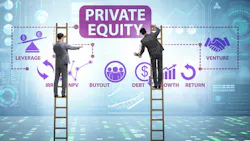
The trades have become one of the most actively consolidated corners of the economy. Capital has poured into home services for the better part of a decade, and the pace has not let up. Sector deal activity this year has been dominated by add-on acquisitions, with well-capitalized buyers leaning on inorganic growth to build scale in a fragmented market, according to Capstone Partners. From the outside it looks like a sector on fire. From the inside, it looks like something quieter and more revealing. A lot of these platforms keep buying because buying is the only way they know how to grow.
I have spent more than two decades running home services businesses, and I have watched this pattern up close. The headline is that private equity is winning the trades. The part nobody says out loud is that a great many of these platforms cannot grow the companies they already own. So they buy more.
The Tailwind That Went Away
For most of the last cycle, growth was almost beside the point. When money was close to free, you did not have to build much to make a deal work. Bain & Company found that rising valuation multiples alone powered more than half of all buyout returns during that era. McKinsey put a finer point on it. For deals done between 2010 and 2022, cheap leverage and multiple expansion accounted for 59% of returns. Actually growing the underlying business was a minor character in that story. Deloitte estimates that real organic growth represented only a fraction of what drove returns in those years.
I lived inside that logic. When money is cheap, people make decisions they would never make with their own cash on the line. I have sat in rooms where we bought companies we had no business buying, at prices that only worked because credit was almost free and we had capital we were paid to place. That holds up right until it does not.
Twelve is the New Five
The tailwind is gone. Borrowing costs are higher, leverage is lower, and purchase prices have stayed near records. Bain describes the shift as “12 is the new 5.” A deal that used to need about 5% annual EBITDA growth to hit its target now needs something closer to 10 to 12%. In plain terms, the return has to come from the business itself. McKinsey now argues that operational value creation is the primary source of returns going forward, and that the job has changed from holding an asset to actually running it.
This is the moment that separates capital that can build from capital that can only buy. Improving a business is slow, unglamorous work. It is training, hiring foremen who were taught how to lead, tightening how the work gets scheduled and sold, and earning back a customer who was thinking about leaving. None of that shows up on a spreadsheet next quarter. So when a platform cannot make the existing shops grow, the reflex is to add another shop, and another, because acquisition creates the appearance of momentum without the harder work underneath.
The Clock is the Problem
There is a structural reason for the reflex. Funds run on a clock. The capital comes with a return-it-by date, holding periods at exit have drifted toward seven years, and buyout funds are sitting on roughly $3.8 trillion of value they have not yet turned into cash. When the clock is running and the assets are not growing on their own, the pressure is to keep the machine moving. Buy, integrate on paper, prepare for the next sale. Deloitte notes that many assets are now simply held too long and pushed into continuation vehicles, which is another way of saying the model has run out of easy ways to create value and is buying time.
A countdown changes behavior. It rewards what looks good at the finish line over what compounds across a decade. That is the quiet cost of a short horizon, and it is exactly where an operator-led, permanent-capital approach has room to do something different.
What Growing From Within Looks Like
I learned the alternative the slow way. Years ago I helped grow a residential HVAC and plumbing company from about $2.8 million in revenue to $30 million. We did not out-acquire anyone. We grew the workforce by more than 400% almost entirely from within, moving apprentices into technician roles, technicians into leads, and leads into managers. The revenue followed the people. Later, as chief people officer at a national services platform, I watched the same discipline hold as the business scaled from around $300 million to more than $1.4 billion across dozens of brands. The brands that kept and developed their people grew. The ones that treated acquisition as the whole strategy stalled the moment the buying slowed.
Organic growth is the only kind that compounds. It is harder to start and far harder to copy, which is precisely why it lasts. Buying more can make a portfolio bigger. It cannot make the businesses inside it better, and eventually the difference shows.
I am not against private equity. I will raise private capital myself, and real discipline about returns is a good thing. But the best returns come when capital serves the business rather than the other way around. The platforms that come out of this cycle strongest will not be the ones that bought the most. They will be the ones that finally learned how to grow what they already own.
Jamie Gerdsen is founder and CEO of G5 Ventures, an operator-led firm focused on building enduring home services businesses. He previously served as President and CEO of Apollo Heating, Cooling and Plumbing.