Building AI Infrastructure: Water, Cooling and Construction for Ongoing Expansion
Key Highlights
- AI data center growth depends heavily on physical infrastructure investments, including data centers, utilities, and retrofit projects, with a projected $19 trillion needed by 2040
- Cooling strategies are evolving from traditional air cooling to liquid-based and hybrid systems, impacting structural support, piping, and installation planning
- Plumbing advancements are central to efficient cooling, demanding precise pipe sizing, leak detection, and integration with building systems for reliability and maintenance
- Utilizing digital tools like CFD analysis and digital twins enhances design accuracy, enabling better coordination and adaptation to changing thermal loads in data centers.
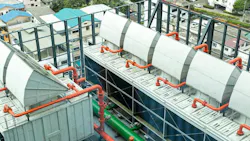
AI operates through software. However, its ongoing growth relies heavily upon structures constructed from concrete, steel, pipes and mechanical systems. According to a recent global infrastructure report, the estimated $19 trillion in investment needed for digital infrastructure (fiber, towers, satellites and data centers) by 2040 represents a major driver of the accelerated data-center development fueled by AI.
That estimate provides a significant projection of the lengthy construction process encompassing new data center facilities, expanded utilities, retrofit projects and phased additions. Additionally, as AI continues to place increased amounts of computing power within each structure, the impact of growth will affect both the quantity of construction and the combination of structural, mechanical and plumbing expertise associated with each individual project. Plumbing professionals are central in this regard since removal of heat is becoming increasingly dependent on supply, circulation, rejection and management of fluids.
Digital infrastructure depends on physical infrastructure. Supporting its continued expansion will require the right people, right tools and right ideas working from a common understanding of how the facility must perform.
A Construction Decision Regarding Cooling Strategies
Conventional air cooling remains appropriate for many data centers but as rack density and heat concentration rise, air cooling may become less effective. A recent study documents the transition toward direct liquid cooling, rear-door heat exchangers, immersion systems and hybrid designs.
Each option represents a distinct construction program. For example, direct-to-chip systems may include coolant distribution units, sealed piping, heat exchangers, additional pumping capacity and leak detection as well as methods to reject heat. Hybrid designs incorporate both air-cooled equipment along with liquid-cooled equipment to meet higher demands. However, retrofitting a facility designed using air-cooling may necessitate new piping networks, reconfigured server racks and modification to existing infrastructure.
Therefore, cooling strategy cannot be viewed merely as an equipment selection decision occurring subsequent to the building being constructed. Rather, it impacts mechanical room space, distribution route locations, structural support locations, equipment accessibility and installation sequence. For structural teams, these requirements will impact support frame configurations, pipe support locations, connection accessibility and erection planning. Incorporating detailers and fabricators into the process prior to establishing routing and equipment locations allows teams to test the design against production and field constraints while alternative solutions remain feasible.
Capacity Considerations Extend Beyond the Site Boundary
When evaluating potential water availability, consideration must be given to both the frequency of demand and total amount of water used over a year. A recent research pre-print estimates that approximately 0.5 MGD to 2.5 MGD of evaporative cooling water may be required to cool a 100 MW IT load (excluding extreme climate conditions), based on system design and operating configuration.
As peak conditions can coincide with community wide and power system strain during extremely hot weather conditions, public systems must possess sufficient treatment, storage, distribution and wastewater capabilities to manage peak withdrawal and discharge requirements. Although a site may appear viable under average consumption evaluations, practical constraints may exist due to peak withdrawal and discharge requirements.
Not All Data Centers Should Utilize the Same Cooling Methodology
Dry heat rejection reduces direct water usage. However, dry heat rejection typically requires significantly more electrical energy compared to evaporative cooling during peak summer conditions. In addition, closed loop liquid cooling circulates fluid throughout the facility but total water usage still depends on the ultimate manner in which heat is removed from the system.
Appropriate choices are based on local climate considerations, available water resources, utility capability to provide adequate water supplies, energy requirements of the facility and operational priority of the facility.
Connecting Computing Loads to Facility Performance Through Plumbing
Advancements in cooling technology bring plumbing work closer to the operational heart of the data center. Distribution units supplying facility water or alternate cooling mediums to internal loops providing cooling to individual racks and processor modules represent key aspects of advanced cooling technologies. To ensure reliable operation during rapid shifting of AI workloads and non-uniform distribution of cooling loads across the data center's processing elements, flow rates and thermal balance must be responsive without impacting reliability.
This responsibility encompasses hydraulic design through final installation. Proper pipe sizing, pressure drop characteristics, pump selection and heat exchange selection all must work together as a cohesive system. Additionally, sealing of connections and implementation of leak detection protocols are especially important since liquid cooled circuits are operated in close proximity to highly sensitive electronic equipment. Finally, secondary heat rejection equipment must be properly integrated into the building's larger mechanical and utility systems.
Installation planning for long-term maintenance should also be considered. Access provisions for maintenance personnel for items such as coolant distribution units, heat exchangers and leak detection devices are essential in order to allow for routine inspection, testing, maintenance and replacement operations. Establishing these access provisions early in the design phase will minimize the likelihood that a compact design will lead to difficulty maintaining adjoining systems once they are installed.
The Right Tools Turn Loads into Buildable Information
Volume and variability of AI cooling loads make reliance on assumption-based coordination increasingly hazardous. Research indicates that computational fluid dynamic analysis, system level modeling and building performance simulation can be utilized to assess airflow, liquid cooling distributions and waste heat recoveries. Digital twins and predictive control methodologies can assist operating systems in responding to changes in thermal loading conditions over time.
Similarly to operating models, construction models can facilitate a related purpose prior to installation. Coordinated digital environments can connect performance specifications to geometry and approved production information. Changes affecting flow characteristics, equipment placement or system layouts can be propagated downward to affected teams prior to outdated information reaching the shop floor or job sites.
Tools allow visibility into conditions, but competing priorities are not resolved solely by using tools. Experienced professional interpretation is required regarding what the model demonstrates, identification of consequences of various alternatives and implementation of selected solutions through production and installation processes.
Collaboration at Scale
Successful collaboration starts with clearly articulated technical responsibilities.
Owners and operators define computing loads, reliability criteria and anticipated expansion requirements.
Engineers defining cooling strategies translate operator requirements into temperature ranges, flow rate specifications and heat rejection strategies.
Plumbing professionals assess hydraulic performance, installation and testing requirements.
Structural teams identify equipment and piping supports, connection access and construction tolerance limitations.
Utilities determine whether peak water and wastewater capacity can be delivered.
Conceptualization emerges when multiple perspectives are collectively considered. Use of modular equipment, repeated connection details, accessible distribution pathway and staged cooling capacity will enable a facility to expand without requiring complete reconstruction of all supporting systems. This objective is not prediction of specific server configurations years in advance. Rather, to maintain viable alternatives.
Engineering, detailing, fabrication, logistics and erection operate as connected components of a single delivery system. Coordination among these functions becomes especially beneficial when designs need to rapidly move from approved requirements into production and field execution.
Adaptation to Future Needs
Computing equipment will continue to evolve more rapidly than facilities designed around it. Therefore, the long-term economic viability of an AI data center will be influenced by whether the physical aspects of its systems can adaptably accept new thermal demands without jeopardizing either reliability or constructability.
For plumbing and construction professionals, that makes cooling infrastructure a long-term capacity decision. Teams that understand the water system, coordinate with physical interfaces and preserve room for adaptation can turn growing AI demand into facilities ready to support whatever comes next.
About the Author
George Skaros
George Skaros is a seasoned financial executive with deep experience in private equity, strategic planning and operational transformation. As Chief Financial Officer at Extreme Steel, he partners closely with leadership to drive growth, improve profitability and guide long-term financial strategy. With a global background across industries and a strong track record in M&A, turnarounds and fundraising, George brings both hands-on leadership and high-level financial expertise.