How GPS Fleet Tracking Helps Plumbing and HVAC Contractors Improve Dispatch Efficiency
Key Highlights
- Combine technician location with skills, equipment, workload, and appointments to make better assignments
- Use vehicle activity and geofencing to spot delays early and adjust schedules before they affect more customers
- Consider the full fleet and sequence of jobs—not just the fastest route between two locations
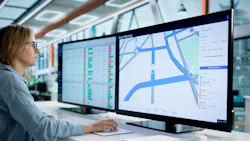
HVAC and plumbing companies may start the day off with a solid schedule and have it fall apart before lunchtime.
Repairs may take longer than expected, and emergency calls may come in out of nowhere. And on slower days, technicians may finish their jobs early, leaving unexpected gaps in the schedule. Dispatchers must continually adjust assignments to make the most of every minute and prevent bigger problems down the line.
This is where the value of GPS fleet tracking lies.
Making the right call means weighing location, technician skills, travel time, existing appointments, and the urgency of each job. GPS fleet tracking adds real-time vehicle information to that decision. When used well, this technology can help contractors respond to schedule shifts without having to rebuild the schedule from scratch multiple times daily.
Factor Location into Dispatch Decisions
When an emergency call arrives, assigning the closest technician sounds like the obvious answer. In practice, proximity is just one part of the decision.
Consider a situation where an HVAC contractor receives a no-heat call. The nearest technician may be 10 minutes away but lack the experience or equipment needed to diagnose that particular system. Another technician who is 20 minutes away may be better prepared and able to resolve the problem in one visit.
The dispatcher needs both pieces of information:
· Who is qualified
· Where those technicians currently are
Real-time vehicle tracking can help dispatchers quickly narrow down that information. Instead of calling several different technicians to figure out where they are, dispatch can identify nearby candidates and then consider their skills, inventory, workload, and upcoming appointments.
A vehicle tracker company can give contractors the location data needed to make those comparisons faster. The real value comes from combining that visibility with what dispatch already knows about each technician and the demands of the call.
Manage the Exceptions That Disrupt the Schedule
The majority of dispatch problems happen when reality deviates from the schedule.
When a two-hour installation turns into a four-hour job or a customer cancels at the last minute, those changes require prompt action. If dispatch doesn’t catch those changes right away, several appointments may be affected.
With GPS data, the office has another way to recognize when field activity doesn’t match the plan.
For example, if a technician was expected to leave a job at noon but the vehicle remains at the location at 12:30, dispatch knows the next appointment may be at risk. The office can check with the technician, move another qualified technician into the next call, or notify the customer before the scheduled arrival window passes.
When GPS data is paired with field service software, automated scheduling tools can also help reassign jobs, update routes, and fill open time slots as conditions change throughout the day.
Geofencing also aids in visibility. This technology puts a virtual boundary around a customer location and can record when a vehicle enters or leaves that area. Those records can help contractors compare scheduled time with actual field activity without requiring technicians to give near-constant updates on their location.
The goal is to identify schedule changes early, giving dispatchers more time and flexibility to respond.
Look Beyond the Fastest Route
“Route optimization” is a way to find the shortest path between point A and point B. For a service contractor, though, efficient routing is more complex. Dispatchers are managing a sequence of jobs, not a single trip.
It can be reasonable to send a technician 15 minutes out of the way for an emergency. However, sending that same technician back across the service area for the next scheduled appointment may not be the best choice. Dispatch may decide that it makes more sense to move that appointment to another technician and rework part of the route.
This is why it’s so important to see the entire fleet. That way, dispatchers can figure out where all of the technicians are located instead of optimizing for each vehicle separately.
Route history can also reveal whether service territories make sense. If technicians assigned to neighboring territories routinely cross into each other’s areas, the boundaries may no longer reflect where the work is occurring. Contractors can use those patterns to reconsider territories, technician starting points, or how appointments are grouped.
Preventing unnecessary travel helps to lower fuel consumption and truck mileage. But the bigger operational benefit may be recovering technician time that would otherwise be spent en route to another job.
Measure the Time Between Service Calls
Contractors often focus on job duration when evaluating field productivity. That isn’t the only factor that deserves attention. Time between jobs is equally important.
There may be technicians who perform efficiently at each location but still lose much of the day to issues like:
· Poor routing
· Long drives
· Unnecessary stops
· Excessive idling
Fleet data can help dispatchers and management zoom in on those issues.
Management personnel can look into travel times, route history, mileage, stops, and idle time to see if there are any patterns. One unusual day may not mean much in the grand scheme of things. The same pattern appearing repeatedly is a stronger sign that something in the operation may need a closer look.
A consistently high travel time in one territory could indicate that the service area is too large. Sizable gaps between certain appointments could point to issues with scheduling. Repeated idling may warrant a closer look at operating practices, particularly when management is concerned about rising fuel costs.
Give Customers Better Information Without Overpromising
Dispatch efficiency affects the customer experience as much as field productivity.
When the office does not know where technicians are, arrival updates often depend on calling or messaging the technician. That interrupts field work and may still leave the customer with a vague answer.
Vehicle location data can reduce the need for repeated check-ins. Dispatch can determine whether the technician is still at a previous job, traveling between jobs, or arriving at the next location on their schedule.
Contractors should still be careful with estimated arrival times. A vehicle’s location does not tell dispatch exactly when a complicated repair will be finished. Traffic and job conditions are bound to change from one moment to the next.
A better practice is to use GPS information to identify delays earlier and communicate them proactively. Telling a customer that the technician is running behind before the expected arrival is more useful than explaining the delay after the customer calls.
Improving Dispatch with Better Field Visibility
GPS fleet tracking gives plumbing and HVAC contractors a clearer view of what’s happening in the field. With better insight into technician locations, routes, delays, and vehicle activity, dispatchers can make informed adjustments throughout the day, reduce wasted time, and keep service operations running efficiently when plans inevitably change.