Preventing Costly Water Damage in Multifamily Buildings
Key Highlights
- Water damage accounts for over 70% of insurance claims in multifamily housing, emphasizing the need for effective leak management
- Resideo's Wi-Fi-enabled leak detectors and shutoff valves provide real-time alerts and automatic water isolation to prevent escalation of leaks
- Grata's integrated platform consolidates hardware, connectivity, and management, simplifying deployment and operation across multiple buildings
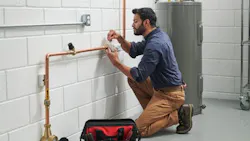
Water leaks are one of the most common and costly risks in multifamily housing. In fact, water damage was cited by more than 70% of multifamily operators as the leading cause of insurance claims in a National Multifamily Housing Council (NMHC) survey. From burst pipes and appliance failures to construction-related incidents, even a single leak can quickly escalate, impacting multiple units and driving significant repair costs. In mid- and high-rise buildings where water can travel across floors, the consequences can be especially severe.
For Grata, a building technology platform designed as an “operating system” for multifamily buildings, addressing this risk has become a critical part of delivering value to property owners and operators. By integrating solutions from Resideo, including the First Alert® L1 Wi-Fi Water Leak and Freeze Detector and First Alert® L5 Wi-Fi Water Leak Shutoff Valve, Grata helps property owners monitor for leaks in real time, respond quickly when leaks occur, and manage water systems across multiple buildings from a centralized platform.
“Water damage is one of the most disruptive and expensive issues property owners face,” said Jason Korstad, National Account Manager with Resideo. “Having visibility into leaks the moment they occur, and the ability to act on them immediately, can make a significant difference in outcomes.”
From Detection to Prevention at Scale
“Water Leaks are a constant reality in multifamily buildings,” said Troy Crema, CEO of Grata. “Most are small, but when they escalate, the impact can be significant. It’s not a question of if they’ll happen—but how quickly you can respond.”
Grata’s platform has evolved from digital access control and security into a comprehensive building operating system that now includes energy management and water risk mitigation—key areas that directly impact building performance, cost, and the resident experience.
Within a typical deployment, water leak detectors are installed in key risk areas throughout each unit, commonly around HVAC/fan coil systems, laundry areas, and kitchen plumbing, as well as in common mechanical spaces and along main water lines.
The First Alert L1 Water Leak and Freeze Detectors act as early warning systems, while L5 Water Leak Shutoff Valves – often installed on both hot and cold-water lines—enable automatic water isolation at the unit or zone level when needed.
“When a leak is detected, the system immediately alerts building staff through the platform, while also triggering an audible alarm in the unit,” said Arjun Mali, COO of Grata. “We’ve built it so that everyone who needs to know is notified right away, which allows teams to respond quickly and limit damage.”
The system is designed with practicality in mind. For example, a single L1 Water Leak and Freeze Detector with a rope sensor can cover multiple appliances, such as a sink and dishwasher, helping reduce hardware needs while expanding coverage.
At the same time, reliability is critical. Because these are Wi-Fi-enabled devices, strong internet network infrastructure is essential to ensure consistent performance. The rise of managed Wi-Fi in multifamily buildings has helped accelerate adoption by reducing the complexity of deploying and managing connected devices at scale.
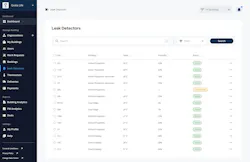
Real-World Impact: Early Detection in Action
According to Grata, early leak detection has helped prevent significant water damage in real-world situations. In one example, a leak was identified before water could cascade through as many as 15 floors of a building. In another, leak detection installed during construction helped identify issues before occupancy, even without full network connectivity, thanks to built-in audible alerts.
Recent industry data shows that water damage claims average nearly $14,000, with severe incidents costing significantly more. Across Grata’s deployments, every building equipped with water leak detection has identified at least one leak, underscoring that while leaks are inevitable, their impact can be significantly reduced.
“It’s not about preventing leaks entirely, because they’re going to happen,” said Korstad. “It’s about catching them early and stopping them from becoming catastrophic events that impact multiple units and drive significant costs.”
Beyond helping mitigate water damage, the technology can help property owners reduce water damage repair costs, respond to leaks quickly, and minimize operational disruptions.
A Shift in the Industry: From Optional to Essential
Water leak detection is quickly moving from a value-add to a standard expectation across multifamily portfolios.
“We’re seeing water leak detection devices become a necessary product,” Crema added. “Once a building experiences a major leak, they often become standard across the entire portfolio.”
Adoption has been driven in part by simplicity. Historically, water leak detection required complex planning, multiple vendors, and significant infrastructure investment. Today, Grata’s integrated approach simplifies deployment by combining hardware, installation, connectivity, and a centralized management platform into a single solution.
“Traditionally, everything has been fragmented with different vendors, different systems, and no central way to manage it,” Mali said. “What we’ve built is a single platform where everything lives together, making it simple for property managers to operate buildings efficiently.”
This shift is also being fueled by peer influence. As more operators experience costly leaks, or hear about them from others in the market, adoption is accelerating across portfolios.
Looking ahead, the combination of water leak detection, smart thermostats, and building data can enable a predictive approach to operations. Property managers can monitor trends such as temperature and humidity to identify potential HVAC issues or conditions that could lead to mold, further reducing risk, and improving maintenance response.
As Korstad noted, “The expectation is shifting. This isn’t a ‘nice-to-have’ anymore—it’s becoming part of the baseline for how modern buildings are managed.”
For multifamily operators, the takeaway is clear: while leaks themselves may be unavoidable, the extent of the resulting damage can often be reduced. By combining leak detection, automated notifications, and water shutoff capabilities, integrated solutions can help property owners identify leaks soon, respond quickly, and help minimize water damage and repair costs.