The Frost-Free Bibb Isn't the Problem: Finding the Real Cause of Freeze Failures
Key Highlights
- Incorrect stem length places the shutoff in the cold zone, leading to freeze damage; always measure the wall assembly before selecting a bibb
- Ensuring the barrel is pitched downward allows proper drainage, preventing water from freezing inside the fixture
- Many failures are simple repairs like replacing worn washers, but severe damage like cracked barrels require full replacement
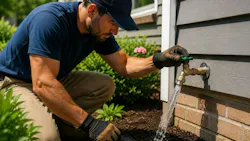
I've lost count of how many spring service calls start the same way. Someone installed a frost-free hose bibb, did everything they thought was right, and now there's water coming through a wall or a hose bibb that won't shut off clean. Their first assumption is almost always that the fixture failed. In my experience, that's rarely what actually happened.
Frost-free bibbs get treated like a set-it-and-forget-it fixture. Pick a reasonable brand, thread it in, move on to the next rough-in. Most of the time that works fine. But when a callback does show up months later, the fixture usually isn't the culprit. Something around it went wrong, and once you know where to look, the diagnosis gets a lot faster.
The Callback That Isn't What It Looks Like
The single most common thing I’ve ran into on a frozen or split hose bibb has nothing to do with the unit itself. It's a hose left attached to the spigot over the winter. A frost-free design only works because the barrel drains completely once the water's shut off inside the wall. Leave a hose connected, and that drainage gets blocked. Water sits trapped in the barrel, right where it'll freeze and crack the housing.
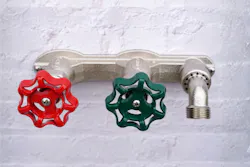
I bring this up first because it changes how you approach a service call. If a homeowner or a GC calls saying their "new" hose bibb already failed, don't assume defective parts before you check whether a hose was left on. Half the time, that's the whole story, and it saves everyone a wasted trip.
Why the Brand Behind the Fixture Still Matters
None of this means fixture quality is irrelevant. It just means quality alone won't save a bad install or a forgotten hose. Where a well-built frost-free bibb earns its keep is in the details you can't see once it's in the wall: how consistently the barrel drains, how the seals hold up after years of freeze-thaw cycling, whether the anti-siphon components actually keep working instead of gumming up after a couple seasons.
That's part of why I lean on Prier products when I'm speccing or replacing outdoor faucets. Plumbing Deals is an authorized dealer, and their frost-free hose bibbs hold up the way you'd want after a decade of Midwest winters. Good hardware won't fix a bad install, but it does mean fewer surprises when everything else is done right.
Get the Stem Length Wrong and Nothing Else Matters
If I had to pick the one installation mistake that causes the most trouble, it's an undersized stem length for the wall it's going into. The whole point of a frost-free bibb is that the actual shutoff sits behind the exterior wall, inside heated or semi-conditioned space, not out at the surface where the cold hits it directly.
That means stem length has to match the wall it's going into, not just whatever's sitting on the truck. A unit sized for a standard 2x4 wall won't cut it in a 2x6 wall or anything with brick veneer added on. Get that measurement wrong and the shutoff point ends up sitting right in the cold zone, which defeats the entire design. And it won't show up on install day. It shows up the first hard freeze, weeks or months later, long after the job's closed out.
Measure the actual wall assembly before grabbing a bibb off the shelf. Insulation thickness, siding type, whether it's a retrofit into an older wall, all of it changes what stem length you actually need.
Pitch Matters More Than People Think
Even with the right stem length, the barrel needs a slight downward pitch toward the outside. If it's dead level, or worse, pitched back toward the house, water won't fully drain after use, no matter how good the fixture is. That's an easy thing to miss on a quick rough-in, and it's worth a second look before you close up the wall.
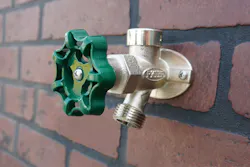
While you're at it, most codes now expect some form of backflow protection on an outdoor hose bibb, and it's usually already built into a quality frost-free unit through its anti-siphon vacuum breaker. Worth confirming it's there and functioning rather than assuming, especially on older retrofits where the existing hardware might predate that requirement.
Repair or Replace? Here's How I Decide
Once you're actually troubleshooting a failed bibb, the fix usually falls into one of two camps. A split or cracked barrel from freeze damage means the whole unit's done. No amount of tightening or resealing brings that back. But a lot of what looks like failure is actually a worn seat washer or packing, and that's a same-day repair, not a wall-opening job.
Knowing which one you're looking at before you quote the job matters, both for your time and for what you tell the customer. If you want the fuller rundown on spotting the warning signs and walking through a full swap, Plumbing Deals put together a solid guide on hose bibb replacement that's worth keeping bookmarked: plumbing-deals.com/blogs/plumbing-blog/hose-bib-replacement-guide.
The Pattern, Not the Product
Go back to those spring calls from the start, and the pattern's almost always the same once you dig into it. It's never really the bibb. It's the hose nobody disconnected in November. It's a stem two inches short. It's a barrel that never got its pitch checked before the drywall closed it up. None of it shows up on a materials list, and none of it costs extra to get right the first time.
Fixture quality still counts, and it's worth putting your name behind hardware built to hold up. But the callbacks I keep seeing didn't start with a bad part. They started with a detail skipped on a job that looked finished. Catch that during the install, and you'll do more for your callback rate than any brand switch ever will.
About the Author
Mack Partin
Mack Partin is a plumber by trade who comes from a family of tradesmen. He learned the fundamentals early on, gaining real-world experience that shaped his career. After stepping away from full-time fieldwork, Mack brought his expertise to Plumbing Deals, where he goes the extra mile to help customers find the right products, solve their plumbing problems, and avoid costly mistakes.