Plumbing Industry Generates $442 Billion in Economic Impact as Labor Shortage Grows
Key Highlights
- Two studies put the plumbing industry’s annual economic impact at more than $442 billion
- The US could face a shortage of 550,000 plumbers by 2027
- Research points to apprenticeships, vocational education and second-career pathways as key workforce solutions

McLEAN, VA — Two new studies highlight the economic contribution of the plumbing industry while warning that a growing shortage of skilled plumbers could put additional pressure on construction, maintenance and critical infrastructure.
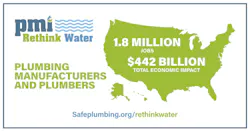
The Plumbing Manufacturers International (PMI) Plumbing Manufacturing Industry Economic Impact Study found that plumbers and plumbing manufacturers collectively generate more than $442 billion in annual economic impact, supporting nearly 1.8 million jobs, more than $142 billion in wages and almost $60 billion in tax revenue.
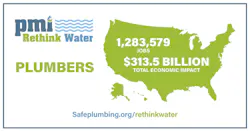
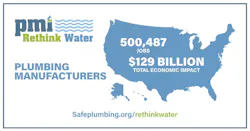
The research also breaks down the economic contribution of each segment. Plumbing manufacturers generate $129 billion in total economic impact, supporting 500,487 jobs and $37 billion in wages. Plumbing contractors and other plumbing professionals account for $313.5 billion in economic impact, 1,283,579 jobs and $105.1 billion in wages.
The data can be viewed by state and congressional, state House and state Senate districts.
Plumbing Shortage Could Reach 550,000 Workers
A second study, Blocked Pipes: The Economic Consequences of Skilled Worker Shortages, commissioned by PMI member LIXIL, projects a shortage of approximately 550,000 plumbers by 2027.
The shortage is already affecting construction and building operations, according to the research. Limited skilled labor can delay projects, increase costs for property owners and constrain broader economic activity.
The study found that adding just 16,400 plumbers to the workforce could reduce plumbing costs by nearly $1.27 billion annually while generating another $144.5 million in savings on plumbing infrastructure maintenance.
Both studies were conducted by economic research firm John Dunham & Associates, with the LIXIL research conducted in collaboration with economist Michael Flaherty.
“These economic impact data illustrate the vital symbiotic relationship between plumbing manufacturers and plumbers,” noted PMI CEO/Executive Director Kerry Stackpole. “Our combined industries generate good-paying jobs, opportunities to learn in-demand technical skills, and a tax base that funds schools, infrastructure, and other public services.”
Plumbing Supports 519 US Industry Sectors
The LIXIL study also found that plumbing services support 519 of the 544 US industry sectors, including healthcare, manufacturing, aerospace and automotive.
As the supply of skilled plumbers tightens, higher service costs can increase the risk of inefficiencies, quality problems and project delays across industries. The impact extends beyond new construction to the maintenance of existing plumbing infrastructure.
About 90% of plumbing-related spending goes toward new construction, according to the study, potentially drawing limited labor resources away from routine maintenance. The resulting imbalance could increase the risk of system failures and add pressure to critical infrastructure and the broader housing market.
Workforce Growth Requires More Career Pathways
Addressing the shortage will require the industry to expand the pipeline of new workers while making plumbing an attractive option for people considering a second career.
Stackpole said a larger plumbing workforce also can help accelerate housing construction, improve water efficiency and support safer buildings.
“It creates upwardly mobile career paths that don’t involve excessive student debt. It strengthens domestic manufacturing by ensuring that innovative, high-performing products can be properly installed and maintained. And most importantly, it reinforces the systems that Americans rely on every day for safe, clean water,” he said.
Apprenticeships and Education Can Strengthen the Pipeline
PMI says closing the workforce gap will require expanded vocational education, apprenticeships and collaboration among industry, policymakers and educators.
The association recently supported legislation allowing Americans to use 529 education savings accounts for expenses associated with learning the plumbing trade, taking certification exams and maintaining certification credentials. PMI also supports legislation and grant funding aimed at increasing student participation in work-based learning programs.
LIXIL is pursuing similar workforce development efforts through its TradeUp and GIVE programs, which work with educators, customers and communities to provide training and resources for people entering the skilled trades.
“At LIXIL, we’re taking action through our TradeUp and GIVE programs, working with educators, customers, and local communities to provide students with the training, tools, and inspiration needed to succeed in the trades,” Benavidez said. “We also partner with global organizations like WorldSkills and national groups such as Tools & Tiaras, while collaborating with state and local governments to support and advocate for policies that elevate the value of skilled trade careers. By valuing and investing in the trades today, the US can secure the plumbing workforce it needs to build, maintain, and innovate for the future.”
To read Plumbing Manufacturing Industry Economic Impact Study, visit www.safeplumbing.org/advocacy/economic-impact.
To read Blocked Pipes: The Economic Consequences of Skilled Worker Shortages, visit landing.lixil.com/blocked-pipes/report.