The Power of AI Comes to Commissioning Mechanical Systems
Key Highlights
- AI tools like CxPlanner automate checklist verification, punch list management, and report generation, reducing manual effort and increasing efficiency
- Thomas Jarloev emphasizes AI as a supportive assistant, ensuring human operators verify outputs to maintain trust and accuracy in critical commissioning phases
- AI's role in commissioning is evolving, with future potential to further streamline workflows and facilitate quicker project handovers
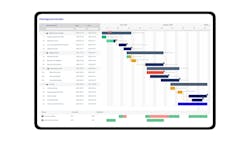
The commissioning process is a perfect example of why so many mechanical contractors are at once drawn to the potential efficiencies to be gained through adopting AI, and at the same time wary of embracing it.
Commissioning involves repetitive tasks—checklist verification, punch list management, report generation—that seem ripe for automation. At the same time, it rests at one of the most critical phases of the construction process: the handover from designer/builder to owner/manager. It’s the point when everything has to be right or to be made right—how do you trust that to a machine?
Danish Twist
This was the problem confronting Thomas Jarloev when he was Strategic Commissioning Manager for Copenhagen Airports. Jarloev started his career on the electrical side, later working with building management systems and doing some design-engineering.
Along the way he became fascinated by the commissioning process, so much so that he travelled to the US where he worked to become first a Qualified Commissioning Process Provider (QCxP), then an Accredited Commissioning Process Manager (CxMSM) and an Accredited Commissioning Process Authority Professional (CxAPSM). Jarloev would eventually go on to co-author the Danish commissioning standard.
While working for the airport he found himself spending hours custom-building macros in excel spreadsheets to help him in his work. When he hit the limit with what those were able to do, Jarloev went looking for a solution. When none of the software he sampled were able to fit the bill, he decided to develop his own, and that was the start of CxPlanner.
“CxPlanner started out as my own tool to help me navigate those kinds of projects,” Jarloev says. “After some time, I carried it to the team and they started using it and then it just started to dribble around in the industry and eventually it went global. Now we have a presence all over the US, Europe, Australia, Asia—everywhere.”
A New Approach

Too often, Jarloev says, the commissioning process works something like law enforcement: a police officer driving around, handing out tickets and making a lot of hassle and paperwork for everyone involved.
Instead, he feels commissioning should be about making the work of everyone involved on the project easier, from the designers to the contractors to the maintenance team that will finally take the project over. Commissioning, he firmly believes, should be fun.
“I don't like to make reports,” Jarloev says. “I don't like to take a picture and import it into a Word document—I want to do the actual commissioning. I like to twist and turn the knobs and check the valves and measure and see if everything works as it should. That is what I think is the fun part.”
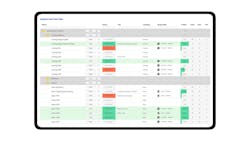
CxPlanner works on a mobile device. Pictures from the site can be uploaded to the cloud and are automatically entered into reports with all the correct formatting. Team members running checklists or site inspections don’t need to go back to the office and spend hours on paperwork—the report practically writes itself. And since the entire project lives in the cloud, it updates in real-time for any team member who needs access and can automatically alert any administrator who requires sign-off.
AI as Assistant
Jarloev stresses that for all its utility, AI will never—should never—be more than an assistant (albeit a tireless, incredibly knowledgeable assistant). “AI is the tool. You are the operator,” Jarloev says, “that's a core part for me. I will never let it loose and just do the job. You will always be the one who's going to verify or validate the output that it has given you before you're going to use it.”
AI, he says, is just one more tool in the toolkit, and it may not always be the right one. For some jobs an excel spreadsheet could be the smarter, faster way to go.
Jarloev likens AI to some of the other advances he’s seen in the industry such as dataloggers, IR cameras and drones, all of which used to be cutting-edge innovations, but are now commonplace. “Now, we're looking into a future where AI is just something that the generations coming into the market, all the ones that we're educating, they will come in and they will expect AI to be there as a utility for them.”
What Cx Planner Can Do
Cx Planner’s Commissioning AI Agent has a wide and growing range of capabilities. It can scan manufacturer documentation and extract attributes like model, serial number, voltage, and warranty info—automatically.
The AI can read SOOs or specs and generate detailed checklists/test procedures (a major time-saver). It can locate unresolved items and draft follow-up messages. It can provide contextual image descriptions, suggesting text to accompany site photos, tailored to checklist line items.
An “AI-suggested replies” feature allows the Agent to generate context-aware responses for reviews and coordination threads. And—like other AIs users may be more familiar with—it excels at creating summaries and reports.
Jarloev believes that as CxPlanner evolves there are even more efficiencies to uncover.
“That means for everyone who's joining in, we gain a benefit,” he says. “Because if we can get the electrical contractor or mechanical contractor to come in and think, okay, it's nice to do commissioning here because we don't have to do extra paperwork, then we have a platform that that will help us to do a quicker handover. We’re reaching the goal if we can get to that spot—removing the paper workflows, the extra workflows. If we can manage that, then we're moving in the right direction.”
To learn more about CxPlanner or to see a demo visit cxplanner.com.
About the Author
Steve Spaulding
Editor-in-Chief - CONTRACTOR
Steve Spaulding is Editor-in-Chief for CONTRACTOR Magazine. He has been with the magazine since 1996, and has contributed to Radiant Living, NATE Magazine, and other Endeavor Media properties. You can find him on LinkedIn at www.linkedin.com/in/stevespaulding.