The Future of MEP Construction: Embracing Prefab, Data-Driven Operations, and Material Efficiency
Key Highlights
- Prefabrication is evolving from a labor-focused approach to a strategic risk management tool that helps control material costs and improve project predictability
- Adoption rates vary significantly across trades, with mechanical and piping leading due to their longer history of shop fabrication, while electrical is rapidly catching up
- Material waste is a critical, yet underutilized, lever for margin improvement, especially as material prices become more volatile and expensive

Jake Olsen is the CEO of Stratus (www.stratus.build), a connected fabrication platform built for MEP contractors. An engineer and entrepreneur, Olsen has over 20 years of experience in engineering and construction technology working with firms such as Binsky Snyder, DADO and Stanley Black and Decker
Each year Stratus publishes its State of MEP Report which in 2025 surveyed more than 140 construction leaders across the mechanical, electrical and plumbing trades. The results of the latest report suggest the construction industry is undergoing a fundamental shift: paper, spreadsheets, and disconnected home-grown systems are giving way to model-driven workflows, field-ready digital tools, and automated fabrication.
CONTRACTOR spoke with Olsen about the state of prefabrication in the trades, the forces driving adoption, and the operational metrics that are really driving financial outcomes.
CONTRACTOR: What are some of the factors driving contractors to adopt prefabrication, and how are those factors changing?

Jake Olsen: The short answer is that prefab used to be a labor play, and now it's becoming a risk management strategy. Those two things sound similar, but they lead to very different decisions about how you invest in your shop and your workflows.
For a long time, the conversation was about getting work off the jobsite and into a controlled environment so you could do more with fewer people. That's still true, and labor pressure hasn't gone away. Over 50% of the contractors we surveyed for our 2025 State of MEP Annual Report said labor availability actually got worse in 2025 compared to 2024, with the South and Midwest hit hardest. So that driver is alive and well.
But what's changed is the material cost picture. Our survey of 144 MEP contractors found that the median material cost increase over the past year was 8%, while labor inflation came in at about 2.5%. Material pricing uncertainty has actually overtaken shortages as the industry's primary cost risk. Tariffs, freight variability, supply chain inconsistencies. When the price of copper or steel can move meaningfully between when you bid a job and when you buy the material, that's a margin problem that keeps owners and VPs of operations up at night.
Prefabrication helps you control that variability because it enables earlier, more predictable procurement where waste is much more measurable. When your BIM model is connected to your fabrication workflow, you can lock in material quantities and place orders earlier in the project lifecycle, tied to actual production schedules rather than field guesswork. You're pulling procurement decisions forward and grounding them in data, which is a fundamentally different approach than the traditional "order it when we need it" model.
The bottom line: the firms that are leaning into prefab the hardest are seeing real results. Contractors in our survey with over 60% prefabrication rates reported a median revenue increase of 14.5%, compared to 4.5% for the industry overall. Prefab is evolving from a time-saving tactic into a genuine growth strategy.
CONTRACTOR: Why has adoption been so uneven across trades and company sizes?
Olsen: This is one of the most interesting findings from our research. The industry's median prefab rate sits at about 30%, but the range is dramatic. Piping contractors are at about 29.5%, sheet metal is at 19.5%, and electrical is down at 9.5%. Those numbers tell you that this isn't just a "big companies do it, small companies don't" story. There are real trade-specific factors at play.
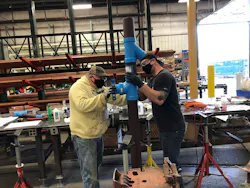
On the mechanical and piping side, prefabrication has a longer history. Pipe spools, for example, have been fabricated in shops for decades. The legacy workflow from spool sheets (or PDFs) to the shop floor is well understood. Now we see direct BIM to shop floor with tools like Stratus—making this not only more efficient, but also enabling a much more data-driven workflow, with connections directly to the automated equipment on the shop floor (pipe profilers, spool welding robots, etc.). Sheet metal has a similar story with a longer history of true fabrication in shops. Electrical is the outlier because so much of the work, historically, has been field-built with less emphasis on creating a fabrication level BIM, and more dependance on jobsite decision-making for routing, detailed assembly definition, and clash avoidance. All of that has made it harder to move electrical work into a prefabricated model.
That said, electrical prefab is accelerating. We're seeing contractors prefab electrical racks, cable tray assemblies, fixture whips, and enclosures at increasing rates, especially on data center and healthcare projects where the scope is repetitive enough to justify the upfront planning investment. The electrical trade is probably five to seven years behind mechanical in prefab maturity, but the gap is closing quickly.
On the company size question, yes, larger firms are outpacing smaller ones. Contractors above $250M in revenue in our survey reported a median revenue increase of 14.5%, fully ten percentage points above the overall industry median. They had larger fabrication footprints, higher prefab rates, and more mature digital workflows. But it's important to understand why. It's not just that they have more capital. It's that they've invested in the fabrication systems that give them real time insights into capacity, profitability, logistics and throughput—allowing them to take on work outside of their core geography with confidence.
Here's the part that should encourage smaller contractors: when we asked firms planning to expand prefab what would enable that growth, the top answers weren't about buying more equipment. They were about adding dedicated prefab planners, standardizing design components, and strengthening collaboration between VDC, shop, and field teams. In other words, prefab growth is a people-and-process problem, not a capital expenditure problem. That's a gap any contractor can close with the right strategy.
CONTRACTOR: Is material waste about to become a key consideration given rising materials pricing?
Olsen: Absolutely, and I think it's one of the most underleveraged opportunities in the industry right now. When material was cheap, waste was a nuisance. When material is expensive and volatile, waste is a margin killer. That math has changed dramatically in the last two years.
Think about it this way: if you're a mechanical contractor and your material costs went up 8% last year, but your waste rate on copper or stainless is running 10 to 12% on field-fabricated work, you're essentially compounding the inflation hit. You're paying more for the material and then throwing a meaningful percentage of it away. In a shop environment, that waste rate drops considerably because you're cutting from digital models with optimized nesting, you're controlling your inventory, and you're not dealing with the rework and damage that happens in the field.
But here's the catch: most contractors don't actually know their waste rates with any precision. They know what they bought for a project and what the project cost, but they can't tell you how much material ended up in the dumpster versus installed in the building. That's the kind of operational blind spot that becomes really expensive when material prices are moving the way they have been.
The contractors who are getting ahead of this are the ones connecting their digital models to their production data. When your BIM model drives your cut lists and your fabrication schedule, you can measure theoretical versus actual material consumption at a granular level. You can optimize nesting algorithms for sheet metal. You can batch pipe spool production to minimize offcuts. You can track scrap by project, by material type, by crew. That's when waste goes from an accepted cost of doing business to a controllable variable that directly impacts your margins.
I also think there's a sustainability angle here that's going to matter more and more. GCs and owners are increasingly asking about environmental impact, and material waste is a tangible, measurable part of that story. The contractor who can show a lower waste rate on a proposal isn't just saving money. They're telling a story about operational maturity that resonates with a lot of the customers driving big projects right now.
CONTRACTOR: What metrics should contractors start tracking to get the most out of prefabrication?
Olsen: This is the topic I'm most passionate about, because it gets to the heart of what's holding a lot of contractors back. The industry is very good at measuring financial outcomes. Our survey found that 75% of contractors track project profitability, and 89% track project profit versus estimate. Those are important numbers. But they're lagging indicators. They tell you how a project ended, not why it ended that way.
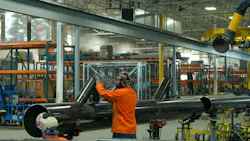
When you look at the operational metrics that actually drive those financial outcomes, the numbers drop off a cliff. Less than 30% of firms track VDC productivity or material logistics cycle time. Only 21% track on-time material and fabrication delivery rates on all of their projects. Material flow from shop to field—which is the logistics handoff that determines whether your field crews are productive or standing around waiting—is the least instrumented workflow in the entire industry.
Think about that for a moment. It's like running a factory and only measuring revenue. You wouldn't do that. You'd track defect rates, production speed, on-time delivery, equipment utilization. MEP contractors have increasingly adopted a production system methodology, a connected workflow from BIM to fabrication to logistics to installation, but the way they measure that system hasn't caught up.
So what should contractors start tracking? I'd put them in three buckets. First, shop throughput and efficiency: how many spools, weld, lbs., assemblies, or duct sections are you producing per shift, per hour, per worker, etc.? What's your cycle time from work order release to completed assembly? What is your equipment utilization percentage? What's your rework rate? These are manufacturing KPIs, and they belong in every fab shop.
Second, logistics and delivery accuracy: what percentage of your fabricated material arrives at the jobsite on time, to the right location, in the right sequence? This is the metric that connects shop performance to field productivity. If your shop is cranking out assemblies but they're showing up late or out of sequence, you're creating downstream waste in the form of idle field labor.
Third, the BIM-to-field feedback loop: how quickly does a design change in the model propagate through your fabrication schedule and into the field? What's your coordination-to-fabrication cycle time? These metrics tell you how connected your workflows actually are, versus how connected you think they are.
The good news is that contractors are waking up to this. Heading into 2026, 68% of our survey respondents said they plan to increase investment in tracking shop and operational metrics. The firms that are already doing this report better forecasting, improved billing cadence, higher schedule predictability, and stronger margin control. They're not managing by financial rearview mirror anymore. They're operating with real-time production data, from the BIM model through the shop floor to the installed product in the field. That's where the industry is headed, and the contractors who get there first are going to have a significant competitive advantage.
To learn more about Stratus, visit www.stratus.build.
To download a copy of the 2025 State of MEP Report, visit https://www.stratus.build/state-of-mep-2025.
About the Author
Steve Spaulding
Editor-in-Chief - CONTRACTOR
Steve Spaulding is Editor-in-Chief for CONTRACTOR Magazine. He has been with the magazine since 1996, and has contributed to Radiant Living, NATE Magazine, and other Endeavor Media properties. You can find him on LinkedIn at www.linkedin.com/in/stevespaulding.