AI vs. Automation: What’s the Difference in Fleet Service Workflows?
Key Highlights
- Automation streamlines routine maintenance tasks, reducing errors and administrative bottlenecks across multiple technicians and locations
- AI analyzes historical data and operational patterns to support informed, long-term maintenance decisions and improve asset reliability
- Combining automation and AI creates a proactive, connected maintenance workflow that minimizes downtime and lowers operational costs
- Effective fleet maintenance requires understanding the full operational context, including service history, vendor performance, and lifecycle costs
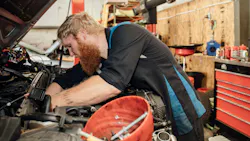
An increasing challenge fleets are seeing today in maintenance is keeping service workflows moving efficiently while balancing uptime, costs, technician productivity, parts availability and asset longevity. As operations become more complex, fleet leaders are increasingly turning to both automation and artificial intelligence (AI) to streamline maintenance processes and reduce unnecessary downtime.
Although the terms are often used interchangeably, automation and AI are not the same thing. Understanding the distinction matters because each technology solves a different operational problem. Automation helps fleets standardize and accelerate routine processes, while AI introduces context, analysis and decision-making support that helps maintenance teams improve long-term outcomes. Together, they create a more connected and proactive service workflow, but the real value comes from understanding where automation ends and where AI begins.
Automation Keeps Maintenance Workflows Moving
At its core, automation is about consistency and speed. In fleet maintenance operations, automation eliminates repetitive manual tasks that slow teams down or create opportunities for errors. This can include automatically generating service reminders based on mileage or engine hours, routing inspection defects into maintenance requests, assigning work orders, updating service statuses, or notifying stakeholders when repairs are complete. Automation ensures that the right steps happen in the right order without requiring constant manual oversight.
For many fleets, this alone delivers meaningful operational gains. Standardized workflows reduce administrative bottlenecks and help ensure that maintenance tasks don’t fall through the cracks. Service managers spend less time tracking paperwork and more time managing operations.
Automation is particularly valuable in environments where multiple technicians, vendors or locations are involved. It allows fleets to maintain consistency regardless of who is handling the work by creating repeatable processes, which is especially important for fleets trying to reduce delays and create visibility across both in-house and outsourced maintenance operations.
However, automation primarily focuses on moving data and tasks through a workflow more efficiently, but it doesn’t necessarily help fleets determine whether they are making the best maintenance decisions. That’s where AI comes in.
AI Introduces Context and Decision Support
AI builds on the operational foundation automation creates. Instead of simply moving information from one step to the next, AI analyzes historical patterns, costs, asset performance, downtime trends, utilization and maintenance histories to help fleets make more informed decisions.
Many maintenance platforms today approach AI primarily as an efficiency layer. These systems often focus on summarizing data, answering user prompts, or helping technicians navigate workflows faster. While this can improve productivity, the effectiveness of those outputs often depends heavily on the quality of the user’s prompt or query.

But if AI recommendations depend on how well someone writes a prompt, how do organizations ensure consistency? How do fleets avoid situations where two employees receive different recommendations for the same issue? And how can managers know whether the system is recommending the best long-term action instead of simply the fastest or most obvious response?
Consistency matters just as much as speed. More advanced AI systems move beyond prompt-based assistance by embedding intelligence directly into maintenance workflows. Instead of requiring users to ask the right questions, the system continuously evaluates asset history, repair frequency, downtime patterns, vendor performance and cost trends in context, allowing AI to become prescriptive rather than reactive.
Prescriptive AI can identify when a recurring repair issue signals a deeper reliability problem, determine when an aging asset is becoming uneconomical to maintain, flag vendors associated with higher repeat repair rates, or recommend preventative actions based on downtime risk. Rather than simply documenting maintenance activity, AI helps fleets improve maintenance outcomes over time.
Why Maintenance Context Matters
Effective fleet maintenance requires understanding the full operational story behind every asset. Fleets need visibility into service history, lifecycle costs, repair patterns, parts usage, vendor performance and downtime trends all in one place. Without that broader context, fleets often struggle to identify the root causes driving maintenance costs upward. Repeat repairs, inconsistent service practices, hidden downtime and vendor inefficiencies can remain invisible when systems only focus on moving tasks from inspection to completion.
A more mature maintenance strategy requires deeper operational intelligence. When maintenance data is centralized and connected, fleets can begin comparing spend patterns across asset classes, identifying which units are becoming cost liabilities and understanding how maintenance decisions impact total cost of ownership over time.
Context-aware AI can evaluate what repair occurred, as well as how often similar failures happen, how much downtime they create, whether certain vendors produce better outcomes, and when replacement may become more cost-effective than continued repairs. In other words, fleets move from simply capturing maintenance work to actively improving maintenance strategy.
Reducing Downtime Requires More Than Faster Workflows
Speed matters in fleet operations, but reducing downtime is not solely about completing repairs faster. While automation helps eliminate friction inside daily workflows, AI helps fleets understand which actions will create the best long-term operational outcomes.
When these technologies work together, fleets can standardize maintenance practices while also becoming more proactive and strategic. Technicians spend less time on administrative work, service managers gain clearer operational visibility, third-party shops are more accurate and accountable, and leadership teams can make more confident decisions about asset replacement, vendor management and maintenance planning. The result is a more intelligent maintenance operation overall.
As fleets continue adopting connected technologies, the conversation will increasingly shift away from whether organizations should use automation or AI. According to a 2026 fleet benchmark report, 53.3% of fleets are already either researching AI use or piloting it, so now the more important question becomes how effectively those technologies work together to improve maintenance performance, reduce downtime and lower the true cost of operating fleet assets.
About the Author
Rachael Plant
Rachael Plant is a senior content marketing specialist for Fleetio, a fleet maintenance and optimization platform that helps organizations run, repair, and optimize their fleet operations.