JLG Expands Workforce Pipeline with School, Trade and Industry Partnerships
Key Highlights
-
School-to-Work, TCAT partnerships and trainee programs create direct pathways into welding, painting, assembly, maintenance and technical roles
-
JLG® University and industry collaborations provide MEWP/telehandler training and safety education to thousands of craft professionals each year
-
Company-led workforce initiatives help contractors, manufacturers and communities rebuild the skilled trades
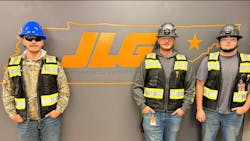
McCONNELLSBURG, PA — JLG Industries, Inc., an Oshkosh Corporation business and global manufacturer of mobile elevating work platforms (MEWPs) and telehandlers, is taking a deliberate, people-first approach to addressing the skilled labor shortage. Instead of waiting for talent to arrive, the company is building its own workforce pipeline through partnerships with schools, technical programs and industry organizations, along with robust training and upskilling opportunities inside its facilities.
Across classrooms, welding booths, factory floors and trade schools, JLG is helping students discover technical careers while giving current workers clear pathways to advance their craft. The effort is producing a growing talent pool of welders, painters, assemblers, robotics and manufacturing engineers, maintenance professionals, service technicians and equipment operators—all essential to construction and manufacturing.
“In America today, there are more students who want hands-on technical education than there are classroom seats available,” said Andy Tacelosky, Chief Operating Officer at JLG. “We saw an opportunity, not just to hire talent but to help create it one student, one trainee and one craft professional at a time. These programs give people a pathway to build a career, earn a living and stay in the communities they love.”
School-to-Work: Cultivating New Skilled Workers in Pennsylvania
JLG’s School-to-Work (S2W) program gives high school juniors and seniors near its Pennsylvania facilities in McConnellsburg, Shippensburg, Bedford, Greencastle and Chambersburg the ability to earn school credit while holding paid positions in welding, painting, assembly, fabrication, warehousing and more. Students gain hands-on experience and mentorship, with the option to transition into full-time roles after graduation.
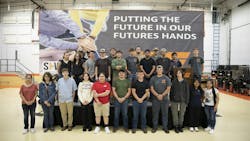
S2W+ extends the program by placing students in advanced technical tracks such as maintenance, robotics, machining, engineering and product testing.
“Our School-to-Work program gives young people a real opportunity to help us rebuild the future of the skilled trades,” said Tacelosky. “They earn school credit, a paycheck and the chance to learn alongside experienced professionals.”
TCAT Partnership: Blending Technical Education With Real-World Experience
In Tennessee, JLG has partnered with the Tennessee College of Applied Technology (TCAT) near its Jefferson City facility. After campus engagement and plant tours, multiple TCAT students now work part-time on the JLG maintenance team while attending classes. Students rotate shifts and learn from specialists across disciplines, applying what they learn in class directly to factory environments.
“This is what modern technical education should look like,” Tacelosky said. “Students are learning in class and applying it in real-world situations the same day.”
Upskilling Existing Talent Through Hands-On Trainee Programs
JLG is also investing heavily in current workers. Through internal trainee programs, employees and new hires can advance into skilled roles—especially in welding and industrial painting, where demand is high across the manufacturing sector.
The Weld Trainee Program includes three to four weeks of classroom and lab instruction, followed by three weeks of on-the-job training with experienced welders. The Paint Trainee Program provides similar hands-on learning and mentorship to prepare team members for full-time industrial painter positions.
“Welding and painting require skill, safety, precision and pride in craft,” said Tacelosky. “Instead of waiting for talent to come to us, we’re choosing to grow it.”
Industry Partnerships: Supporting MEWP and Telehandler Training Across North America
Beyond its own facilities, JLG works with trade associations, unions, community colleges, apprenticeship programs and rental partners to help train and upskill craft professionals in operating and servicing MEWPs and telehandlers. Partners include ABC, AGC, AWCI, MCAA, SEAA, regional trade unions and correctional/vocational programs.
“We know we can’t solve the skilled labor shortage on our own,” said Tacelosky. “Working alongside these organizations, we’re helping people build lasting careers. It’s good for workers, it’s good for employers and it’s good for the future of the trades.”
Through JLG® University, thousands of workers each year receive hands-on operator training, service instruction and ANSI/OSHA-compliant safety education—helping contractors staff capable, confident crews.
A Long-Term Workforce Investment
“These investments are not short-term initiatives; they are part of a long-term vision for American manufacturing,” Tacelosky added. “We’re not just preparing people for jobs — we’re helping them build meaningful careers and strengthening the trades and the communities we’re proud to call home.”
For more information on JLG, visit JLG.com.
Note: this press release was rewritten with help from generative AI.