Getting More Value from Your Hydronic Wholesaler
Key Highlights
- Early involvement of hydronic wholesalers can prevent expensive piping errors and system inefficiencies
- Strong relationships built through joint problem-solving foster trust and long-term success
- Contractors should view wholesalers as partners, engaging them from the planning stage for optimal results.
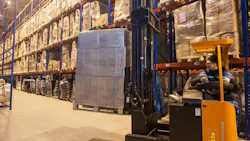
Most contractors know where to buy boilers, pumps and controls. What many do not fully realize is that the right hydronic wholesaler can provide considerably more value than simply supplying equipment. The role of a hydronic specialist at a wholesaler is to help contractors succeed.
Back in the spring of this year I received a call from a mechanical contractor that I hadn’t dealt with much in the past. They were awarded a job with three commercial condensing boilers. The contractor had all three boilers re-piped into the existing system piping and were getting ready to fill the system by the time I became involved.
One of their techs opened a boiler manual to the piping diagram section and realized what they had done didn’t match any of the diagrams. They called into one of our counters, asked for some technical help and were sent over to me. I agreed to meet onsite the next morning and discovered that the boiler piping was indeed incorrect.
Where there was supposed to be one primary/secondary connection, the contractor piped each boiler’s supply and return in succession off the main header. If they left the piping this way the supply off the first boiler would feed straight into the second boiler and then into third rather than going straight into the system piping.
Long story short, the contractor had to rework the piping, and press connections aren’t cheap. An expensive mistake could’ve been avoided if they had reached out prior to beginning the piping work.
More Than a Parts House
A wholesaler’s objective isn’t simply to move boxes. The goal is to help contractors deliver reliable systems to their customers. On any given day a hydronic specialist may be helping size a replacement boiler, reviewing pump selections, creating a piping layout, designing a radiant floor system, troubleshooting an existing boiler or assisting with a new startup.
Every hydronic system is unique. Even a project that appears straightforward can present different challenges once existing building conditions, customer expectations, fuel sources and budget considerations are factored in. As hydronic specialists, our responsibility is to help contractors navigate those challenges by recommending systems that are most appropriate for the application.
How Contractors Should Be Using Their Wholesaler
The contractors who receive the most value from the hydronic wholesaler relationship aren’t necessarily the ones buying the most equipment. They’re the ones who involve us early in the project. Sometimes a quick phone call to the hydronic specialist during the planning stages can prevent expensive problems later in the project.
Pre-bid site visits are possibly the most valuable thing a good hydronic specialist can offer. Whether it’s residential or commercial, bid/spec or design build, new construction or retrofit, collaborate with your hydronic wholesaler at the beginning stages of your project.
Here in the Midwest especially, where hydronic work represents a much smaller share of the market than forced-air systems, many contractors don’t regularly work on hydronic projects. A good hydronic wholesaler is there to help ensure that when a project does come up, the contractor is informed and prepared.
The Value of Training
Technology in our industry continues to evolve. One of the most important responsibilities of the hydronic wholesaler is helping contractors stay current through classroom and field training, manufacturer sessions, jobsite demonstrations, startup assistance and troubleshooting visits.
Much of what I know today came from spending time in mechanical rooms with contractors, manufacturers and the Old Man, my mentor, Pat Linhardt. Some of the most valuable lessons weren’t learned in a classroom. They came from standing in front of a boiler that wasn’t behaving the way everyone expected and working together to determine why.
Relationships Matter
The times I’ve spent crawling through dusty, dimly lit mechanical rooms alongside contractors have taught me that hydronics is ultimately a relationship business. When a contractor and wholesaler spend a day troubleshooting a difficult problem together, working through unexpected challenges and trying to find the right solution, trust is built. Sometimes the job goes exactly as planned. Other times it doesn’t. Either way, those shared experiences create lasting professional relationships.
Of course, those relationships aren’t built exclusively on jobsites. They often grow during training classes, manufacturer events, a round of golf or simply sharing a meal (or drink) after a long day. Those conversations rarely stay focused on boilers and pumps. They provide an opportunity to better understand each other.
When a critical boiler fails on winter night, a complex design questions arises or a contractor needs help solving a problem quickly, that foundation of trust becomes invaluable. Contractors should view their wholesalers as resources and partners rather than simply vendors. Likewise, wholesalers have a responsibility to understand how their contractors operate and provide solutions that help them succeed.
Responsibilities Behind the Counter
One thing that cannot go without mentioning is inventory of essential products. Maintaining inventory is one the least glamourous but most critical responsibilities of a hydronic wholesaler. Contractors count on us to have the right equipment, boiler trim and replacement parts on hand and available when they need it.
In today’s supply chain environment, inventory management has become more important than ever. Contractors don’t just need boilers and pumps. They need relief valves, expansion tanks, air separators, controls, sensors, gaskets and dozens of other components that can stop a project in its tracks if they aren’t readily available. The best hydronic wholesalers spend considerable time deciding what products to stock before contractors ever need them.
The value of inventory becomes most apparent during an emergency. When a gas valve fails on a January morning or a critical pump stops running in a commercial building, the difference between having a replacement part on the shelf and waiting several days for delivery can mean the difference between a minor inconvenience and a major crisis. Contractors need partners who understand that urgency.
Inventory isn’t just products sitting on shelves. It’s a commitment to supporting contractors when they need help most. To a service technician on a freezing winter morning, that inventory suddenly becomes one of the most valuable services a wholesaler can provide.
The End Goal
At the end of the day, wholesaler success is measured by contractor success. When a project is completed on schedule, a startup goes smoothly and an end user enjoys years of reliable comfort, everyone wins.
The best hydronic wholesalers don’t just sell equipment. They invest their time, experience, training and resources to help contractors build better systems and avoid costly mistakes. The next time a hydronic project lands on your desk, don’t wait until the boiler is piped, the controls are wired or the startup date is approaching. Pick up the phone early. Invite your hydronic wholesaler into the conversation during the planning stages. Ask questions. Review the design. Lean on their experience.
The most successful projects aren’t built by contractors working alone. They’re built by contractors who surround themselves with the right partners from the very beginning.
About the Author
Brady Brophy
Brady Brophy is a Hydronics Department Manager for Corken Steel Products with experience in both the contracting and distribution sides of the HVAC industry. He began his career in 2015 and became a Hydronics Specialist in 2018. Brady supports contractors with the design of radiant floor and snow melt systems, and works across design-build, bid/spec, and retrofit hydronic applications, providing equipment sizing, training and hands-on technical guidance.