What’s Under the Turf? - Hydronic and Geothermal Heating Beneath Sports Fields
Key Highlights
- Undersoil heating helps prevent frost, improve drainage and protect grass roots without necessarily making the playing surface warm
- The same core components and design considerations apply as in other hydronic systems: piping, manifolds, pumps, controls, sensors and heat sources
- Geothermal and hydronic systems can help maintain natural playing surfaces in cold climates, extending familiar heating principles beyond the mechanical room

Back in week 4 of the NFL season, George Kittle and the San Francisco 49ers put a whooping on my favorite team, the Denver Broncos. As the beatdown ensued, the Broncos couldn’t move the ball and Kittle was dominating. The game became increasingly difficult to watch, so my focus turned to the beauty of Levi Stadium, the 49ers home field.
During the summer, George Kittle was very vocal about his preference to play on natural grass over a synthetic turf material. Levi Stadium is one of the NFL facilities in which they have a natural grass playing field. As Kittle was galloping past the Broncos D in a 56-yard scurry for a game-sealing touchdown, I was thinking, of course the 49ers can have a natural grass turf, San Francisco has beautiful weather virtually all year long. Then the hydronic nerd in me started to come through.
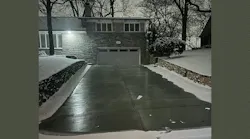
With hydronic heating, we melt snow and ice from driveways, sidewalks and parking lots all the time. Why not condition a natural turf field with geothermal or hydronic technology to promote turf health in any climate condition? Turns out it’s happening more than you would think.
According to a Yahoo Sports report, 16 of 32 NFL teams have a natural turf playing field. Of those 16, most if not all have an undersoil heating system.
Why Heat Grass?
Professional stadiums, universities, municipalities and golf courses invest significant resources maintaining high-quality turf. Frozen ground, winter injury, excessive moisture and poor drainage can affect everything from athlete safety to revenue. A single canceled event can cost far more than the energy required to operate an undersoil heating system. At the professional level, football is played during the coldest months of the year. Getting tackled by a 250-pound linebacker would hurt enough; landing on a frozen turf that feels like concrete takes it from bad to worse.
The Same Hydronic Principles
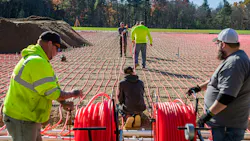
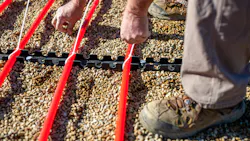
Whether you are warming a bathroom floor, melting snow on a driveway, heating a warehouse or protecting a sports field, the hydronic fundamentals never change. We are simply moving heat from one place to another in the most efficient manner possible. Undersoil heating systems use tubing buried beneath the turf to introduce heat into the root zone. The goal isn’t necessarily to create a warm playing surface. Instead, the system helps prevent frost, improve drainage, encourage healthy grass growth and protect natural turf from winter damage.
A Familiar Mechanical Room
The components are the same things contractors work with every day: piping, manifolds, pumps, controls, sensors and heat sources. Flow rates matter. Water temperatures matter. Pressure drop matters. Proper control strategy matters. They may cover acres instead of square feet, but good hydronic design principles remain exactly the same.
Where Geothermal Comes In
Most contractors associate geothermal with heating and cooling buildings, but the earth can also be used to help regulate temperatures beneath sports fields and golf courses. A few feet below the surface, ground temperatures remain relatively stable throughout the year. Geothermal systems can take advantage of that stability to help warm root zones during colder periods and moderate temperatures during warmer months.
Real World Example
I reached out to my radiant flooring representative at Legend Valve to see if they had any experience with an undersoil heating system. Turns out they helped with a turf warming system in New England for a professional soccer club. Like George Kittle and many other athletes, the soccer club was adamant about playing on a natural grass turf. However, the winters around Foxboro, Massachusetts feature temperatures that quickly drop to freezing or below as well as plenty of snow and wind. This makes maintaining a natural grass turf with plenty of foot traffic virtually impossible. With the help of Legend Valve they were able to provide a turf warming system that keeps the three practice fields green during cold weather and prevent snow and ice buildup during winter.
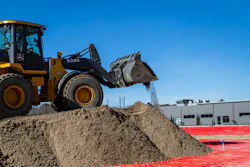
The three soccer fields totaled 226,500 square feet, 99,360 square feet of which would be heated. While the basic hydronic principles remain the same, this is a massive scale. Back in July I wrote an article on radiant heating in self-storage facilities—that building was just 17,000 square feet. Multiply that by almost 6 times to get to the size of the heated outdoor facility in Foxboro.
Apart from the design water temp, it’s not far off a normal snow melt system. A typical driveway melt system would use about 150°F water temp on the coldest day of the year. In the case of the Practice Field, the design temp is 100°F with the goal of maintaining the root zone temperature around 60°F. This promotes grass growth later into the season, resulting in a safer playing surface. The ¾” LegendFlex PEX O2 barrier tubing was laid at 8” O.C with an average circuit length of 500’. There are two reverse-return headers running down each side of the field connecting the more than 200 ¾” circuits.
As far as total boiler system output, Legend calculated the heat loss at 120Btu/hr per square foot. Multiply that by the 99,360 square feet of playing surface and you get to about 11,900,000 btu/hr total.
The Fundamentals Remain the Same
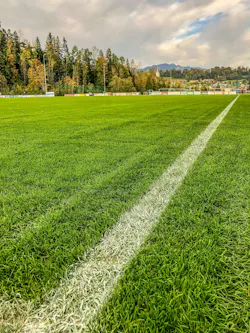
When most people think about hydronic heating, they picture radiant floors, driveway melt systems, boilers or domestic hot water applications. Very few would look at an NFL stadium, a professional soccer practice facility or a golf course and think, “there’s a hydronic system under that.”
That’s what makes our industry so fascinating. The same principles that keep a homeowner’s driveway free of snow can also help maintain a natural grass playing surface for professional athletes in the middle of winter. Whether it’s 200 feet of tubing in a bathroom floor or more than 200 circuits serving nearly 100,000 square feet of turf, the fundamentals remain the same: move heat where it’s needed, control it properly and do it efficiently.
Undersoil hydronic and geothermal systems help preserve healthy natural turf, improve field conditions and reduce the hard, unforgiving surfaces that athletes often face during cold weather. We can’t stop every injury in sports, but technologies that support safer, more resilient natural playing surfaces can help athletes perform at their best and potentially extend their careers. It serves as a reminder that the systems we design and install can do far more than heat buildings. Sometimes they’re helping keep the world’s favorite athletes on the field a little longer.
The next time you are watching a football game, soccer match or golf tournament, take a moment to appreciate what might be happening beneath the surface. Chances are there is a carefully designed hydronic system quietly doing its job, proving once again that our industry extends far beyond the walls of a mechanical room.
About the Author
Brady Brophy
Brady Brophy is a Hydronics Department Manager for Corken Steel Products with experience in both the contracting and distribution sides of the HVAC industry. He began his career in 2015 and became a Hydronics Specialist in 2018. Brady supports contractors with the design of radiant floor and snow melt systems, and works across design-build, bid/spec, and retrofit hydronic applications, providing equipment sizing, training and hands-on technical guidance.