Key Highlights
- Curtis Harbour values mentorship and advocates for a people-first approach to leadership within the industry
- He highlights the importance of collaboration between labor and management to address workforce shortages and industry challenges
- He emphasizes the need for contractors to actively participate in workforce development and joint recruiting efforts
- Harbour believes industry consolidation and private equity can be beneficial if navigated with proper education and strategic planning
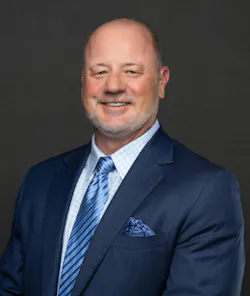
PHOENIX, AZ — As the Mechanical Contractors Association of America (MCAA) was busy celebrating its annual convention this past March in Phoenix, Curtis Harbour, Vice President of Labor Relations for Southland Industries, Houston, was getting ready to take over the reins as MCAA’s newly appointed president-elect. “To even be included in the same conversation as those who have come before me is an honor in and of itself. To be given the responsibility of serving as President of MCAA is a role I do not take lightly, and I intend to work hard on behalf of our members and our industry,” says Harbour.
Now serving as President, Harbour has served in various roles and on various committees within MCAA, including the Board of Directors, the Advanced Leadership Institute Committee, the Audit & Budget Committee, and as MCAA’s representative on the Industrial Relations Council joint labor and management committee. Harbour also serves on the board of directors for the MCA of Houston and participates on various joint trusts and negotiating committees.
Harbour was part of The Brandt Companies for 25 years when Southland acquired Brandt in early 2022 and completed the integration of Brandt into Southland effective January 1 of this year. Southland is the largest privately held mechanical contractor in the US and is a full life-cycle MEP design-build contracting firm serving many major markets and geographies across the United States since 1949.
In this exclusive Q&A, CONTRACTOR caught up with Harbour to talk about his new position, and his vision for MCAA.
CONTRACTOR: How did you get involved with MCAA, and why is the organization important to you?
I have always been impressed with the people I have interacted with through MCAA. Eventually, the MCA of Texas wanted to identify someone that could represent Texas contractors and local associations by applying to the national Board of Directors. I applied and was later installed in 2016. The more involved I have become with MCAA, the more dedicated I feel to our pillars of labor relations, education, political advocacy, and our industry as a whole. It is truly a blessing to represent our members at this level.
CONTRACTOR: We are definitely entering uncertain times on a global stage. What are some things that affect contractors in the short term and how can MCAA guide them through these turbulent times?
Harbour: This question is very appropriate considering MCAA’s 2026 convention theme of “Beyond the Horizon.” Although no one knows what the next crisis will be, MCAA is working hard to create meaningful education sessions, weekly updates and whitepapers that demonstrate best practices and valuable lessons about the necessity of fair contract language, managing and mitigating risks with supply chain concerns, and taking a more partnered approach in how these issues impact all of us.
In truth, every contractor and owners alike, no matter the tier level, are impacted by these issues, and we have to work together collaboratively to manage them as they present themselves. We want our members to be knowledgeable and prepared to manage through the crises as they are revealed beyond the horizon.CONTRACTOR: Piggybacking off of the previous question, how do you see a longer-term economy playing out?
Harbour: Politics and even geopolitics aside, the reshoring of manufacturing in our country— especially high-tech and pharmaceutical manufacturing—is a good thing for our industry. The impact and value of hyperscale artificial intelligence (AI) data center projects have presented countless opportunities for the construction industry as a whole, including more efficient construction techniques such as modular construction.
I believe this will be seen as a tremendous opportunity for the skilled trades and their ability to attract young people to our industry. Our industry labor partners, such as the United Association (UA), are working very hard and very collaboratively with MCAA to rethink how we attract people, how we train people, how we prepare people for supervisory roles, and how we create long-term opportunities for people to earn a living wage and to have healthcare and pension benefits available for them and their families.
I also believe the economy will always be cyclical due to the factors at play. As long as we are strengthening our skilled trades workforce and realizing the value and impact these folks bring to the industry, we will be able to find ways to manage through all of the concerns you mentioned. In short, everything I am seeing shows our industry continuing to be very strong for the next few years.
CONTRACTOR: Let's talk workforce development. In your term at MCAA, do you have any initiatives to address the skilled labor shortage, and how can MCAA be an organization on the forefront of this?
Harbour: Parents and society have taught our children for far too long that the only path to an effective career is through college. I believe the path to an effective career lies with higher education, but not necessarily through college. The skilled trades provide amazing apprenticeships, and you can earn a paycheck while learning new skills. After five years, you can earn at or near the six-figure range and beyond.
Working with our UA partners, MCAA’s Executive Committee and our co-chairperson, Robert Beck, MCAA Past President, we collaborate on all issues facing our industry, and attracting people to our industry is one of the pillars of our discussions. My goal as president is to bring knowledge of how contractors can partner with local unions and encourage engagement in joint recruiting into the trades. For too long, contractors have believed it is the union’s responsibility to find and send good people to our companies and projects. This is a “we” problem, and we must work in unison to overcome it.
In addition, we are working together to create and develop new and improved foreman and supervisor training so that our leaders represent the industry at a high level.CONTRACTOR: We are moving at high rate of speed toward the indoctrination of AI into everyday businesses, and technology overall. The question is two-fold: How do you see technology shaping today's contractor and how big a role does it play in attracting folks to the trades and workforce development overall?
Harbour: Aside from the obvious construction opportunities AI infrastructure has created and continues to offer, AI-enabled software tools are advancing at an incredible pace. Beyond AI’s ability to help create and refine documents, marketing pieces, speeches and similar materials, I think AI’s true power lies in helping to refine design documents, fill in design gaps, help solve critical construction issues, and help refine schedule logic, among many other areas of the construction process. I believe we are only scratching the surface of the opportunities AI will bring to our industry.
CONTRACTOR: And, what is MCAA doing to facilitate training to help keep up with today's tech?
Harbour: Two to three years ago, any industry conference I attended—including MCAA’s—would have a speaker touch on the subject of AI and what it is. Today, we are offering multiple AI educational sessions at each conference, focused on real-time education on how to put AI to work for your company. We have moved beyond the possibilities of what could be to actually utilizing AI-enabled tools to perform and enhance tasks. I believe many of us will be surprised at the changes that will come about due to the capabilities of AI.
I am not an expert—and I’ve never been able to find a quality crystal ball to show me what is to come—however, if I were to take a stab at predicting the future, I believe AI will greatly enhance data collection, speed up many support processes such as accounting, payroll, HR, and financial reporting, and improve leadership’s ability to make better-informed decisions based on real data and real trends.
What I don’t believe will change as rapidly is the fact our business requires people’s minds and hands to build, maintain, service and repair buildings, equipment and systems. AI tools may make some of that effort easier in certain ways, but we still need people to build.
CONTRACTOR: What are some business philosophies and initiatives you will bring to your term? What are some core values you've learned throughout your career that you have brought with you to this new position?
Harbour: This industry has been amazing to me and my family. I dreamed of building real buildings and being able to point to a structure and tell my family I played a part in bringing it to life. What I received in return is so much more than I ever imagined. I have been fortunate to have some incredible mentors who cared enough to share their knowledge and insight. That didn’t just make me a better builder—it helped make me a better person. Because of that, one of the core values I carry with me is mentorship. I want to inspire others to take mentorship seriously and to never stop passing along their knowledge and experience to others.
One of my greatest mentors once told me that when we are building a business, we spend 80% of our time focused on finance and 20% on people. He said that once the business reaches a certain point, those numbers have to flip—80% of our time should be spent on people. Find those that with potential and invest the time and effort to help them succeed, just as others did for you.
That philosophy has resonated with me for many years and continues to guide how I lead. I want industry leaders to lead from a people-first mindset. That value has never failed me, and it’s one I intend to carry with me throughout my term as MCAA president.
As I travel the country this year, my goal is to share all that MCAA has to offer our membership and to bring back the questions and concerns I hear at the local and regional levels so MCAA can continue to equip contractors with the knowledge and tools they need to be successful. I am also looking forward to building on the partnership that has been created and cultivated between MCAA and the United Association. Together, there is no problem too large for us to handle as labor and management partners.
CONTRACTOR: What are some key trends contractors are facing in terms of mergers and acquisitions? And, is private equity (PE) necessarily and bad thing?
Harbour: I believe we will continue to see a lot of consolidation in the industry. For the first
time, we are truly seeing the value of bringing together two or more organizations and achieving an exponential impact on results and success. As business leaders, we always hope one plus one can equal three, and I believe companies are beginning to achieve integration results that prove one plus one can equal more than two when done right.
I don’t believe PE is necessarily a bad thing at all. However, there are bad PE groups, just as there are bad private and public groups acquiring businesses. There are also many great firms across all models. Like anything else, education is critical, and surrounding yourself with a strong team of professionals will help you navigate those waters. MCAA offers valuable educational resources and can help connect members with the right people if they are heading in that direction.