Are Robots Coming for the Trades? ...Yes and No
Key Highlights
- Robots excel in predictable environments but face challenges in complex, improvisational tasks like plumbing repairs
- AI tools currently assist tradespeople with diagnostics, leak detection, and system analysis, enhancing efficiency and accuracy
- Future robotics will handle hazardous and repetitive tasks, but skilled judgment and decision-making will remain human responsibilities
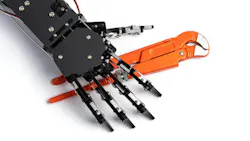
I have been reading quite a bit, lately, about robotics. More specifically, about Elon Musk’s Optimus robot which, depending upon the article, is either the next big purchase you will make or is about to be in every home in America within the next ten years.
The level of robotics shown in these internet articles is incredible. The claims that they will impact the home healthcare industry in a major way seems credible as does the assertion that they will, eventually, provide an alternative to manual labor. Think as in the movie, Bicentennial Man.
Reading further, articles like Steven Onofua’s in the August 2026 issue of Contractor Magazine—well researched and technically sound—makes the oncoming AI tide seem even more inevitable than ever.
Are The Robots Coming?
Let’s face facts here; the age of AI and robotics is here, not “coming,” but here. So that begs the question: how will AI and robots impact the trades? Will skill and training ever be co-opted by Robbie the Robot? The short answer is “somewhat.” The full answer is more complicated and nuanced.
With the introduction of humanoid robots like Optimus, whose manual dexterity and physical abilities mimic those of a human being, it is only a small leap to the conclusion that eventually robots will be able to do every job humans now do. But is that a true statement?
Robots do best in predictable environments. Places such as warehouses, production floors and assembly lines. Robots can perform repetitive tasks very effectively, but throw in a service call in the crawl space of a 60-year-old house (for example) into the mix, and you create an environment that thwarts the robotics.
What Do We Mean by That?
A service plumber, today, might have to identify undocumented piping, remove a corroded fitting and devise a repair that meets code, all while dodging electrical wiring, framing lumber and any number of other obstacles to effect said repair. Currently, that combination of dexterity, judgment, improvisation and responsibility is difficult if not impossible to automate.
Robotics will, nevertheless, reduce some of the most physically demanding work. As we know, AI machines are already used in sewer inspection, for drain cleaning, excavation and pipe rehabilitation. In prefab shops and on multiple unit projects, where repetitive labor is common, one could see where robotics could intrude, but not in the service field. Service and repair plumbing will be much harder to automate.
Every existing building is different, and many problems cannot be diagnosed until walls are opened, or equipment is disassembled. A skilled journeyman plumber routinely makes decisions that are never shown on the building plans.
Also, commercial/industrial plumbing requires an entirely different mindset. Although AI and robotics could, technically, work on such projects, the intricacies of special equipment (hospitals, clean rooms, etc.) would be a bit harder to automate than a straightforward plumbing system.
Where Will AI/Robotics Impact the Hardest?
Future robotic systems will inspect systems, detect anomaly’s, identify leaks or components about to fail (See Steven Onofua’s column), cut and prepare piping, work in hazardous spaces and, as noted, perform repetitive tasks. What they won’t be able to do is use the type of knowledge, judgment and skill of a fully trained journeyman plumber, electrician or HVAC journeyman. At least not for the immediate future anyway.
While robotic AI will not, completely, replace tradesmen it will impact the trade in other ways. Today, plumbers are using AI diagnostics and cameras to assist with line location, flow patterns, leak detection, product failure, pressure data and so on. These tools assist in diagnosing the source of the problem and providing possible solutions by telling the plumber either where to look or what the problem might be. The plumber could then perform the repair while determining whether the computer’s assessment makes sense.
The Future Flow Chart
What does the evolution of AI/Robotics mean to the trade as we know it? It means changes are coming! The extent of those changes remains to be seen and felt. We all know how much the digital age has changed human history, with many more changes still to come.
To those who would ignore these changes, you do so at your own peril! Adapting to the new reality is a must. So long as there are human beings, there will be the need for plumbing systems. Physiologically speaking, that is an absolutely immutable law. Water and wastewater control is a human requirement.
However, as I write this, there is a new paradigm emerging; Traditional Plumber...technology assisted plumber...plumbing systems technician. It might take a while, but that seems to me, to be as inevitable as an Optimus in every home.
The physical work will remain for now, but there may be less cutting, threading, digging, demolition, lifting and exploratory troubleshooting. As the technology advances there will more likely be more diagnostics, automated electronics, water management technology, etc. The journeyman will still be at the center of it all for the foreseeable future.
About the Author
Al Schwartz
Founder
The Brooklyn, N.Y.-born author is a retired third generation master plumber. He founded Sunflower Plumbing & Heating in Shirley, N.Y., in 1975 and A Professional Commercial Plumbing Inc. in Phoenix in 1980. He holds residential, commercial, industrial and solar plumbing licenses and is certified in welding, clean rooms, polypropylene gas fusion and medical gas piping. He can be reached at [email protected].