Flexible Standardization: How Plumbing and Hydronic Service Fleets Are Rethinking Consistency to Stay Operational
Key Highlights
- Strict vehicle standardization can hinder fleet responsiveness during supply chain disruptions, leading to delays and increased operational costs
- Flexible fleet strategies involve approving multiple OEMs, alternative vehicle models, and adaptable upfit packages to maintain agility
- The future of fleet management lies in strategic flexibility, allowing organizations to navigate uncertainty while maintaining operational excellence.
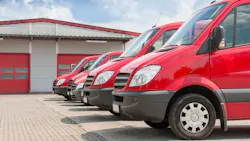
For decades, trade and service fleets across industries such as plumbing, hydronic heating, HVAC, and utilities have relied on strict vehicle standardization as a cornerstone of operational efficiency. Locking in specific makes, models, and upfit configurations helped simplify procurement, streamline maintenance, and ensure consistency across dispersed operations.
But today’s operating environment is anything but predictable.
From ongoing supply chain disruptions to OEM production variability and shifting business demands, the rigidity that once defined best practice is now introducing friction. In Prologis’ 2025 Supply Chain Outlook[1], 87% of executives said safeguarding the supply chain against unforeseen disruptions is now a top priority, reflecting how deeply uncertainty is influencing operational decision making.
Increasingly, fleet operators are discovering that strict standardization, while well-intentioned, can limit their ability to respond quickly when conditions change. As a result, many are moving toward a more flexible approach that preserves consistency while allowing adaptability.
When Standardization Becomes a Constraint
Traditional standardization strategies were built for stability in an often-steady market that allowed for narrow vehicle specifications, reduced complexity and delivered cost efficiencies. In today’s environment, those same constraints can slow fleets down.
When organizations are locked into a single OEM, vehicle, or specific configuration, even minor disruptions, such as production delays, parts shortages, or allocation limits, can cascade into larger operational challenges. Vehicles may take longer to source, replacement cycles can stall, and in some cases, assets sit idle while teams wait for the preferred specification to become available. For service fleets supporting time-sensitive residential calls, emergency plumbing repairs, hydronic heating service, or scheduled maintenance visits, those delays translate directly into lost productivity and missed customer commitments.
Building Flexibility into the Framework
Forward-thinking fleets are not abandoning standardization altogether. They are redefining it.
Instead of rigid, one-size-fits-all specifications, many are adopting flexible standards that establish clear operational requirements while allowing for multiple pathways to meet them. This often includes approving multiple OEMs instead of relying on a single manufacturer, expanding acceptable vehicle classes or comparable models, creating alternative upfit packages based on availability, and identifying substitute components when primary options face delays.
For residential service contractors, that flexibility may include approving multiple cargo van configurations, alternative shelving or storage packages, or substitute vehicle models that still support technician productivity in the field.
This approach enables procurement and operations teams to move faster, sourcing available vehicles that meet core job requirements rather than waiting for an exact match. It also introduces resilience into the acquisition process, ensuring fleets can maintain momentum even when market conditions shift unexpectedly.
The Complexity of Scale
While the challenge is especially complex for large national fleets, mid-sized contractor fleets are also feeling pressure to balance consistency with vehicle availability.
Consistency still matters. Maintenance programs, safety protocols, technician training, and driver experience all benefit from a degree of uniformity. At the same time, over-standardization can create bottlenecks that ripple across the organization. Balancing these competing priorities requires a more deliberate strategy.
Leading fleets are segmenting their operations by defining where strict consistency is essential and where flexibility can be introduced without compromising performance. For example, critical safety systems or core upfit requirements may remain standardized, while vehicle brands or secondary features become more flexible.
Driver experience is another important consideration. Operational consistency can reduce training needs and improve satisfaction, but allowing limited variation, especially when it accelerates deployment, can be a practical tradeoff. The larger the fleet, the more important it is to maintain multiple viable solutions rather than relying on a single path.
Productivity Gains Through Adaptability
The shift toward flexible standardization is not only about managing risk, but also driving measurable performance improvements. Fleets that embrace flexibility are often better positioned to increase uptime, improve asset utilization, reduce downtime, and enhance overall service delivery. Faster vehicle sourcing helps minimize service gaps, while alternative parts and configurations keep maintenance and upfit processes moving. Flexibility allows fleets to keep vehicles on the road and aligned with operational demand, even when external conditions are less than ideal.
This is especially important for residential plumbing and hydronic heating contractors, where technician uptime, emergency responsiveness, and customer satisfaction directly impact revenue and retention.
A More Resilient Path Forward
The fleet industry is entering a new phase in which adaptability is as important as efficiency.
Flexible standardization represents a strategic evolution, not a departure from best practices. It reinforces the importance of consistency while recognizing the need to respond to real-world constraints.
By building optionality into vehicle specifications, procurement strategies, and upfit planning, fleets can reduce risk, maintain productivity, and better support long-term growth. In an environment defined by uncertainty, the most successful fleets will not be those with the most rigid standards, but rather those that can adapt to a changing operating environment.
For plumbing and hydronic service providers, building flexibility into fleet planning can help keep technicians on the road, reduce downtime, and maintain consistent service levels even when vehicle availability shifts unexpectedly.
[1] https://prologis.getbynder.com/m/722af50c42fd46b5/original/Prologis-Supply-Chain-Outlook-Report-2025.pdf
About the Author
Charles Mathew
Charles Mathew is Assistant Director of Order & Upfit at Merchants Fleet.