How CPVC Pipe Leaks Happen — and How to Avoid Them
Key Highlights
- Use manufacturer-recommended tools and techniques for cutting, deburring, and solvent welding
- Follow precise set and cure times during installation, especially in extreme temperatures, to achieve optimal joint strength and durability
- Regularly inspect pipes carefully during service to prevent damage, and replace affected sections promptly to maintain system integrity
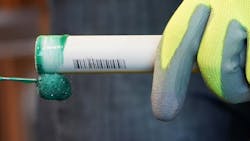
Plastic piping materials, such as chlorinated polyvinyl chloride (CPVC), are popular alternatives to copper for residential plumbing. Lighter in weight and often less expensive, plastics like CPVC deliver reliable, long-term, leak-free performance—as long as they have been installed and maintained properly.
Here are some of the common causes of leaks in plastic piping and best practices to avoid them.
Improper Installation
Purposeful shoddy work is uncommon. But mistakes happen. If an installer is unfamiliar with different plastic piping materials, mistakes during the installation process can increase the likelihood of future leaks.
The most common mistakes during installation happen during the solvent welding process. Solvent welding is a core advantage of plumbing with plastics like CPVC: installation can be completed in the field without any “hot work” like welding or brazing, which requires specialized tools and training. The process uses a solvent cement to chemically fuse separate pieces into a single-piece joint—when done correctly. FlowGuard Gold CPVC has strong solvent-welded joints and is 225% thicker at the joint than the pipe itself. There are several best practices for installation to get these strong solvent-welded joints.
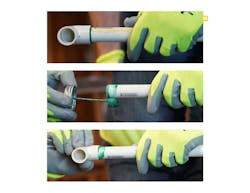
Cut pipes and select fittings per manufacturer instructions.
- Improper cutting methods and the wrong cutting tool are common causes of weak joints. The wrong cutting tool can create jagged edges, complicating joining, or can compress pipes, risking cracks or splintering. Most manufacturers have a reference guide, like this one, for appropriate cutting, deburring and filing during installation and service.
- Fittings are a very common source of failure in PEX pipe. Copper and CPVC pipe have more established fitting systems compared to PEX, which requires the fitting to be inserted into the PEX pipe and then mechanically joined by other components. This multitude of fitting types with PEX can introduce greater opportunity for errors during installation, which can make the fitting a weak point in the system.
Use the appropriate solvent cement.
Some plastic piping materials like CPVC call for a dedicated solvent cement; always choose a cement compatible with the pipe you’ve chosen. For example, CPVC solvent cement should be used to weld CPVC. It’s even better to choose the solvent cement brand recommended in manufacturer installation instructions. Solvent welding is even a one-step process for CTS SDR 11 piping.
- Choose the correct solvent cement viscosity (regular-, medium- or heavy-bodied) based on the size of the pipe. ASTM Standards can help with this choice.
- Avoid using glue. Glue is a temporary adhesive with a limited lifespan, whereas solvent-cemented joints form a permanent bond as the solvent cement-coated pieces chemically fuse together
Use solvent cement correctly.
- Only use solvent cement on clean, dry pipes.
- Always apply solvent cements with an appropriately sized dauber, rather than a finger, rag or brush.
- Apply an event coat of solvent cement with the dauber, avoiding dry sections and also avoiding overapplication, which can puddle.
- Inspect all solvent-welded joints to avoid dry fits. An "interference fit," with a slightly larger outer diameter than the bottom inner diameter of the tapered fitting socket presses the two pieces firmly together to strengthen the solvent weld. This tight fit can create a false sense of security, though: the friction alone can hold a joint at pressures above 100 psi for a long time without proper solvent welding, but natural movement will eventually cause an unwelded joint to fail. Carefully inspect joints to ensure adequate solvent cement was used.
- Don’t allow solvent cement to get too hot or to freeze or to become too old. Some contractors will keep solvent cement in a small, insulated lunchbox or bag to maintain a usable temperature.
And as the next section covers, cure properly.
Improper Set and Cure Times
“Setting” is the initial hold needed for the newly cemented joint to form. “Curing” is the longer process during which the joint becomes a permanent weld. Improper set and cure times have a significant negative impact on final joint quality.
A fully cured joint turns separate pipe segments into a single piece, enabling the pipe to meet its pressure and temperature performance characteristics. Improperly set or cured joints create points of weakness.
Several curing best practices help ensure strong joints.
- Do not disturb joints during set. Follow solvent cement manufacturer instructions for the appropriate length of time to hold joints undisturbed after initial joining.
- Don’t rush cure times. Rushed curing is a very common mistake made during installation. Follow solvent cement manufacturer instructions for appropriate cure times, which are based on pipe size and temperature. Also remember that relative humidity and tightness of fit will impact cure times.
- Exercise extra care when solvent welding in extreme temperatures. Very cold temperatures require a longer set and cure. Very hot temperatures may require slightly more solvent cement to confirm both pieces have fully wet cement when joined. Using solvent cement at the same relative temperature as the pipes can improve the final joint quality.
Chemical Incompatibility
All materials have certain chemical compatibility constraints, including plastic piping. Many of these are easy to avoid by carefully consulting manufacturer compatibility data. But one common chemical challenge to plumbing is the residual chlorine-based disinfectants present in potable water.
Chlorine-based chemicals provide trustworthy disinfection for municipal water, but they can have a powerful effect on some plastic piping. PEX, for example, degrades from continuous exposure to residual water treatment chemicals. PEX relies on sacrificial antioxidants to resist chlorine and other chloramines; once the antioxidants are spent, PEX is vulnerable to the chlorine. The oxidation that then occurs embrittles the PEX, which can lead to leaks. A plastic like CPVC is inherently immune to attack from chlorine and other chloramines due to its chemical makeup.
Carefully consult the piping manufacturer’s guidelines on compatible materials when selecting fittings, insulation and solvents.
Thermal Expansion Stress
All plastic piping expands and contracts more than copper piping in high and low temperatures. Failing to account for this natural expansion and contraction during design and installation, such as affixing plastic pipes rigidly to joists, can increase risks of failure as stresses build or environmental stress cracking (ESC) occurs. Adding loops and offsets, supported by appropriately spaced hangers, can minimize stress without restricting the pipe’s natural movement in CPVC installations, for example.
Damage During Service
Just as during the installation process, accidents can happen during service. Bumps during maintenance can scratch or crack pipes, potentially weakening them and increasing leak risk. Exposure to incompatible materials during service can also occur, such as adding incompatible insulation materials or painting pipes with incompatible paint.
Thankfully, plastic piping is much easier to partially replace than metal. For example, to replace a portion of CPVC, isolate the impacted area of pipe, cut it out using a C-style cutter and replace the removed section with new pipe and solvent cement.
Due Diligence Minimizes Leak Risks
Plastic pipes aren’t naturally “leakier” than copper pipes. Many leaks are the result of easy-to-avoid oversights during design, installation and maintenance. Taking the time to learn more about the dos and don’ts of a chosen material—and choosing only high-quality materials—can help maximize the leak-free service life of these versatile piping options.
About the Author
Gabe Ellis
Gabe Ellis is the North American market segment manager for Lubrizol Advanced Materials Inc., the parent company for FlowGuard Gold Pipe and Fittings.