Near-Boiler Piping Problems? Press Tools Can Provide the Solution
Key Highlights
- Proper application and correct sizing are essential for effective boiler replacement, with installation quality being the top priority
- Press tools allow plumbers to work in confined spaces safely, avoiding open flames and property damage associated with soldering or brazing
- Modern press tools are versatile, capable of pressing copper, PEX, cast iron, and iron pipe fittings, streamlining multiple tasks with a single tool
- Speed and safety are significantly improved with press technology, reducing job time and minimizing hazards on site
Eric Aune is a well-known figure in the plumbing-heating-cooling industry. As well as being a sometime-columnist for CONTRACTOR, he is the owner of Aune Plumbing & Heating, LLC, and host of the Make Trades Great Again podcast.
For this Q&A, Aune puts on his Master Plumber hat to discuss near-boiler piping issues, and how modern press tools can make the job faster and easier than ever.
CONTRACTOR: Given the efficiencies modern boilers can deliver, a lot of contractors are getting work doing boiler replacement work. What are some key considerations to keep in mind during a boiler replacement?
Eric Aune: Proper application and appropriate sizing (for starters) are what I would consider most important when selecting a boiler for replacement. Ultimately the most important detail to consider is proper installation.
Many installers only skim the install manual or never read it at all. After decades of service and repair work I see more improperly installed equipment than not. This is likely related to the rush to complete jobs faster than ever before, often by design, by which I mean from how the back office is scheduling and overseeing the work.
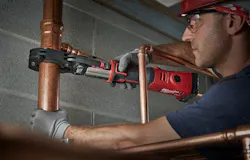
CONTRACTOR: Near-boiler piping on these jobs can be tricky. There are often space constraints, sometimes unusual hook-ups, sometimes it’s cost-prohibitive to demo and remove the old boiler and the new piping has to work around the old machine. Why are press tools the better way to tackle these problems?
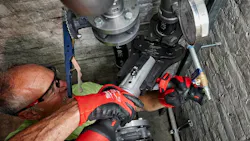
Aune: There never seems to be enough space to work comfortably, but pressing allows us to work in tighter spots without worry of open flames and possible property damage. Whether overhead, deep into a corner, or up against a wall, if you can fit the jaw or ring around the fitting all that’s left is to press the tool’s trigger. This is a sharp contrast by comparison when considering soldering or brazing copper pipe.
CONTRACTOR: What are some of the features of modern press tools that let them deliver both versatility and performance?
Aune: Today’s press tool is more multi-tool than one-trick pony. I’m regularly using my press tool to cut threaded rod for pipe hangers, or to snap cast iron soil pipe for a plumbing repair. In place of threading pipe, we are almost exclusively pressing iron pipe fittings on gas and hydronic piping systems.
Early pressing was limited to the fittings available; today pressing seem only limited by the size of fittings, but not the catalog selection or fitting type. Just this week I used the same press tool to press copper (of course), PEX, and iron pipe all in the same day. It’s not only safer, faster and reliable but also versatile.
How to Select the Best Press Tool for Your Work
Plumbing and mechanical professionals need time-saving, high-quality tools to stay competitive. Press technology has transformed the way professionals work, replacing traditional methods with faster, cleaner, and more consistent connections.
Features that you’ll want to look out for when making a purchase include:
Tool ergonomics – Ergonomics are a key differentiator between press tools on the jobsite and vary from tool to tool. Along with overall tool design, one tool feature impacting ergonomics is grip style. There are two options—inline and pistol grip. In commercial settings with standard and extended tools, pistol grip tools help reduce fatigue, but generally, it comes down to a user’s preference which style offers more comfort when pressing repeatedly during the day.
Enhanced Lighting – With many jobs being done in low- to no-light situations, an LED light on the press tool is essential to lighting up the work area.
Head Rotation – Press tool head rotation is another advanced feature to consider for getting around obstacles or pressing in tight spaces. This feature is particularly useful in residential settings.
Bluetooth Capability – Wireless technology can help to track the number of presses a tool is logging, as well as provide direct access to service centers and the last known location of the tool.
About the Author
Steve Spaulding
Editor-in-Chief - CONTRACTOR
Steve Spaulding is Editor-in-Chief for CONTRACTOR Magazine. He has been with the magazine since 1996, and has contributed to Radiant Living, NATE Magazine, and other Endeavor Media properties. You can find him on LinkedIn at www.linkedin.com/in/stevespaulding.