LIXIL Targets Sanitation Access for Another 100 Million People by 2031
Key Highlights
- LIXIL is targeting improved sanitation and hygiene access for an additional 100 million people by fiscal 2031, building on its SATO social business milestone of reaching more than 100 million people earlier in 2026
- The company is expanding emergency and disaster-response initiatives, including mobile sanitation facilities in Japan, an emergency displacement initiative in Sudan and climate-resilient WASH projects in Kenya and Malawi
- LIXIL and JICA are working to establish locally sustained sanitation services, while products such as the SATO Pan and Resilient Toilets address water efficiency and sanitation needs during supply disruptions

TOKYO, JAPAN — LIXIL Corporation is reaffirming its commitment to improve sanitation and hygiene for an additional 100 million people by the fiscal year ending March 2031. The company is calling on governments, nonprofit organizations and commercial partners to accelerate collaboration as it expands its work into humanitarian crises and disaster-affected communities.
The commitment builds on a milestone announced earlier in 2026, when LIXIL reported that its social business, SATO, had helped improve sanitation access for more than 100 million people. The company is now expanding beyond traditional community development to address sanitation needs in fragile and emergency settings.
Approximately 3.4 billion people worldwide still lack safely managed sanitation, according to LIXIL. Climate-related disruptions, natural disasters and geopolitical conflicts are increasing the challenges facing communities and humanitarian response organizations.
LIXIL is applying its engineering expertise and market-based solutions to connect immediate emergency relief with locally operated sanitation services designed to remain viable beyond traditional aid programs.
Emergency Initiatives Address Humanitarian and Disaster Needs
Over the past year, LIXIL has advanced several initiatives in fragile, extreme and disaster-affected environments.
In August 2026, the company launched an emergency displacement support initiative in Sudan’s Blue Nile State in partnership with the United Nations Development Programme (UNDP).
In Japan, LIXIL is advancing emergency sanitation measures that align with the country's disaster preparedness approach, which emphasizes resilience before disasters occur and quality of life in evacuation settings. Activities include providing mobile sanitary equipment and coordinating with municipalities.
The company is also deploying its Resilient Toilets, engineered to maintain hygienic flushing functionality with as little as one liter of water during water supply interruptions.
Mobile Sanitation Equipment Serves Multiple Applications
LIXIL’s withCUBE mobile toilet facility, originally developed for emergency relief, is being used in additional settings. The company reports that the facilities are expanding across industrial manufacturing sites, where they can help address shortages of sanitation facilities.
The deployment demonstrates how equipment developed for disaster response can also serve ongoing sanitation needs in other environments.
Partnerships Advance Climate-Resilient WASH Services
LIXIL and the Japan International Cooperation Agency (JICA) are working under a memorandum of understanding to establish sustainable sanitation economies in Kenya and Malawi.
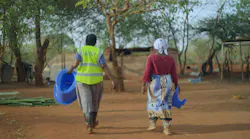
In Kenya, the partnership aims to provide inclusive, market-based water, sanitation and hygiene (WASH) services for refugees and host communities in and around Kakuma refugee camp. The initiative aligns with the government’s Shirika Plan.
In Malawi, the partners are deploying climate-resilient WASH solutions designed to withstand prolonged flooding.
JICA President Akihiko Tanaka emphasized the need for locally sustainable systems in addition to infrastructure investment.
"It has also become clear that providing infrastructure alone does not lead to sustained hygiene practices, highlighting the urgent need to create mechanisms that function sustainably on the ground. This partnership with LIXIL brings together JICA's strengths in building institutional frameworks and working closely with governments with LIXIL's expertise in product development, market creation, and business expansion in the field. By doing so, we aim to move beyond conventional aid approaches and realize a 'Sanitation Economy' where sanitation services can be sustained locally."
SATO Documentary Highlights Community-Led Sanitation
LIXIL is also using the documentary A Place of One’s Own to highlight the role of its SATO social business in reaching its first 100 million people and supporting its next milestone.
Directed by Oliver Couch, the documentary follows local masons, entrepreneurs and families as they take ownership of sanitation improvements in their communities. The film won the 2026 Film Award at London's Big Syn International Film Festival.
LIXIL says the community-driven approach represented in the film is central to expanding sanitation access and building long-term resilience through local participation.
Water-Efficient Products Support Hygiene Access
LIXIL’s sanitation strategy is based on a human-centered engineering approach that connects personal well-being with practical hygiene solutions. One example is the SATO Pan, which uses less than one liter of water and is designed to seal away odors and insects.
The company says its next 100-million-person goal will require continued collaboration among governments, nonprofit organizations and commercial innovators to extend sanitation services and build systems that can operate sustainably in the communities they serve.
To learn more about LIXIL’s work on sanitation & hygiene, visit www.lixil.com/en/impact/sanitation/sanitation_detail.html.