Key Highlights
- IAPMO was founded in 1926 by inspectors in Los Angeles to develop plumbing codes ensuring safety and standards for city infrastructure
- The organization emphasizes collaboration, trust, and community engagement to develop effective water safety standards and solutions
- Global partnerships, such as with India and Australia, demonstrate IAPMO’s commitment to adapting codes and training programs to local needs
- Future challenges like climate change and counterfeit products are addressed through innovative research, industry collaboration, and proactive standards development
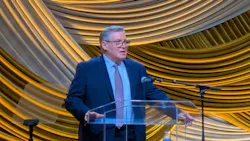
Dave Viola is the CEO of IAPMO, an international non-profit organization of plumbing professionals who deliver innovative solutions for water-related challenges. He has served in that capacity since 2021 when former CEO Russ Chaney stepped down.
Viola also serves as the CEO of IAPMO’s charitable arm, IWSH (the International Water, Sanitation and Hygiene Foundation), as a Global Partner for WorldSkills International, and is Chair of the Executive Board of the World Plumbing Council. He is a plumber, a mechanical engineer, and a self-described “code nerd.”
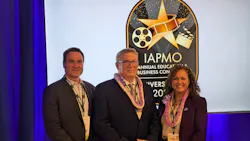
CONTRACTOR was able to interview Viola during a brief break at the association’s annual Education and Business Conference, where IAPMO is celebrating its 100-year anniversary. (For full coverage of the conference, turn to pg. 20 for our feature – Ed.)
CONTRACTOR: Let’s go back to 1926, to those 39 inspectors who came together to found what would become IAPMO. What brought them together? What made them decide they all needed to sit down in one room and figure things out?
Dave Viola: 1926 was literally the year it got crazy in LA. The oil boom was going crazy, Hollywood had everyone flying out to California to be a star. Even City Hall was being built.
And think about that City Hall Building. How do you make that building safe without codes and product standards and process certification? It came down to the people, their vigilance, and their knowledge of their craft.
So they started coming together for coffee and saying, What did you learn today? How did you get this figured out? Saying, Hey, here's what we should be doing, or, I saw this today, and we shouldn't let this happen anymore. And that that was basically the seeds of the plumbing code that we have today.
CONTRACTOR: Can you talk a little bit about that spirit of collaboration and how it has driven the organization to the present day?
Viola: I’ve been a code nerd for 40-something years now. I've been on every model code committee for decades. And if you want to get your way, you have to collaborate. You can't just go in there and raise hell and pound on the table. You learn, very early on, that this is process. You need to let everyone contribute their expertise, and you need to trust in the process. And that carries beyond the code development process, into our national and international partnerships.
It works because we are truly trying to do good for the right reasons, and our reward is simple: that people aren't dying, that plumbing systems are safe and sustainable. That’s the beauty of being a not-for-profit. Corporate greed is not driving us. It's about doing the right things for the right reasons.
CONTRACTOR: With that mind-set, developing a charitable organization like IWSH seems to be a natural progression—doing the most amount of good for the most amount of people.
Viola: Looking at the work IWSH has done over the decade of its existence, perhaps its greatest impact has been in places where native populations had a real need for improved plumbing facilities—to uplift them and care for their hygiene and sanitation needs.
In Canada, at the Walpole Island First Nation Project, in the US with the work done for the Navajo Nations, and in Northern Australia, they’ve proved some of our most successful collaborations.
Working with these indigenous people, to take care of their hygiene and sanitation needs, we first needed to earn their trust. It’s a difficult first step, it’s the hardest part of the process, but once you’ve earned that trust, they then become the easiest projects that you can do—and the most gratifying.
CONTRACTOR: It’s been an amazing journey for the organization over the last 100 years. Just today at the conference you’re reporting high revenues, increased memberships, new partnerships around the world. So, what’s the secret of IAPMO’s success?
Viola: If I had to get to the heart of it, I’d say trust. Trust in who you are, in what your industry is. I always tell people: whatever the industry needs and wants, that's what we do.
There's certainly going to be times where different industry sectors might have disagreements on specific things, but there's a lot of common ground, and we facilitate and bring people together to focus in, to give back, and to help people in need.
It feels good to give back. To return for a moment to IWSH, the biggest gift you can give people in those communities is safe water and decent sanitation.
[With the services we provide] we're not the most expensive, and we're not the cheapest, but we work very hard to adapt to make sure that we're getting our clients what they need. And as we grow, as that relationship progresses, we make sure to listen. And if they say, “you guys ought to be doing this” a lot of times we will go and do that, and sometimes those new things will create new business and new clients.
When we invite people to partner with us good things happen—and I can give you many, many examples. WE·Stand [Water Efficiency and Sanitation Standard] is just one of the cool things that we've done. In the early days there were plumbing groups pushing for higher water efficiency (like the Water Warriors) and on the other side were manufacturers saying, you guys are a bunch of knuckleheads, why are you trying to make us change all this stuff?
Those first years it was just putting them in a room, locking the door, and having them wrestle and figure it out. At the end of the day, they created this powerful, incredibly useful standard, and along the way they became friends. Literally, lifelong friends, due to the trust that grew from what they did together.
You create a forum. You facilitate and you gather these well-intentioned people that are experts in their fields. Give them a chance and they're going to do good things.
CONTRACTOR: And you’ve taken that approach global.
Viola: Our friends from Australia, and from the Indian Plumbing Association are here at the conference. To take India as an example, we worked in India, for, I don't know, 15 years, and we lost a lot of money, but we were there simply to try and bring over IAPMO’s codes and our training programs and testing certification.
We respectfully used our models, facilitated meetings, worked to adapt our codes to meet their local needs. And now, they have ownership because they literally spent years modifying the language through their own code change process.
Because we demonstrated trust, they trusted us in return. Now they will do anything for us, and we will do anything for them.
CONTRACTOR: It’s been an amazing 100 years for IAMPO. But the future looks like it holds a brand-new set of challenges: the effects of climate change, counterfeit and uncertified products, data centers and their water demands. What’s next for the association?
Viola: I think it was Winston Churchill who said you never want to let a good crisis go to waste!
These challenges can be formidable, but we have a diverse group of very smart people that are very motivated to get together and hammer out solutions, just like our founders back in 1926. It’s going to be daunting—and you didn't even mention the geopolitical craziness that's in front of us—but the work has already begun.
For data centers, most are on closed-loop systems now. They're not using any more water than a restaurant. A lot of things on that front are already getting better. Thanks to a lot of collaboration, you're already starting to see some solutions.
One thing we've done to anticipate ways we can help deal with some of these water scarcity challenges is the Innovative Research Fund we’ve established. It's a fund that we're hoping can be seeded by government grants, trade associations, anyone who needs solutions but might not have the resources themselves can chip in. For example, validating the good things rainwater harvesting can do for the potable water supply.
With regard to counterfeit products and illegal products, we have a handle on the traditional systems, the wholesalers and the retailers, but it’s hard to keep up with online sellers.
So, we’ve done work with Plumbing Manufacturers International, collaboration and testing, so we have real data to point to the dangers these products pose to the public; levels of toxic chemicals, levels of lead. Then that data was presented during Congressional hearings and to the Consumer Product Safety Commission, and it made some big changes. It motivated Amazon to start working with us to find ways to prove the products they are selling are actually compliant.
There's always a way to start educating, to start bringing the industry together, no matter what the problem is.
About the Author
Steve Spaulding
Editor-in-Chief - CONTRACTOR
Steve Spaulding is Editor-in-Chief for CONTRACTOR Magazine. He has been with the magazine since 1996, and has contributed to Radiant Living, NATE Magazine, and other Endeavor Media properties. You can find him on LinkedIn at www.linkedin.com/in/stevespaulding.