Water Quality Starts with the System
Key Highlights
- Proper system design, including pipe sizing and routing, minimizes water stagnation and enhances long-term water quality
- Certified materials like PEX-a and CPVC resist corrosion and scale buildup, supporting system durability and reducing maintenance needs
- Quality installation practices, such as correct fitting techniques and system protection during construction, are essential for reliable performance
- Plumbing decisions made during design and installation significantly influence water movement, quality, and system longevity, beyond the initial treatment process
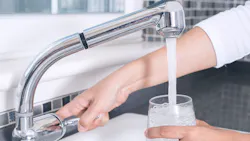
Every day, contractors install systems that will transport drinking water for the next 50 years or more. Yet, many conversations about water quality often begin at the treatment plant or with point-of-entry filtration. Both play an essential role in ensuring the quality of the water entering a building. But once water passes through the treatment plant, a different part of the equation takes over—the plumbing system itself.
While a piping system does not treat water, it does influence how water moves, how long it remains within the distribution system, and how reliably it is delivered throughout the life of the building. Material selection, hydraulic design, pipe sizing, system layout, commissioning, and long-term maintenance all contribute to maintaining water quality.
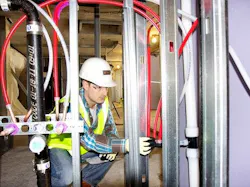
In other words, water quality doesn’t end at water treatment; it continues with every decision made during design and installation by engineers, designers, and contractors. This creates both a responsibility and an opportunity. Every routing decision, every connection, and every commissioning step contributes to the long-term performance of the potable water system.
Looking Beyond Treatment
Imagine two identical buildings supplied by the same municipal water source. One plumbing system is thoughtfully designed with properly sized piping, efficient routing, and minimal unnecessary pipe volume. The other includes oversized branches, excessive offsets, and dead-end piping.
Both buildings receive the same water. Yet over time, the plumbing systems may perform very differently. That’s because one of the most important, and sometimes overlooked, aspects of potable water system design is how efficiently water moves through the building.
Water that reaches fixtures quickly and efficiently spends less time sitting stagnant in the distribution system. Conversely, oversized systems, excessive branch lengths, unnecessary dead legs, or poorly designed recirculation systems can increase water volume within the piping network and extend the time water remains in the system between uses.
These are not water treatment decisions. They are engineering and installation decisions, yet they directly influence the long-term performance of the plumbing system. At the end of the day, contractors are not only installing pipes. They are building the infrastructure that will deliver potable water every day for decades to come.
Designing for Water Movement
Good plumbing design begins long before material selection. Today’s contractors and engineers have access to more sophisticated hydraulic modeling tools, better fixture demand data, and a greater understanding of actual building usage than ever before. Rather than relying on historical oversizing practices, plumbing systems can now be designed to more closely match anticipated demand while still delivering the required pressure and flow.
Thoughtful system design includes:
● Proper pipe sizing
● Efficient routing
● Minimizing unnecessary water volume
● Eliminating dead legs whenever practical
● Designing effective hot-water recirculation systems
● Reducing unnecessary fittings and directional changes
Every gallon of water that doesn’t need to remain in the system is one less gallon wasted.
The Importance of Certified Materials
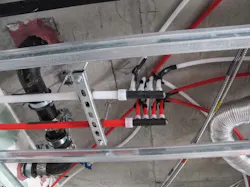
After system design, material selection is the next critical decision. Every wetted component, pipe, fitting, and valve should be specifically designed and certified for potable water applications. Independent third-party certifications such as NSF/ANSI/CAN 61 provide confidence that products have been evaluated for drinking water applications.
There is an important distinction between a product tested for compliance and one certified by a third party. Compliance to testing demonstrates compliance at a specific point in time, at the point of testing; certification represents ongoing review, manufacturing audits, and continuous verification that these products continue to meet established performance requirements, not simply a one-time compliance check.
Compatibility matters as well. Components engineered and performance-tested together can provide greater confidence than assembling products from multiple manufacturers that may not have been evaluated as a complete system. This is particularly crucial at connection points, where variations in material properties and dimensional tolerances, along with installation methods, can influence long-term reliability.
As an example, Uponor AquaPEX®, when used as part of a complete PEX-a plumbing system with compatible ProPEX® fittings, demonstrates how certified components can support a system-based approach to potable water design.

Why Material Characteristics Matter
Water chemistry varies considerably across North America. Hard water, aggressive chemistry, varying pH, and mineral content all interact differently with plumbing materials over decades of service. Material selection should therefore focus on long-term system performance rather than short-term installation considerations alone.
PEX-a and CPVC are widely used in potable water systems because they are inherently resistant to corrosion, pitting, and mineral scale buildup. Those characteristics can help maintain consistent internal flow throughout the system’s life while reducing maintenance concerns commonly associated with corrosion or scale accumulation.
Uponor AquaPEX® and ChlorFIT® Schedule 80 Corzan® CPVC are examples of a piping system that combines these material characteristics with certified potable water components designed to work together as an engineered system. Together, they deliver the best of both worlds from a single supplier, adapting to diverse installation environments and reducing labor time to keep water moving.
These complete systems, consisting of pipe, fittings, and valves, combine flexibility, strength, and chemical resistance to handle high-demand commercial and domestic water applications. By providing a complete solution from main to fixture, they can help enhance workflows, reduce installation time, and improve overall jobsite efficiency.
The point, however, extends beyond any individual product. Selecting certified materials that resist common long-term performance challenges helps support reliable plumbing systems when paired with good design.
Installation Quality Completes the System
But even the best material and design cannot overcome poor installation practices. Contractors ultimately determine whether a carefully engineered design performs as intended. Successful installations begin with following the manufacturer’s installation instructions, using approved tools, and employing validated connection methods.
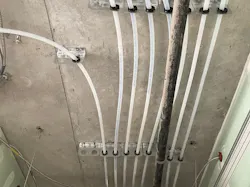
For expansion fitting systems such as Uponor ProPEX®, proper expansion techniques, fully seating fittings, and allowing connections to recover before pressurization are important steps in producing consistent, reliable joints.
Installation quality also includes protecting pipe during construction by:
● Properly supporting piping
● Protecting penetrations through framing and concrete
● Minimizing unnecessary UV exposure
● Maintaining clean installation practices
● Avoiding unnecessary system contamination
Each of these practices contributes to long-term system reliability.
Commissioning: The Final Step, Not an Afterthought
A plumbing system should never be considered complete just because the last fitting has been installed. Final tasks include proper commissioning, pressure testing, and flushing.
● Proper commissioning verifies that the installed system performs as designed.
● Pressure testing confirms installation integrity.
● Flushing removes construction debris and prepares the system for occupancy.
These final steps often receive less attention than design or installation, yet they represent the contractor’s final opportunity to deliver a high-performing potable water system.
Talking Water Quality
Contractors have an important opportunity to help owners understand that water quality is influenced by more than municipal supply or treatment equipment. It is also shaped by the entire plumbing system, including certified materials, thoughtful hydraulic design, efficient water movement, quality installation, and proper commissioning. Each of these factors contributes to preserving potable water system performance over its service life.
That means contractors can credibly discuss how material selection can support resistance to corrosion and scale buildup, how flexible piping can help create efficient layouts, and how proper sizing and routing can reduce unnecessary water volume. The piping system does not treat water, but it does influence how water moves through the building.
That distinction matters. No single product determines water quality, and no single material guarantees system performance. Great plumbing systems are defined by how all the system materials and components work together.
When certified materials, smart design, and proper installation practices come together, contractors can deliver a potable water system that performs reliably, reduces lifecycle risk, and gives building owners greater confidence in the long-term performance of their investment.
Stephanie Radel is the Director of Hot and Cold Water Supply Americas at GF Building Flow Solutions. She can be reached at [email protected].