A Better Estimate Builds a Better Business: 5 Ways Technology Helps Mechanical and Plumbing Contractors Protect Profitability
Key Highlights
- Automated takeoff tools streamline counting and measurement, reducing errors and freeing estimators to focus on project evaluation
- Standardized labor assemblies and productivity assumptions promote consistency and enable continuous refinement based on project experience
- Cloud-based databases and standardized assemblies help preserve and share institutional knowledge, supporting new estimators and multiple offices.
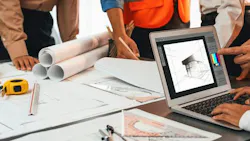
For mechanical and plumbing contractors, operational efficiency starts long before crews arrive on the jobsite – It starts with the estimate.
Every bid requires contractors to make dozens, sometimes hundreds, of decisions about quantities, labor, materials, productivity and risk. Those decisions ultimately shape how much work a company wins and, just as importantly, whether that work is profitable.
For years, many contractors have relied on a combination of paper plans, spreadsheets, manual counts and the experience of veteran estimators to build those bids. Experience will always be essential, but increasingly complex projects, tight margins, material-price fluctuations and skilled-labor constraints make it harder to depend on manual processes alone.
Specialized estimating and takeoff technology gives contractors another way to put that experience to work. Digital tools can reduce repetitive tasks, improve consistency and give estimators more time to focus on the judgment calls that determine whether a project is worth pursuing.
Here are five areas where technology can strengthen the estimating process and help mechanical and plumbing contractors build a more profitable operation.
1. Automate Takeoff and Reduce Manual Counting
Takeoff is one of the most labor-intensive parts of estimating. An estimator may spend hours reviewing drawings, counting fixtures and equipment, measuring pipe runs and tracking quantities across multiple sheets.
That work is necessary, but much of the process can now be automated.
Digital takeoff tools allow estimators to work directly from electronic drawings, measuring lengths and calculating quantities without transferring information between paper plans and spreadsheets. Newer capabilities can go further by using AI-assisted recognition to identify and count repetitive symbols or equipment across a drawing set.
For a mechanical contractor, this might mean identifying grilles, diffusers, VAV boxes or other equipment. A plumbing estimator might use similar capabilities to speed the counting of fixtures or components.
Automation does not eliminate the estimator’s role, but it does reduce the repetitive work surrounding it. An experienced estimator still needs to understand the drawings, recognize unusual conditions and determine whether the quantities make sense. Technology simply allows that person to spend less time counting and more time evaluating the project.
The result can be faster takeoff, fewer transcription errors and additional capacity to pursue work without simply asking estimators to work longer hours.
2. Build Labor Assumptions Around How Work is Actually Performed
Material quantities may be easier to see on a drawing, but labor often determines whether an estimate ultimately succeeds.
Two projects with similar quantities can require very different labor hours depending on ceiling heights, congestion, access, installation methods, crew composition and other job-specific conditions. Estimating software can help contractors build those realities into the estimate more consistently.
Rather than developing every labor calculation from scratch, contractors can create standardized assemblies that combine materials with associated labor units. For instance, a particular piping assembly can include fittings, hangers and other components along with the labor required for installation. Those standards provide a starting point, which is not an inflexible answer. Estimators can still adjust productivity assumptions to account for project conditions.
The benefit is consistency. If several estimators approach the same type of work, they are starting from a common methodology rather than relying on individual spreadsheets or personal calculation methods.
Over time, contractors can refine those assumptions based on experience and completed projects. The estimating system becomes a way to capture what the organization has learned about how it performs work.
3. Keep Material Pricing Current
Mechanical and plumbing contractors work with thousands of products whose costs can change because of market conditions, manufacturer adjustments, availability and supplier differences. If estimators rely on old spreadsheets or manually maintained price books, an accurate quantity takeoff can still produce an inaccurate bid.
Digital estimating systems can centralize material information and make it easier to maintain current pricing across the estimating team. Some systems can also incorporate supplier pricing or allow contractors to collect and compare vendor quotes as part of the bid process. That creates two advantages:
● Estimators spend less time searching through catalogs, emails and separate files to confirm costs.
● Contractors reduce the likelihood that two estimators use different prices for the same material simply because their personal spreadsheets were last updated at different times.
As deadlines approach, estimators who rely on current pricing can focus on exceptions, major equipment packages and areas of volatility instead of manually reviewing every line item.
4. Respond to Design Changes Without Starting Over
Few construction drawings remain unchanged from the first set through the end of a project. Addenda arrive during bidding, engineers revise layouts and owners change requirements. After award, contractors may need to price additional work or evaluate the financial effect of a design revision.
Manual estimating processes can make those changes difficult to track. An estimator may have to compare two drawing sets visually, determine what changed and then reconstruct portions of the estimate. Digital drawing and takeoff tools can make the process much more manageable.
Revision overlays and drawing-comparison capabilities can help estimators identify changes between plan versions. Because quantities and pricing are already associated with the original estimate, contractors can then update affected items rather than rebuilding the estimate from the beginning.
The same foundation can also support change-order pricing. If an owner adds fixtures or reroutes piping, the contractor has a documented baseline for the original scope. The estimator can identify the revised quantities, apply established labor and material assumptions and develop the change from information already captured during bidding. This process saves time, and also creates a clearer record of how additional costs were developed.
5. Turn Estimating Data Into Institutional Knowledge
Mechanical and plumbing contracting businesses often depend heavily on experienced estimators who understand local labor conditions, know which assemblies consistently perform well and have spent years refining their approach to pricing work.
If that knowledge resides primarily in an employee’s memory, handwritten notes or personal spreadsheet, the company has limited ability to share it. Centralized estimating databases, standardized assemblies and cloud-based platforms provide a way to turn individual experience into company knowledge.
New estimators can begin with established labor assumptions and assemblies instead of building their own system from scratch. Multiple offices can work from common data, and estimators can access projects without being tied to a particular workstation or local server.
Cloud and subscription-based technology can support that consistency further by keeping users on current versions of the software and making updates available without periodic large-scale upgrades. Contractors can also add access as estimating teams grow or workloads change.
For an industry facing a continuing shortage of experienced workers, preserving expertise is particularly important. Technology cannot replace decades of field and estimating experience, but it can help make sure that experience benefits more than one person.
Building a Stronger Estimating Process
For mechanical and plumbing contractors, better estimating technology can improve speed, consistency and confidence at the front end of every project. By reducing manual work, strengthening pricing and labor assumptions, managing revisions and preserving institutional knowledge, contractors can make better bidding decisions and protect profitability.
About the Author
Brooke Stewart
Brooke Stewart is director of product management, Trimble construction management solutions. She brings two decades of deep domain experience and a passion for collaborating with contractors to find innovative and practical ways to leverage technology to advance pre-construction workflows.