The 10-Minute Permit Preflight That Can Save Weeks
Key Highlights
- An ACORD certificate alone does not grant additional-insured status; verify the actual endorsement and its dates
- Get every required owner authorization and declaration signed before filing
- Check that all licenses, registrations, and insurance policies are current on submission day
- Compare the application against the drawings so scope, fixture counts, areas, and valuations match.
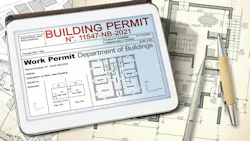
Nobody loses three weeks to a building department because of bad workmanship. They lose it because of a missing signature.
The packet comes back before a plans examiner ever looks at the work, and it comes back for reasons that have nothing to do with how well your crew installs anything. Permit intake is a completeness check, not a technical review, and most packets fail it.
Jenny Song, CEO of permitting software firm Infilla, estimates that only about 10% to 15% of applications are complete at initial plan review, and an application missing information can cycle for another 30 to 45 days. Denver accepts only about 37% of applications on the first round and has set a target of 80%. Cities are now spending real money on software that checks packets for completeness before a human sees them. The counter is grading your paperwork first.
I coordinate permits, invoicing and purchase orders as a construction administrative coordinator, and I prepare permit packets for contractors in my own practice. The same five errors show up in packet after packet. Every one of them is preventable in about 10 minutes.
1. The Certificate That Proves Nothing
A certificate of insurance is a snapshot, not a promise. The standard ACORD 25 form states on its face that it confers no rights on the certificate holder. If a city, a general contractor or a property owner is supposed to be an additional insured on your policy, that status exists only if your carrier issues the endorsement. A line in the description of operations box, or a checked box on the certificate, does not create it.
Packets stall when the certificate holder's name is wrong, when the policy dates do not cover the permit period, when the endorsement is missing, or when the certificate is a specimen copy pulled from a bid file two renewals ago. For trade permits the stakes are the same. New York City will not issue a trade permit unless the license and insurance are active and current first. Read the endorsement, not the certificate, and calendar every expiration date that appears anywhere in the packet.
2. A Valuation That Does Not Match the Work
The project value on the application is not a number you choose to keep fees low. Portland, Oregon, sets permit fees on the fair market value of all work, expressly including electrical, plumbing, heating, air conditioning and fire protection systems, plus the contractor's profit. When the submitted value and the building official's value disagree, the official uses ICC Building Valuation Data and charges on the higher figure. Oregon's model language goes further: if a valuation is underestimated, the permit shall be denied unless the applicant produces detailed estimates the official approves.
Undervaluing a job to trim a fee buys a correction cycle that costs more than the fee ever would. It also creates a mismatch the reviewer can see, because the plans describe the real scope even when the application does not. State the full value, including the mechanical and plumbing work, the first time.
3. The Missing Signature
Some packets never enter the review queue at all. They die at the intake window over authorization.
When the applicant is not the property owner, jurisdictions want proof that the person filing has the right to file. California Health and Safety Code Section 19825 requires the owner's signed authorization of agent before an owner-builder permit issues when someone else executes the application. New Jersey's administrative code requires an owner's affidavit when the applicant is not the owner. Sacramento requires every declaration and authorization on its applications to be fully executed at submission.
This is the purest unforced error on the list. The form is one page. It takes a signature, not a study session. It is also the mistake most likely to embarrass you in front of a client, because the job sat unfiled for days over a line anyone could have signed in the first five minutes.
4. The License That Lapsed Last Week
Permits issue to licenses, and licenses expire quietly. In New York, a plumbing permit goes only to a Licensed Master Plumber, and a boiler permit only to a master plumber or a Licensed Oil Burner Installer, with license and insurance current before issuance. Washington's Department of Labor and Industries automatically suspends a plumbing contractor's registration if the annual certificate of insurance is not filed before it expires, and reinstatement carries fees.
The trap is rarely your own license. It is the designated master plumber whose name the shop files under, or a subcontractor whose township license or insurance lapsed the week the packet went in. Licenses do not send reminders that reach the person assembling the packet. Check every license and policy date in the packet on the morning you file, not the morning you assembled it.
5. The Story That Contradicts the Drawings
Reviewers in several disciplines read the same packet. When the application's scope narrative describes a different job than the plan sheets show, each reviewer who finds the mismatch writes it into the comment letter, and the correction cycle starts.
It is usually small. The application says two bathrooms and the plans draw three, which matters in any jurisdiction that charges per fixture. The energy compliance form was built from an older drawing set, so, as one plan reviewer puts it, every number that does not match a drawing becomes a line in the comment letter. In San Francisco, a permit whose description reflected an earlier version of the project drew an appeals condition requiring the scope to be revised to match the approved plans.
Read your own application the way a reviewer will: against the plans, line by line. Fixture counts, areas, valuations and scope language should tell one story everywhere they appear.
The Payoff
None of these five mistakes requires better craftsmanship, better software or a bigger office. They require a preflight habit. Before any packet leaves, spend 10 minutes on five questions:
- Is the endorsement in the file, or only the certificate?
- Does the valuation cover all the work, including the trades?
- Is every authorization signed?
- Is every license and policy in the packet alive on filing day?
- Does the application tell the same story as the drawings?
Denver's gap between 37% first-round acceptance and its 80% target is not a craftsmanship gap. It is a paperwork gap, and it closes one complete packet at a time. The cleanest packet gets the calendar. Make it yours.