Designing Plumbing Infrastructure to Address Corrosion and Long-Term Reliability
Key Highlights
- Corrosion-resistant coatings, especially those with antimicrobial properties, provide a protective barrier against microbial activity and aggressive water conditions.
- Implementing advanced coatings like ArmorTek extends valve service life, reduces maintenance needs, and minimizes costly replacements
- Standards such as AWWA C550 guide the use of durable interior coatings to enhance the longevity of water system components
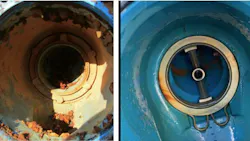
Microbiologically Induced Corrosion (MIC) is one of the most damaging and persistent enemies of plumbing infrastructure. Epoxy-coated cast-iron and ductile-iron valves, when first installed, provide reliable, trusted performance. However, over time, corrosive conditions can weaken these plumbing components and the infrastructure they support, particularly when the epoxy coating is stripped, exposing the underlying metal.
MIC is a major contributor to these harmful conditions, as it degrades automatic control valves (ACVs), backflow preventers, strainers, and other water system components. As corrosion progresses, leaks, poor performance, pressure control issues, and potential failure can occur. These issues ultimately lead to increased maintenance needs and downtime over the life of a plumbing system.
Since corrosion develops gradually and remains hidden, it is important for municipalities and utility owners to consider how their plumbing components will perform over time. These risks can be mitigated by applying corrosion-resistant coatings designed to protect plumbing infrastructure from the adverse effects of MIC.
Why MIC Needs a Proactive Approach
MIC is a damaging process that occurs when microorganisms, such as bacteria and fungi, form biofilms on metal surfaces found on devices such as ACVs, backflow preventers, and strainers. When these biofilms develop, they trap corrosive substances on the metal surfaces of these plumbing components, leading to localized corrosion. Aggressive water conditions, low chlorine levels, and low or infrequent flow can increase MIC activity and undermine the long-term performance of plumbing equipment.
Due to MIC, a standard coating can be stripped, exposing the underlying metal, which is more susceptible to corrosion without a protective barrier. By the time leaks, pressure-control issues, or other performance issues transpire, the valve may already require extensive servicing or replacement. Merely replacing a corroded component with another standard-coated valve may leave it vulnerable to the same conditions, potentially resulting in repeat service calls and replacement. To prevent this risk before failure occurs, contractors can select a coating that can withstand the effects of MIC from the start.
Designing for Long-Term Reliability
AWWA C550 establishes requirements for protective interior coatings used on valves and fittings in water service to help provide a durable barrier between the water and the metal surface. When protective coatings are compromised, however, they can threaten the long-term integrity of plumbing infrastructure by slowly damaging vulnerable components before they are discovered. Fortunately, corrosion-resistant coatings are designed to help proactively resolve the performance issues that devices such as ACVs, backflow preventers, and strainers face in challenging water environments, helping maintain their reliability and functionality.
Corrosion-resistant coatings create a protective barrier between the valve’s metal surface and its surrounding environment. Some advanced coatings include antimicrobial properties to limit the effects of microorganisms associated with MIC, as well as abrasion-resistant qualities to combat undercutting and aggressive water. By withstanding demanding water conditions, a strong coating provides a dependable layer that helps slow corrosion and preserve the valve, ultimately supporting longer service life for the pipe.
By incorporating these coatings into municipal plumbing infrastructure, contractors can help protect public water lines from MIC and play an important role in keeping their communities safe.
Corrosion-Resistant Coatings in Practice
In 2018, Watts conducted a field study using its ArmorTek® corrosion-resistant coating system at a municipal complex in Las Vegas that was experiencing valve failures due to corrosion and low, infrequent flow. When the municipal complex's local water supply was tested, the Watts team found low chlorine levels and high MIC activity, which required a solution capable of handling these rigorous conditions.
ArmorTek is a micro-composite coating with super-adhesion and abrasion-resistance that helps protect the underlying metal from undercutting and aggressive water conditions. It features an antimicrobial agent designed to protect the valve from the effects associated with MIC. An NSF/ANSI 61 compliant epoxy topcoat provides the final barrier for use in potable water applications.
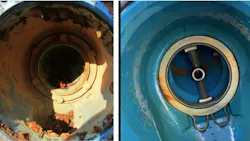
One valve with standard epoxy coating was evaluated after 14 months and showed corrosion indicative of MIC activity. After the valve was swapped for one coated with ArmorTek, the replacement displayed limited corrosion after 16 months under the same conditions.
A follow-up inspection in 2022 evaluated the performance of the standard-coated valve against an ArmorTek-coated valve. The inspection found that both valves were significantly different, with the standard valve presenting visible corrosion, whereas the ArmorTek-coated valve had no visible signs of MIC or corrosion and remained serviceable whenever maintenance would be needed.
Reducing Maintenance and Replacement Costs of Plumbing Infrastructure
Deteriorating valves caused by corrosion are often out of sight, out of mind, until a closer inspection reveals damage or physical symptoms that require replacement or repairs. Once a valve fails, the cost extends beyond the damaged component itself, as downtime, emergency service calls, and system disruptions must also be accounted for.
By leveraging durable corrosion-resistant coatings, valve service life can be extended while reducing the likelihood of repeated maintenance calls and premature replacement. Selecting corrosion-resistant coatings for plumbing components helps infrastructure withstand challenging conditions, allowing contractors to deliver more reliable installations with fewer callbacks. Proactive corrosion protection implemented during valve design and installation can help contractors safeguard municipal plumbing infrastructure while keeping communities safe.